About this artwork
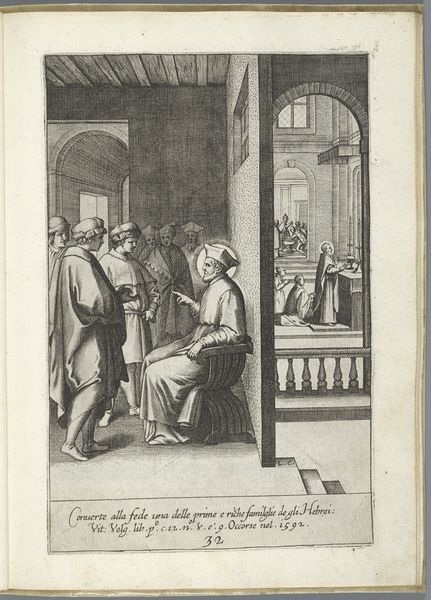
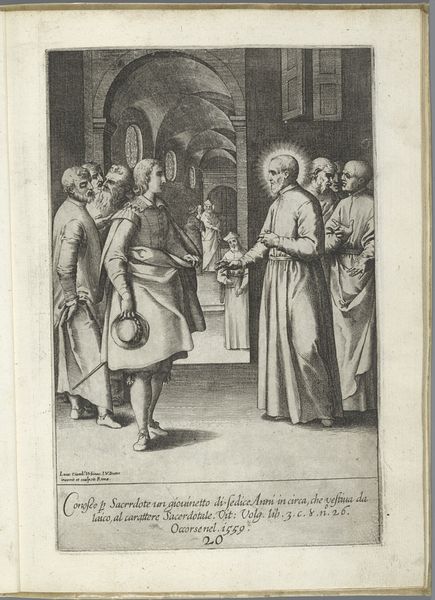
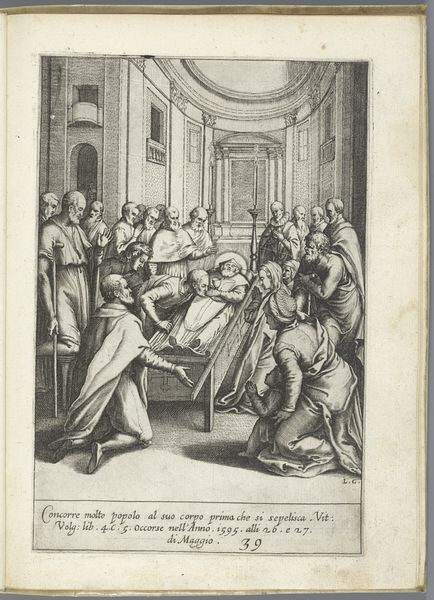
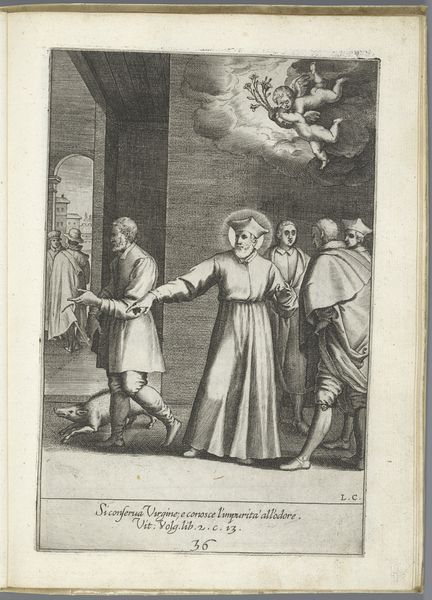
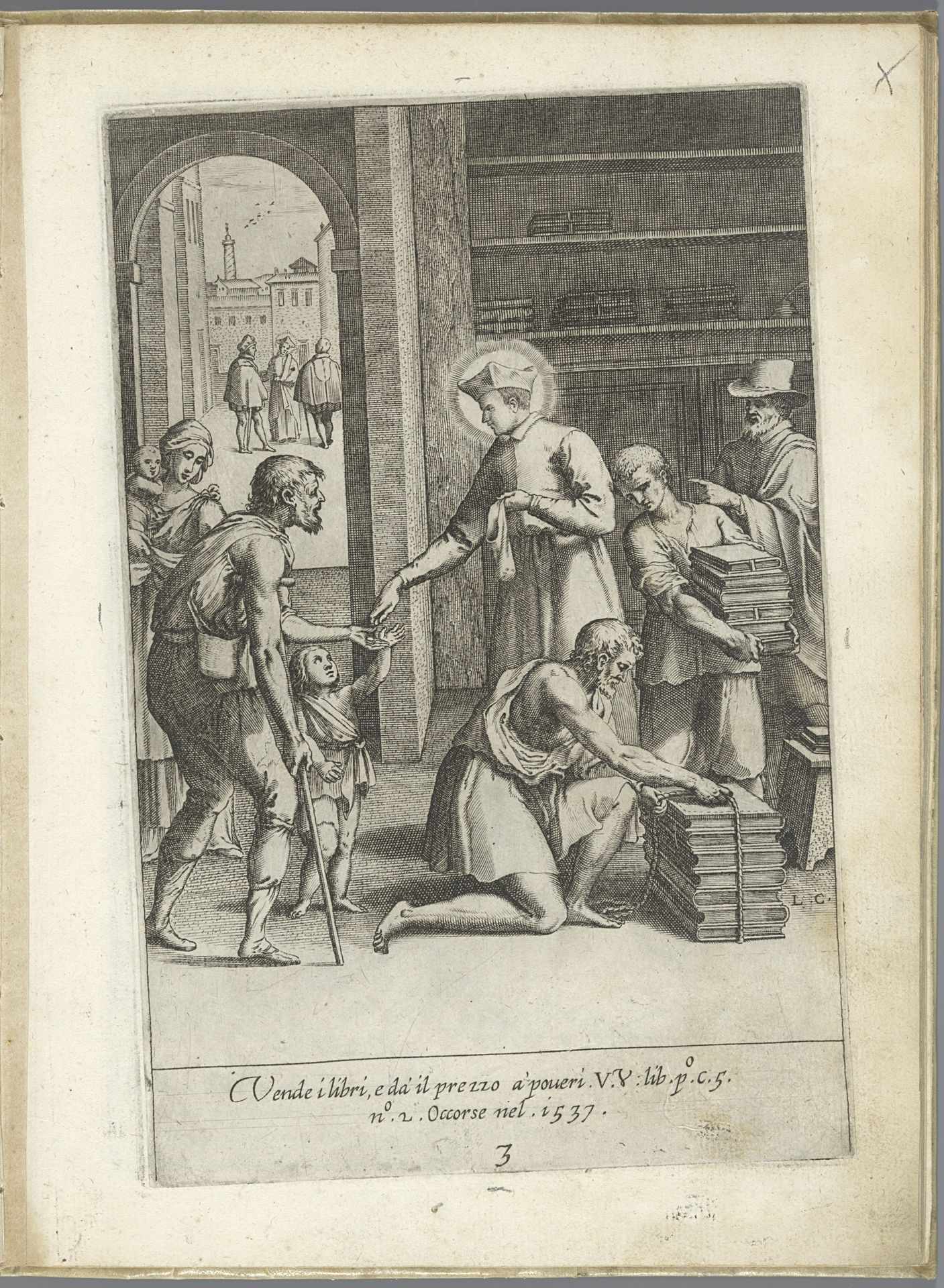
Curator: Up next, we have Luca Ciamberlano’s engraving, dating from 1630 to 1641, titled "Filippo Neri verkoopt zijn boeken en geeft het geld aan de armen." The work belongs to the Rijksmuseum collection and showcases the Baroque style. Editor: There's a powerful austerity to the scene. I mean, beyond the obvious narrative, the stark contrasts in light and shadow kind of carve out the figures. It's a really effective use of simple lines to depict so much destitution, but also charity. Curator: Absolutely. The artist uses line and form to convey a compelling narrative here, a historical genre piece focusing on a moment of almsgiving. We can delve into the use of baroque-era semiotics, noting the classical structural conventions deployed here. Editor: Classical? Maybe. To me it feels surprisingly vital and almost subversive—a radical act in a world of luxury. Books going to the needy; imagine the potential transformation! Curator: A nuanced observation. Consider the placement of Neri within the picture plane. He forms the focal point, situated almost architecturally amidst suffering, an embodiment of divine charity in a terrestrial sphere. Editor: The visual construction amplifies his altruistic gesture. It's hard to tell from an engraving alone, but I'm wondering if the materiality— the etching on the plate — plays into this as well. Curator: A valid point. The tactile quality of the engraving enriches the subject, evoking a specific visual experience of depth. Note also the balance within the architectural context. Editor: Balance, yes, but I see the dynamic as well. It’s as if he's rerouting knowledge, turning high culture upside down—democratizing it in a way. I'm really drawn to the hope it holds, even if only as a symbol. Curator: Well, by engaging with the artistic intent and exploring these stylistic and philosophical tensions, we attain deeper understanding of Ciamberlano’s work, hopefully. Editor: Agreed. It shows us even simple lines, when thoughtfully deployed, can give weight and volume to very moving concepts.
Filippo Neri verkoopt zijn boeken en geeft het geld aan de armen
1630 - 1641

Luca Ciamberlano
1599 - 1641Location
RijksmuseumArtwork details
- Medium
- engraving
- Dimensions
- height 228 mm, width 150 mm
- Location
- Rijksmuseum
- Copyright
- Rijks Museum: Open Domain
Tags
Comments
Share your thoughts
About this artwork
Curator: Up next, we have Luca Ciamberlano’s engraving, dating from 1630 to 1641, titled "Filippo Neri verkoopt zijn boeken en geeft het geld aan de armen." The work belongs to the Rijksmuseum collection and showcases the Baroque style. Editor: There's a powerful austerity to the scene. I mean, beyond the obvious narrative, the stark contrasts in light and shadow kind of carve out the figures. It's a really effective use of simple lines to depict so much destitution, but also charity. Curator: Absolutely. The artist uses line and form to convey a compelling narrative here, a historical genre piece focusing on a moment of almsgiving. We can delve into the use of baroque-era semiotics, noting the classical structural conventions deployed here. Editor: Classical? Maybe. To me it feels surprisingly vital and almost subversive—a radical act in a world of luxury. Books going to the needy; imagine the potential transformation! Curator: A nuanced observation. Consider the placement of Neri within the picture plane. He forms the focal point, situated almost architecturally amidst suffering, an embodiment of divine charity in a terrestrial sphere. Editor: The visual construction amplifies his altruistic gesture. It's hard to tell from an engraving alone, but I'm wondering if the materiality— the etching on the plate — plays into this as well. Curator: A valid point. The tactile quality of the engraving enriches the subject, evoking a specific visual experience of depth. Note also the balance within the architectural context. Editor: Balance, yes, but I see the dynamic as well. It’s as if he's rerouting knowledge, turning high culture upside down—democratizing it in a way. I'm really drawn to the hope it holds, even if only as a symbol. Curator: Well, by engaging with the artistic intent and exploring these stylistic and philosophical tensions, we attain deeper understanding of Ciamberlano’s work, hopefully. Editor: Agreed. It shows us even simple lines, when thoughtfully deployed, can give weight and volume to very moving concepts.
Comments
Share your thoughts