About this artwork
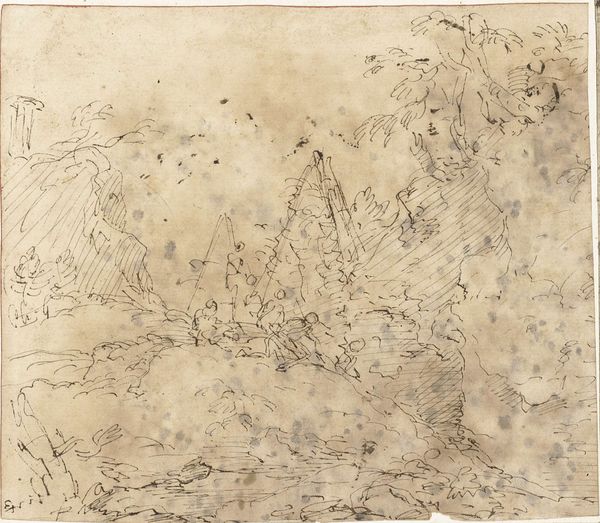
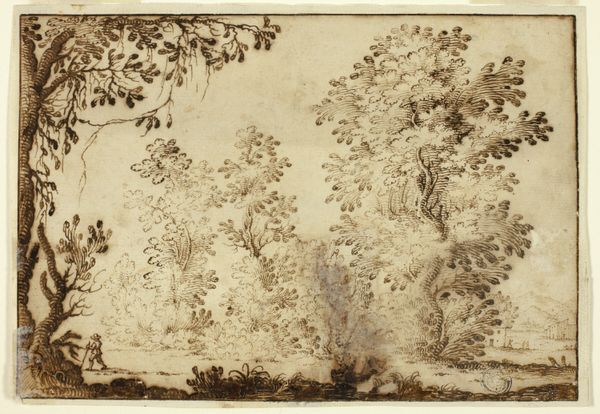
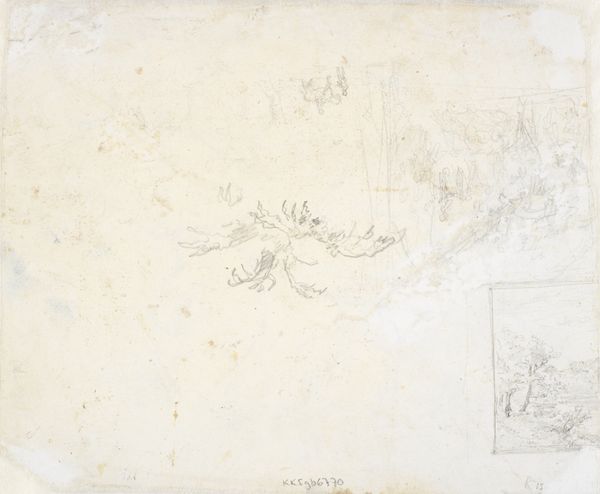
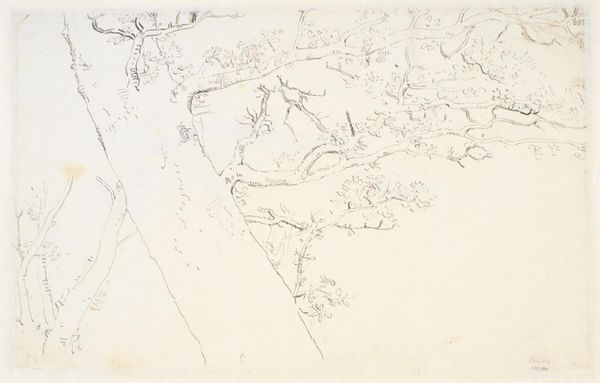
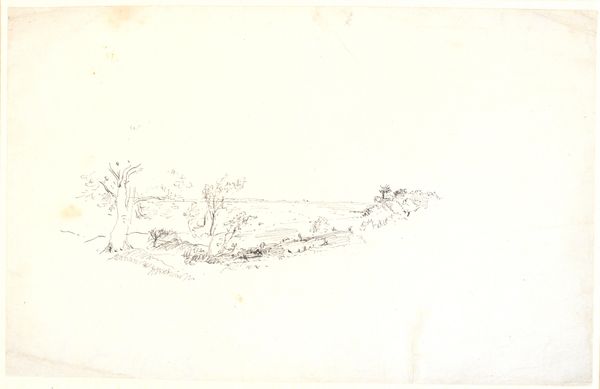
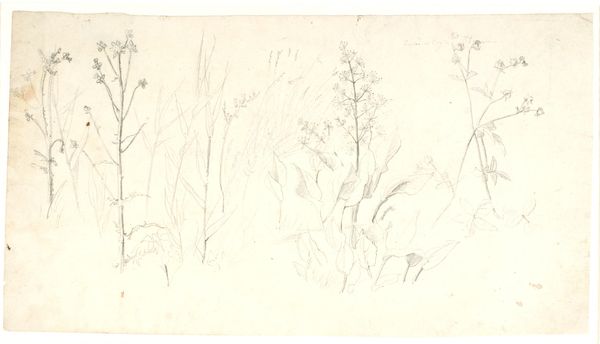
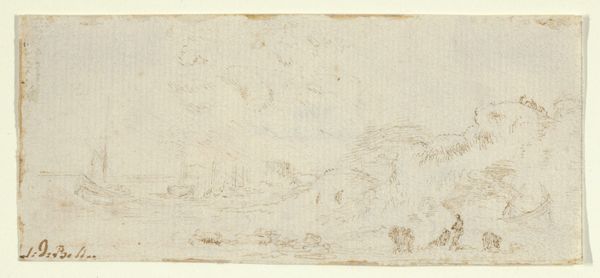
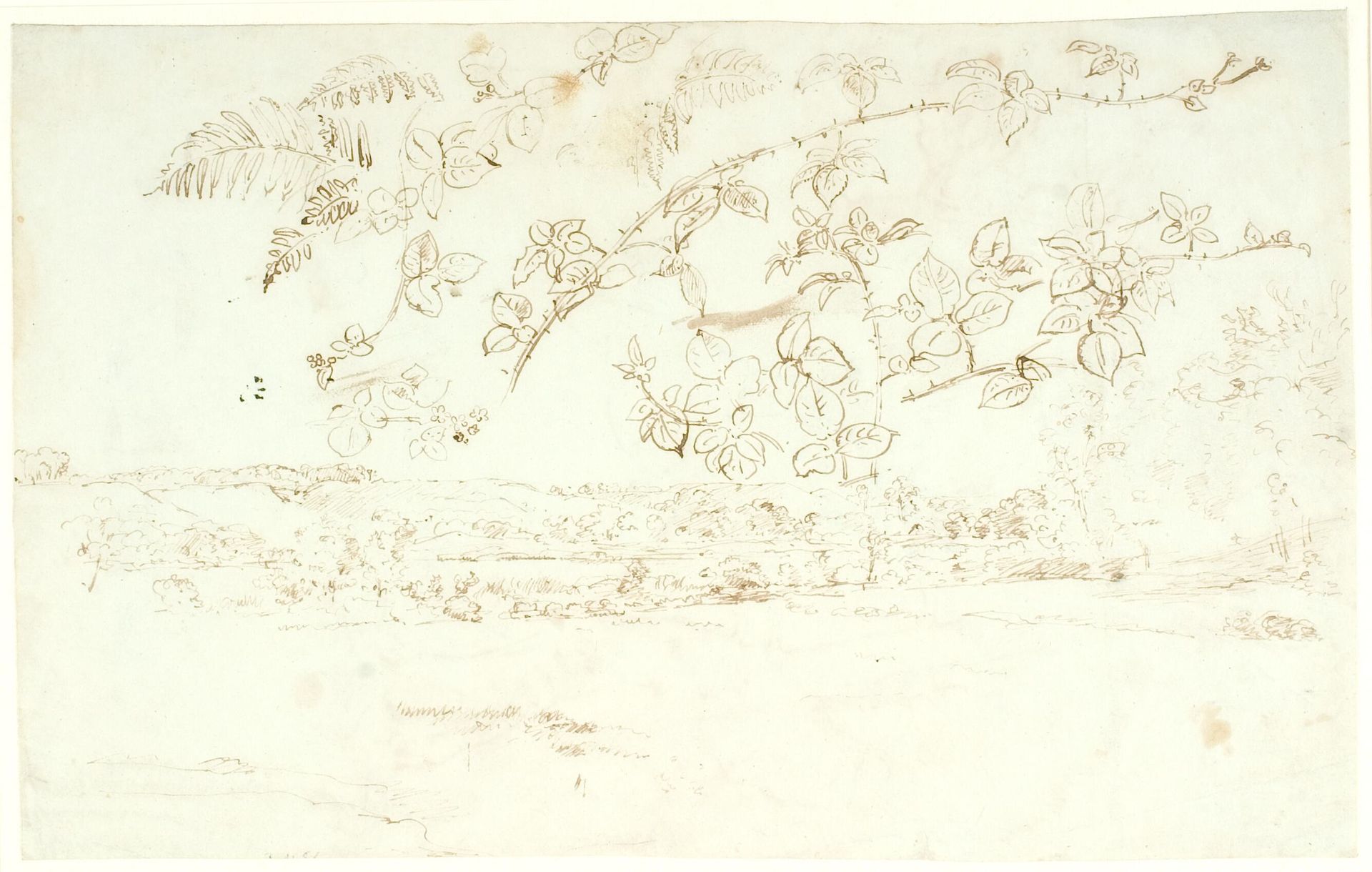
Dankvart Dreyer rendered this landscape sketch with brown ink, capturing a view towards hills and studies of rose branches. Dreyer, positioned within the Danish Golden Age, was painting during a time of national romanticism, when artists turned to nature to define a sense of cultural identity. The sketch carries a quiet intimacy; the rose branches reach into the scene, and are suggestive of the artist's engagement with the immediate, natural world. Dreyer's choice to focus on the local landscape, rather than historical or mythological scenes, reflects a broader movement towards celebrating the everyday and the regional. His sensitive rendering of the Danish countryside can be viewed as an assertion of national pride and belonging in a period of significant social and political change. While seemingly apolitical, landscape art like this played a crucial role in shaping a collective identity during the 19th century. It fostered a sense of shared heritage and attachment to the land, reflecting deeper societal values and aspirations.
Landskabsskitse, udsigt mod bakker. Foroven studier af rosengrene 1840s


Artwork details
- Medium
- drawing, plein-air, ink
- Dimensions
- 208 mm (height) x 331 mm (width) (bladmaal)
- Location
- SMK - Statens Museum for Kunst
Tags
drawing
plein-air
landscape
ink
romanticism
Comments
No comments
About this artwork
Dankvart Dreyer rendered this landscape sketch with brown ink, capturing a view towards hills and studies of rose branches. Dreyer, positioned within the Danish Golden Age, was painting during a time of national romanticism, when artists turned to nature to define a sense of cultural identity. The sketch carries a quiet intimacy; the rose branches reach into the scene, and are suggestive of the artist's engagement with the immediate, natural world. Dreyer's choice to focus on the local landscape, rather than historical or mythological scenes, reflects a broader movement towards celebrating the everyday and the regional. His sensitive rendering of the Danish countryside can be viewed as an assertion of national pride and belonging in a period of significant social and political change. While seemingly apolitical, landscape art like this played a crucial role in shaping a collective identity during the 19th century. It fostered a sense of shared heritage and attachment to the land, reflecting deeper societal values and aspirations.
Comments
No comments