About this artwork
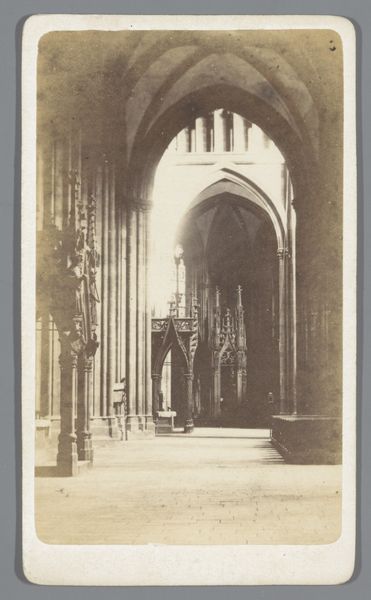
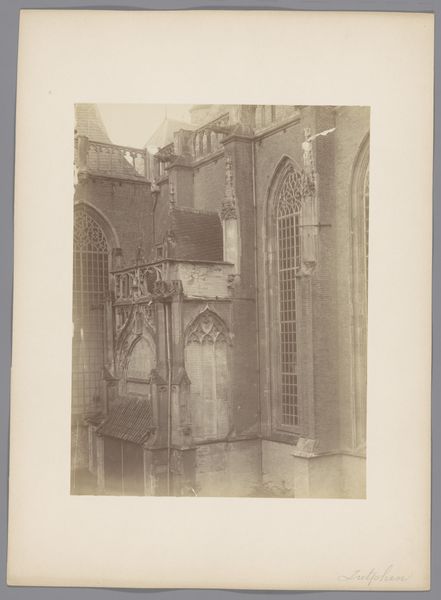
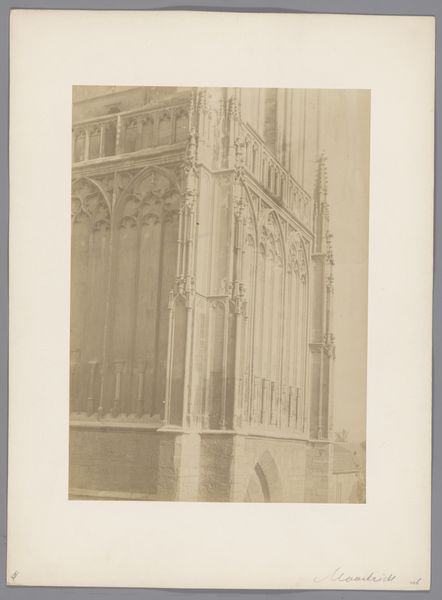
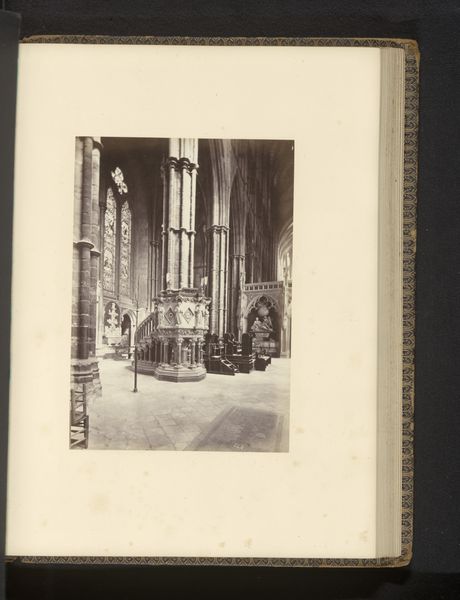
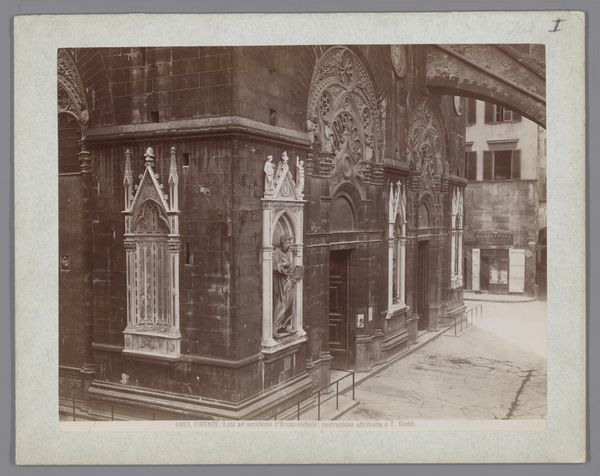
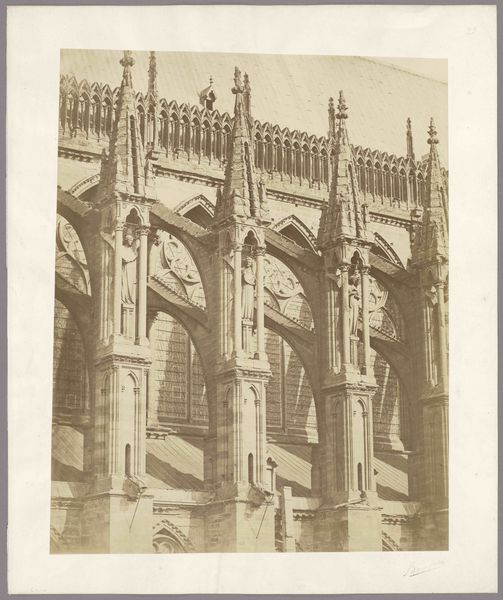
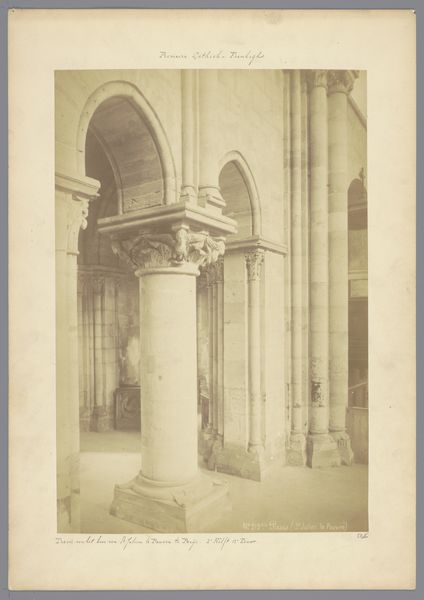
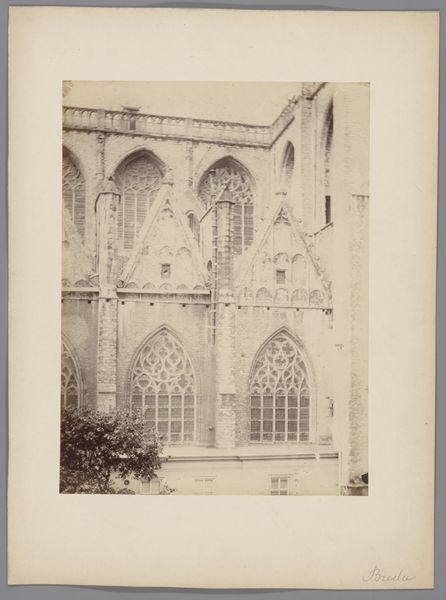
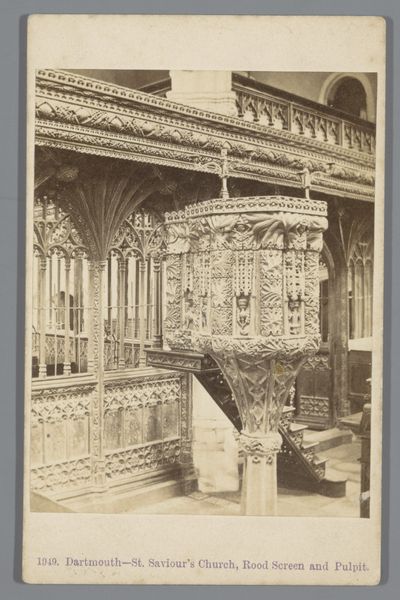
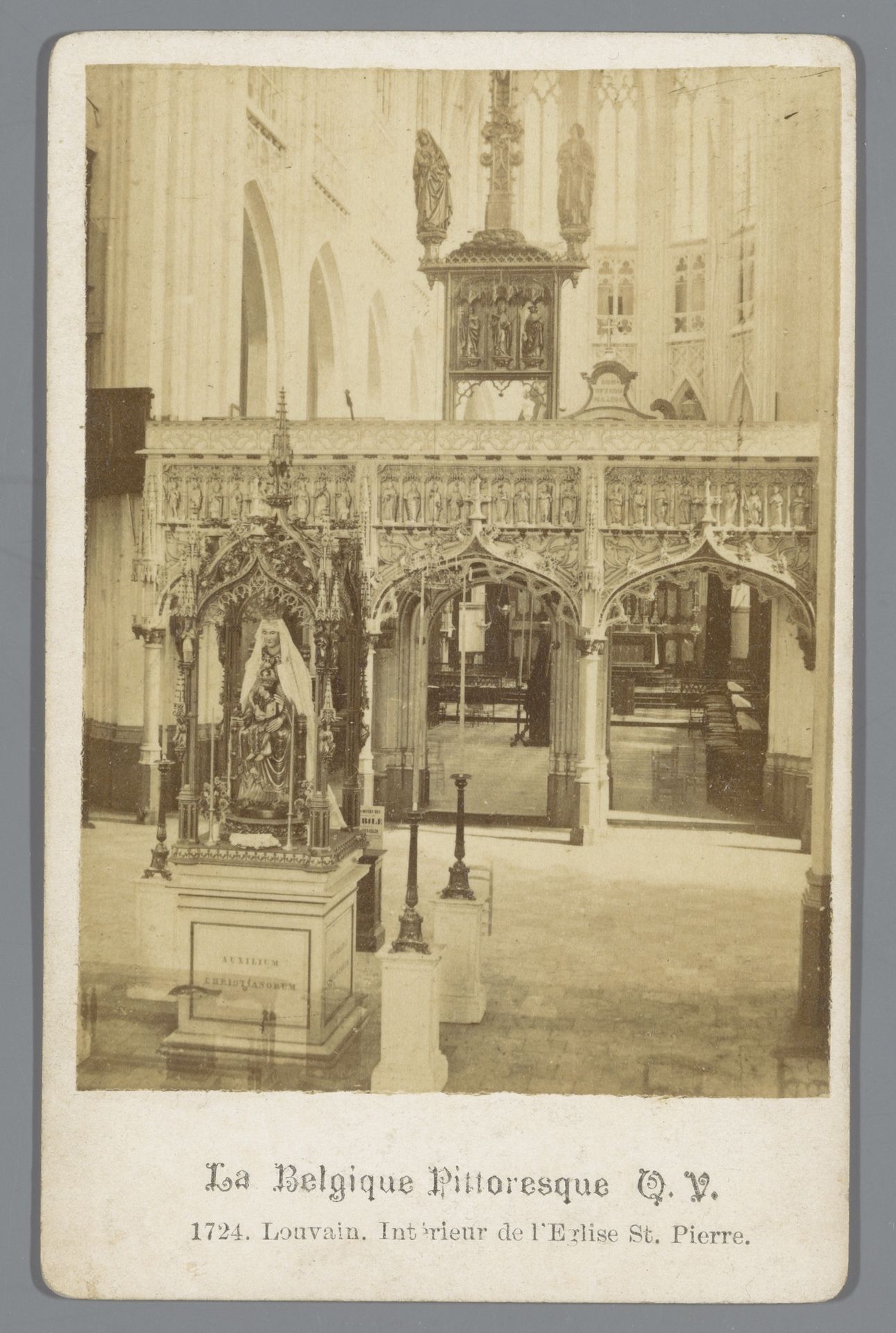
Jules Hippolyte Quéval captured this image of the interior of the Sint-Pieterskerk in Leuven using photography, a relatively new medium at the time. Quéval was working in a period where the representation of religious spaces was often intertwined with national identity and cultural pride. Churches, like this one, were not just places of worship but also symbols of community and history. The photograph, with its focus on the intricate details of the church's architecture, invites reflection on the role of religion in shaping social identities. Consider how the architectural grandeur might have reinforced notions of power and authority. It prompts us to reflect on who had access to these spaces and whose stories were told within them. It serves as a reminder of the complex relationship between faith, identity, and the built environment.
Interieur van de Sint-Pieterskerk, Leuven
1872 - 1875

Jules Hippolyte Quéval
1824Location
RijksmuseumArtwork details
- Medium
- photography, gelatin-silver-print
- Dimensions
- height 107 mm, width 68 mm
- Location
- Rijksmuseum
- Copyright
- Rijks Museum: Open Domain
Tags
landscape
photography
romanesque
gelatin-silver-print
Comments
Be the first to share your thoughts about this work.
About this artwork
Jules Hippolyte Quéval captured this image of the interior of the Sint-Pieterskerk in Leuven using photography, a relatively new medium at the time. Quéval was working in a period where the representation of religious spaces was often intertwined with national identity and cultural pride. Churches, like this one, were not just places of worship but also symbols of community and history. The photograph, with its focus on the intricate details of the church's architecture, invites reflection on the role of religion in shaping social identities. Consider how the architectural grandeur might have reinforced notions of power and authority. It prompts us to reflect on who had access to these spaces and whose stories were told within them. It serves as a reminder of the complex relationship between faith, identity, and the built environment.
Comments
Be the first to share your thoughts about this work.