About this artwork
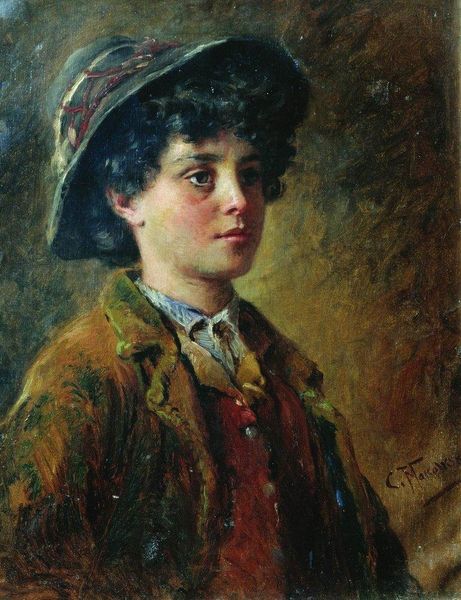
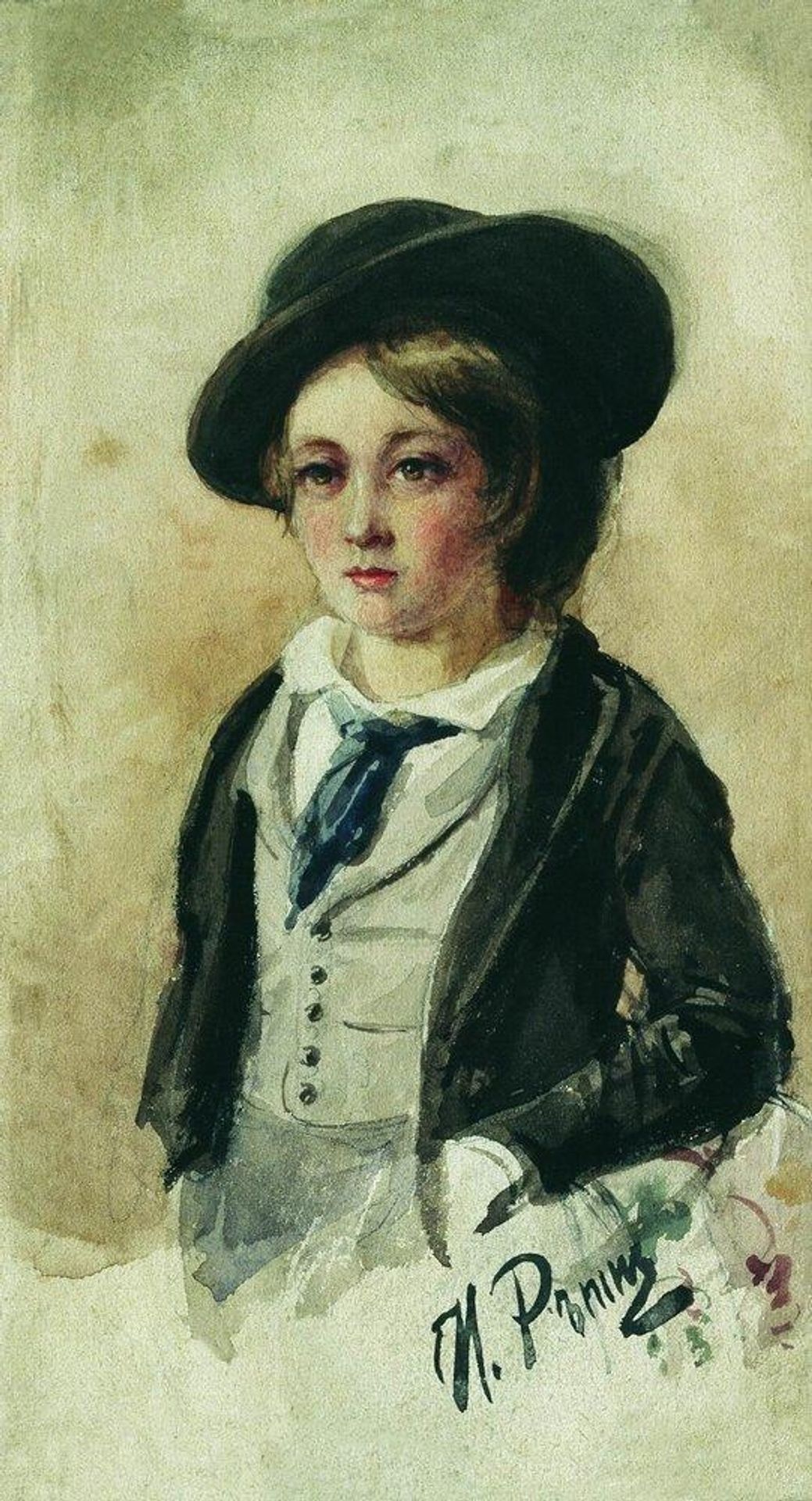
Ilya Repin created this watercolor portrait of a boy in Russia, though the date is uncertain. Repin was a key figure in the Russian realist movement, seeking to depict the lives of ordinary people and critique social inequalities. Here, we see a young boy dressed in the attire of the upper class. The formal suit, tie, and hat signal a life of privilege, but the boy's somewhat melancholic expression hints at the complexities of social identity. During Repin's time, Russia was undergoing significant social and political change, with growing tensions between the aristocracy and the peasantry. Artists like Repin often used their work to comment on these divisions, challenging the status quo through their representations of everyday life. To fully appreciate the social commentary embedded in Repin's work, we can consult historical archives, letters, and critical analyses of the period, gaining insight into how artists engaged with the pressing issues of their time and the role art played in shaping public discourse.

Artwork details
- Medium
- watercolor
- Dimensions
- 22 x 11 cm
- Copyright
- Public domain
Tags
portrait
figuration
watercolor
romanticism
portrait art
Comments
No comments
About this artwork
Ilya Repin created this watercolor portrait of a boy in Russia, though the date is uncertain. Repin was a key figure in the Russian realist movement, seeking to depict the lives of ordinary people and critique social inequalities. Here, we see a young boy dressed in the attire of the upper class. The formal suit, tie, and hat signal a life of privilege, but the boy's somewhat melancholic expression hints at the complexities of social identity. During Repin's time, Russia was undergoing significant social and political change, with growing tensions between the aristocracy and the peasantry. Artists like Repin often used their work to comment on these divisions, challenging the status quo through their representations of everyday life. To fully appreciate the social commentary embedded in Repin's work, we can consult historical archives, letters, and critical analyses of the period, gaining insight into how artists engaged with the pressing issues of their time and the role art played in shaping public discourse.
Comments
No comments