graphic-art, print, engraving
#
graphic-art
#
baroque
# print
#
engraving
Dimensions: height 90 mm, width 71 mm
Copyright: Rijks Museum: Open Domain
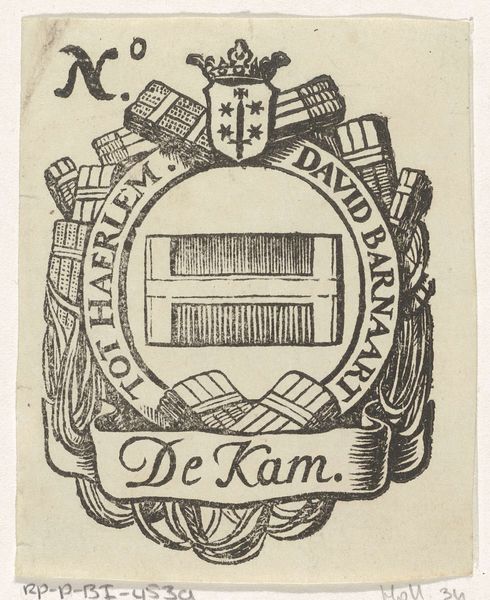
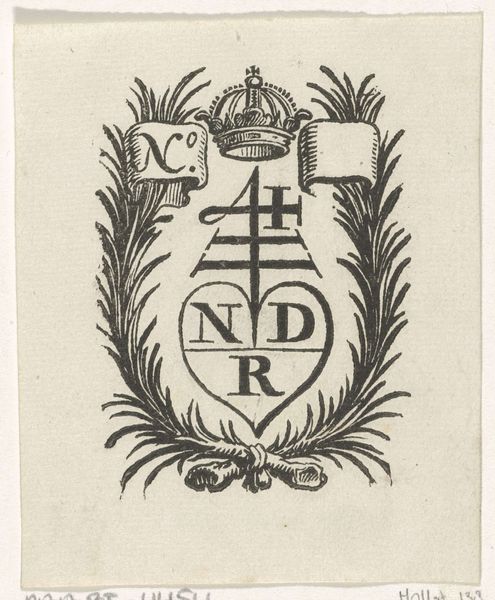
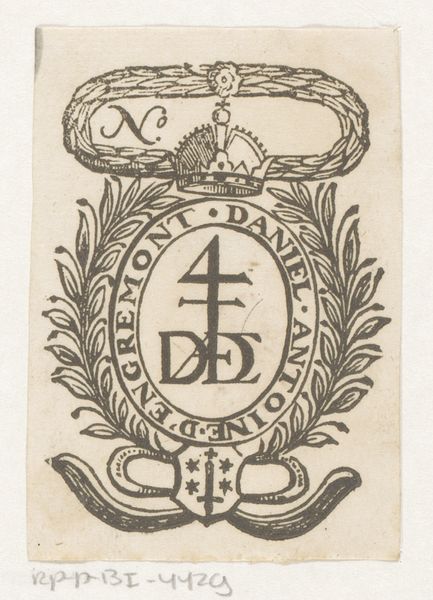
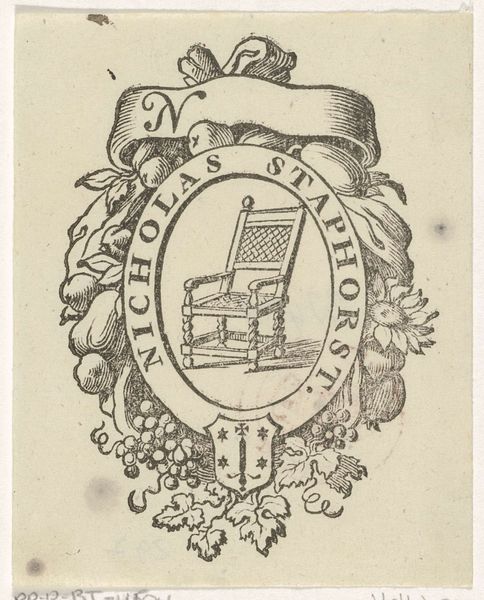
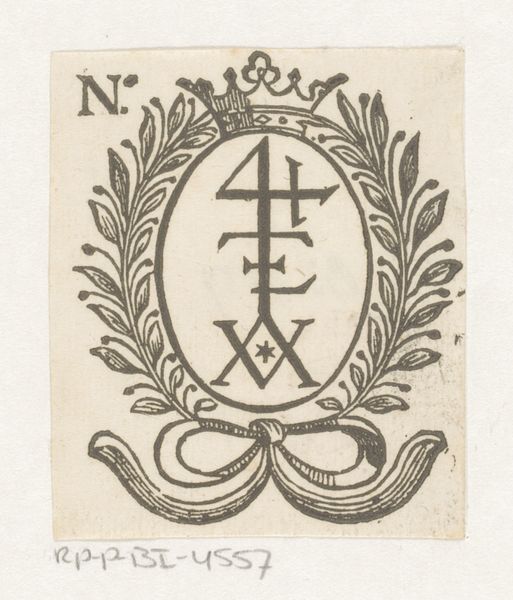
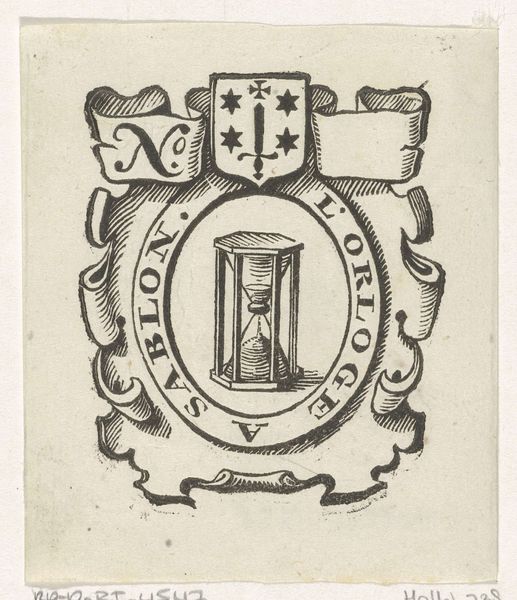
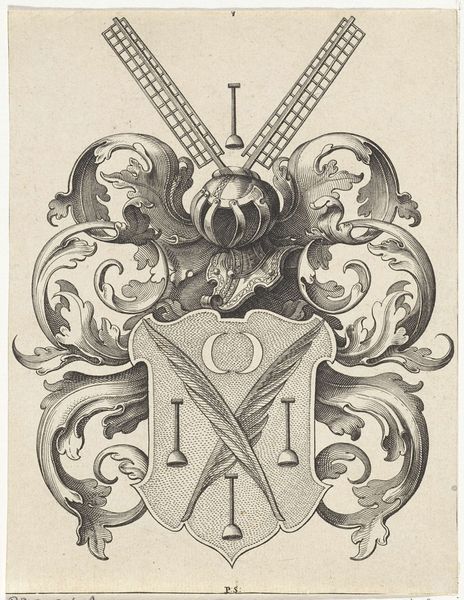
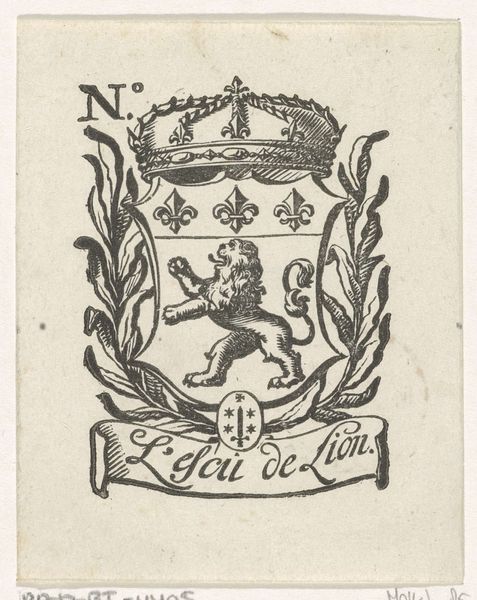
This trade card for David Barnaart, was engraved by Isaac Vincentsz van der Vinne, likely in the early 18th century in the Netherlands. Trade cards like these, circulated within a specific social and economic context. They weren’t just advertisements; they were emblems of a burgeoning commercial culture. Note the prominence of the coat of arms, a visual cue that would have resonated with notions of status and lineage. The central image of combs, alongside the name "De Kam" or "The Comb," points directly to Barnaart's trade. These weren't mere functional objects, but symbols of personal grooming and social presentation. Historical records, like guild documents and trade directories, would shed light on the social standing of merchants like Barnaart. Examining the visual language of these cards reveals how images construct meaning within a society shaped by commerce and consumption. The role of institutions like guilds in regulating trade is also key to understanding how art served as a bridge between commerce and culture.
Comments
No comments
Be the first to comment and join the conversation on the ultimate creative platform.
 Collect
 React
React Comment
More like this