About this artwork
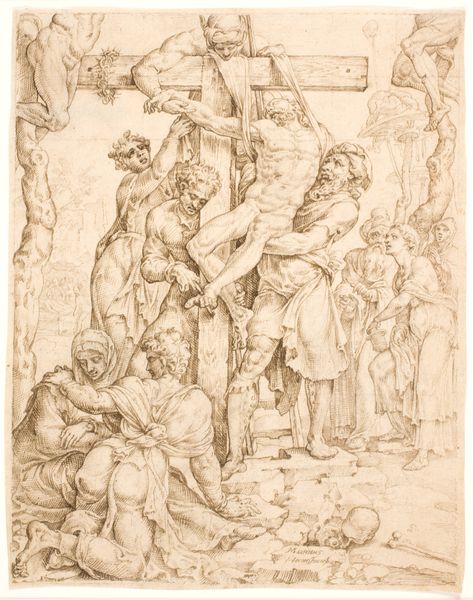
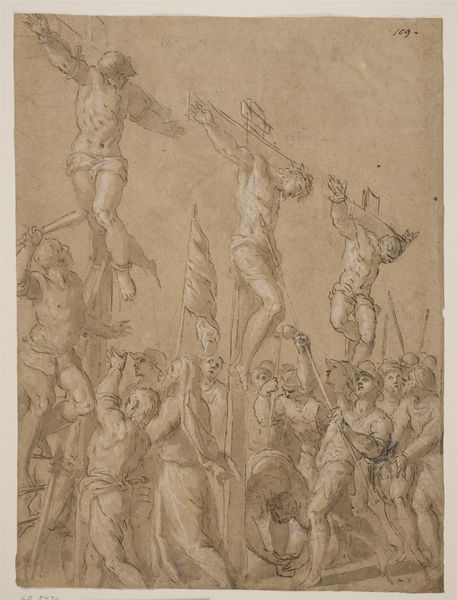
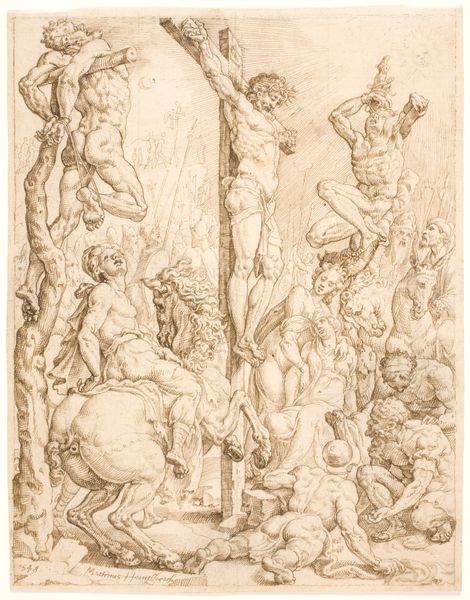
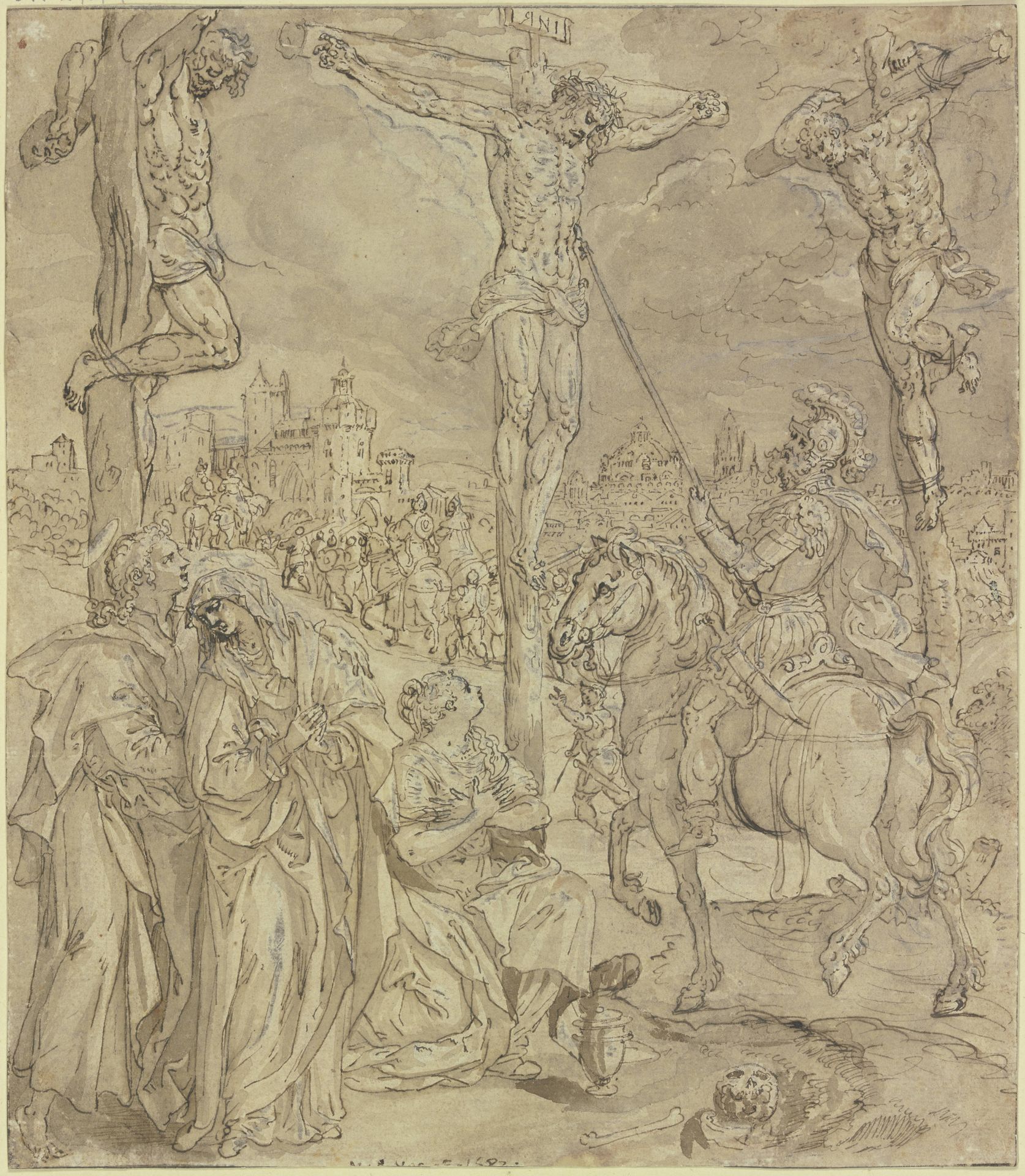
This drawing, "Crucifixion of Christ, Longinus Piercing Christ's Side," was created by Maarten de Vos, likely in Antwerp, sometime in the late 16th century, a period of intense religious and political turmoil in the Netherlands. De Vos translates a biblical scene through the visual codes of his time. Notice how Longinus, the Roman soldier, is rendered in contemporary armor atop a majestic horse, a symbol of authority. The city in the background, with its soaring towers, could represent Jerusalem, but it also bears a resemblance to the urban landscapes of the Netherlands. The presence of the bones in the foreground might remind the viewer of the ever present threat of death. How might the image have been read in a culture where public executions were an everyday occurrence? To fully understand the artwork, we might consult religious texts, historical accounts of Antwerp, and studies of print culture in the Low Countries. The meaning of art is never fixed, but contingent on its social and institutional context.
Kreuzigung Christi, Longinus sticht Christus in die Seite


Artwork details
- Medium
- drawing, ink
- Location
- Städel Museum
- Copyright
- Public Domain
Tags
drawing
figuration
11_renaissance
jesus-christ
ink
13_16th-century
history-painting
Comments
Be the first to share your thoughts about this work.
About this artwork
This drawing, "Crucifixion of Christ, Longinus Piercing Christ's Side," was created by Maarten de Vos, likely in Antwerp, sometime in the late 16th century, a period of intense religious and political turmoil in the Netherlands. De Vos translates a biblical scene through the visual codes of his time. Notice how Longinus, the Roman soldier, is rendered in contemporary armor atop a majestic horse, a symbol of authority. The city in the background, with its soaring towers, could represent Jerusalem, but it also bears a resemblance to the urban landscapes of the Netherlands. The presence of the bones in the foreground might remind the viewer of the ever present threat of death. How might the image have been read in a culture where public executions were an everyday occurrence? To fully understand the artwork, we might consult religious texts, historical accounts of Antwerp, and studies of print culture in the Low Countries. The meaning of art is never fixed, but contingent on its social and institutional context.
Comments
Be the first to share your thoughts about this work.