About this artwork
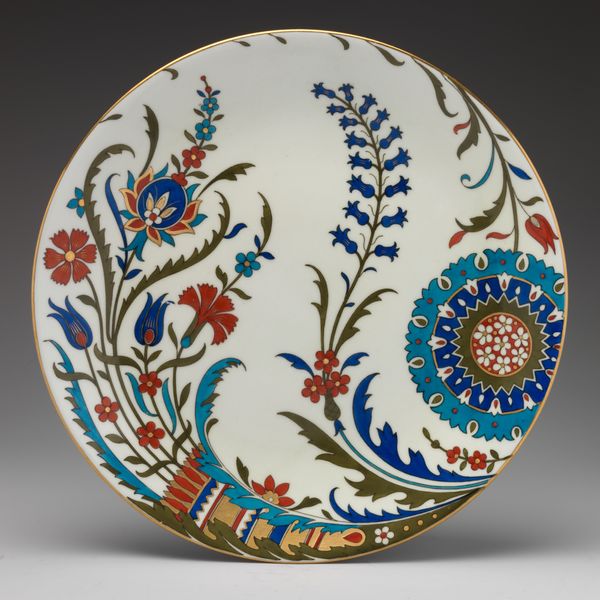
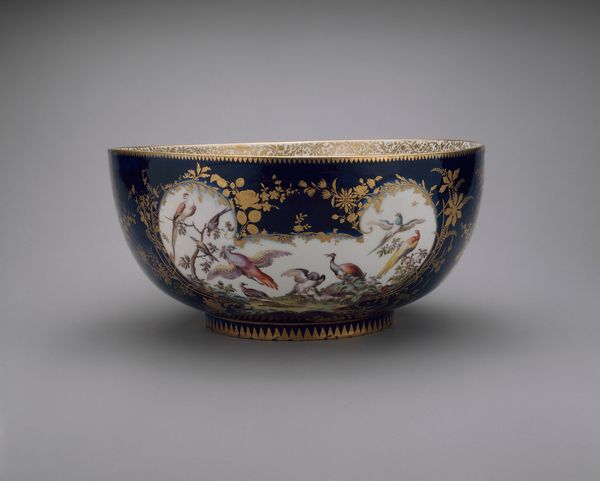
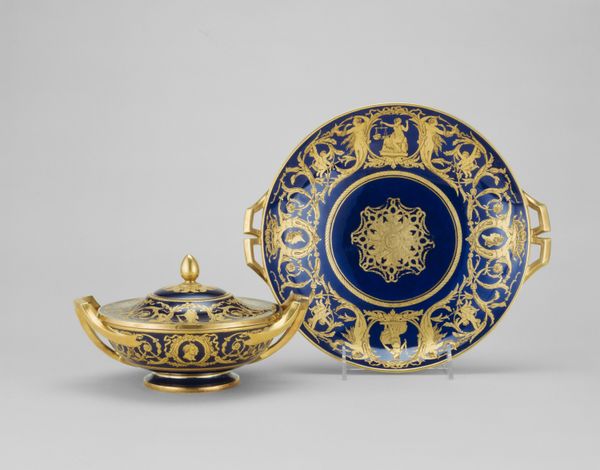
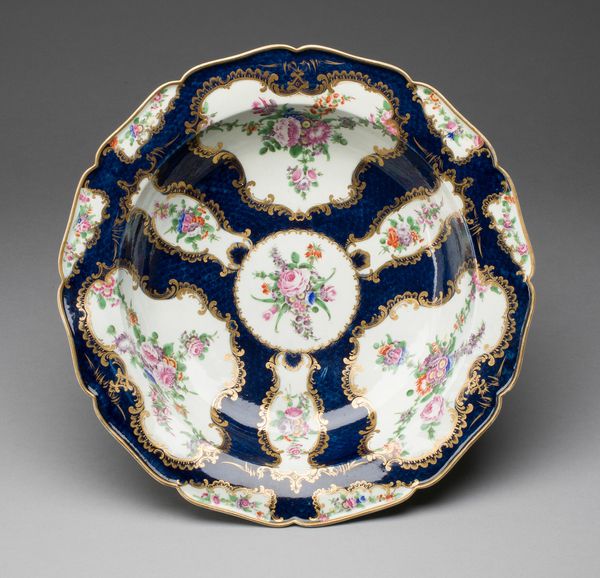
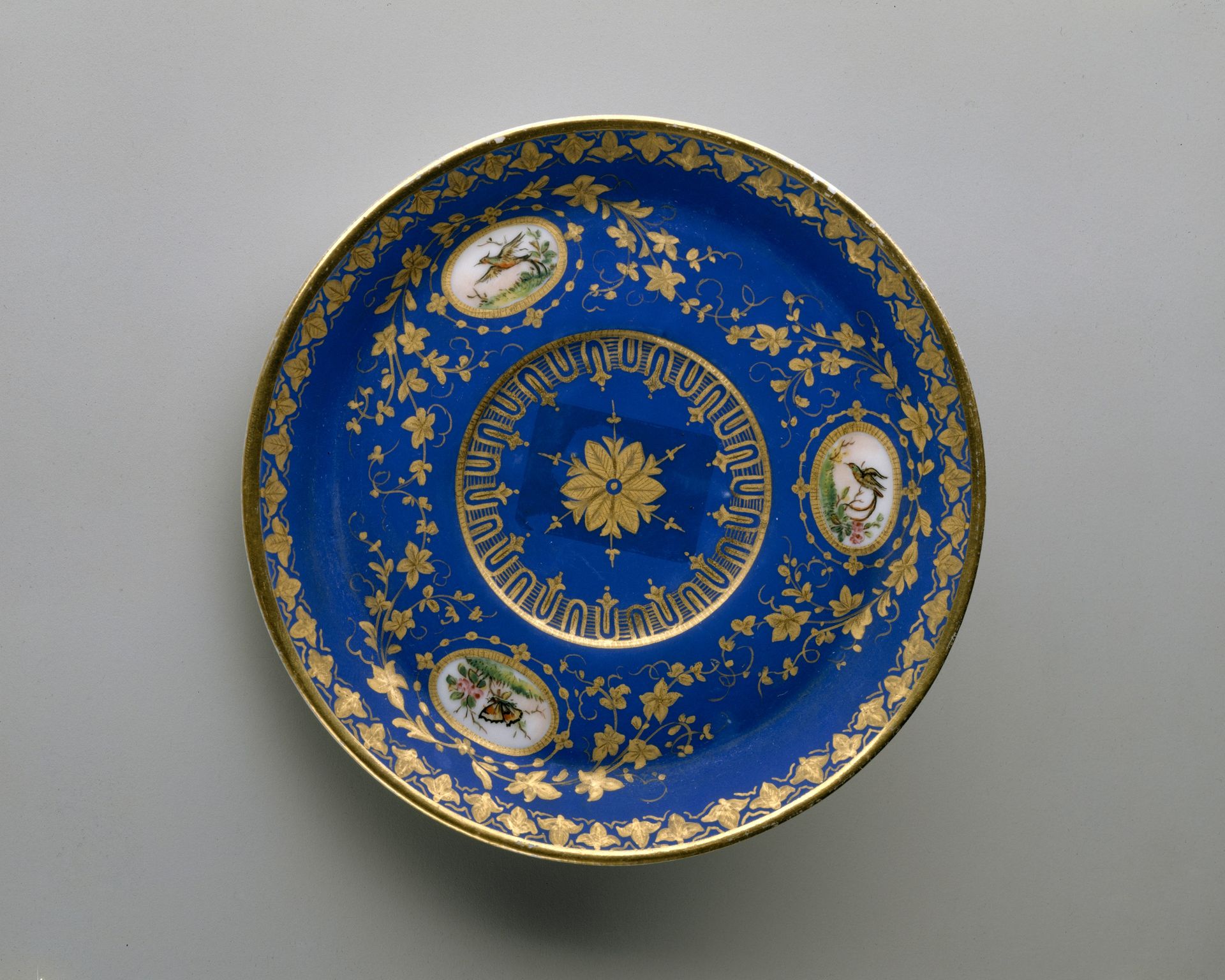
This saucer was crafted by the Union Porcelain Works, featuring an elaborate arrangement of golden floral motifs against a rich blue backdrop. The gold leaf, intertwined with images of birds and insects, evokes a sense of nature's opulence. The central flower is an ancient symbol, seen across cultures from Mesopotamia to the Renaissance. Its radiating petals mirror the sun, embodying enlightenment and cyclical rebirth. Note, for example, how a similar rosette appears in Minoan frescoes, acting as a focal point of spiritual and decorative power. The birds, often messengers between realms, have journeyed across art history. From Egyptian soul-birds to Christian symbols of the Holy Spirit, their presence taps into our collective unconscious, where flight represents aspiration and transcendence. The recurring motifs are not static; they are dynamic carriers of memory, constantly reshaped by cultural forces. They speak to our psyche, echoing primal desires for harmony and understanding, demonstrating the continuous, cyclical progression of symbols, evolving and taking on new meanings across time.
Saucer 1876

Union Porcelain Works
1863 - 1922
The Metropolitan Museum of Art
Metropolitan Museum of Art, New York, NYArtwork details
- Location
- Metropolitan Museum of Art, New York, NY
- Copyright
- Public Domain
Comments
No comments
About this artwork
This saucer was crafted by the Union Porcelain Works, featuring an elaborate arrangement of golden floral motifs against a rich blue backdrop. The gold leaf, intertwined with images of birds and insects, evokes a sense of nature's opulence. The central flower is an ancient symbol, seen across cultures from Mesopotamia to the Renaissance. Its radiating petals mirror the sun, embodying enlightenment and cyclical rebirth. Note, for example, how a similar rosette appears in Minoan frescoes, acting as a focal point of spiritual and decorative power. The birds, often messengers between realms, have journeyed across art history. From Egyptian soul-birds to Christian symbols of the Holy Spirit, their presence taps into our collective unconscious, where flight represents aspiration and transcendence. The recurring motifs are not static; they are dynamic carriers of memory, constantly reshaped by cultural forces. They speak to our psyche, echoing primal desires for harmony and understanding, demonstrating the continuous, cyclical progression of symbols, evolving and taking on new meanings across time.
Comments
No comments