c. 1733
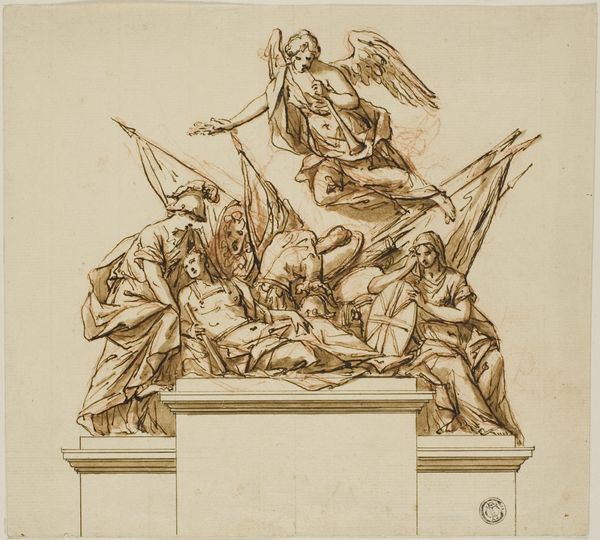
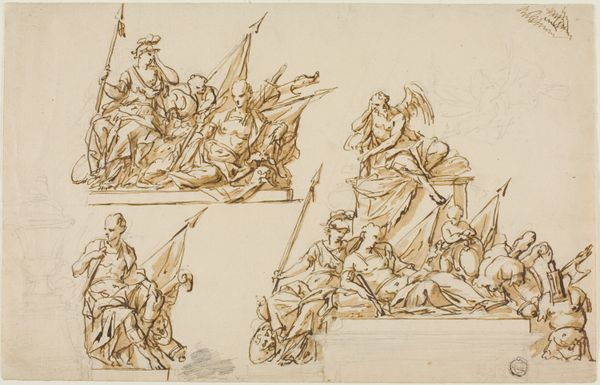
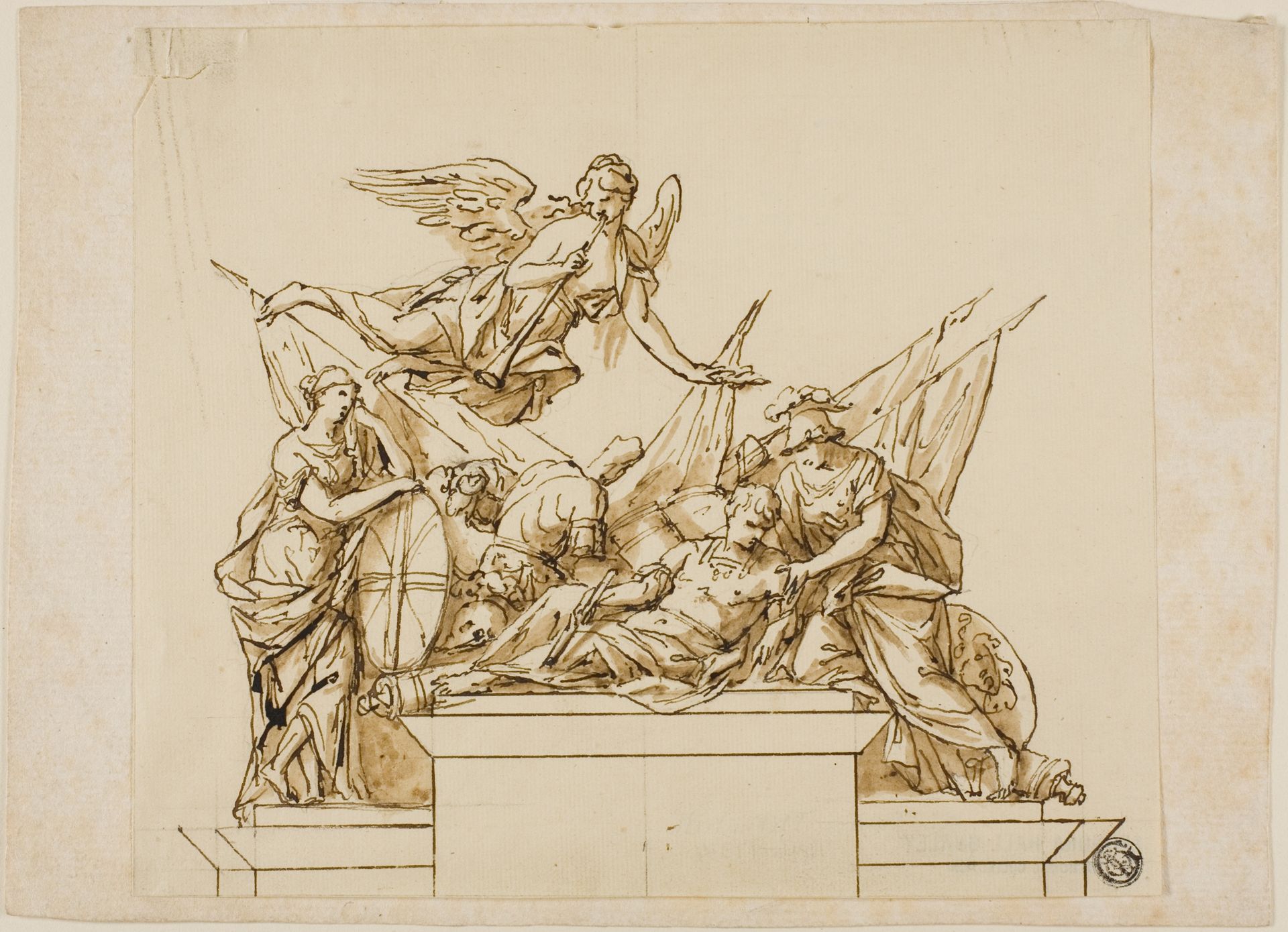
Unexecuted Design for the Monument to the First Duke of Marlborough


Listen to curator's interpretation
Curatorial notes
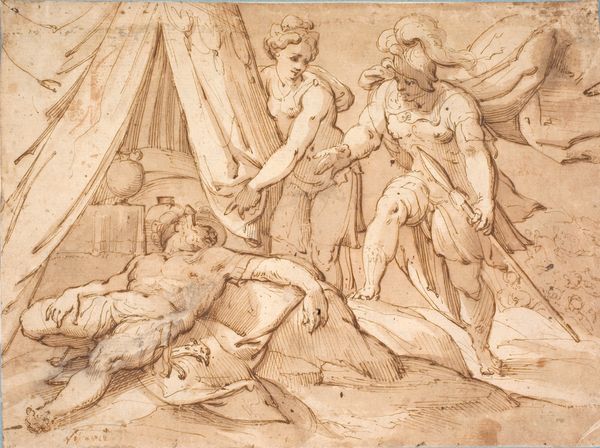
Editor: This is "Unexecuted Design for the Monument to the First Duke of Marlborough," a drawing from around 1733 by John Michael Rysbrack. It's a striking piece, and what stands out is the elaborate staging. I mean, just look at the almost operatic drama of the figures. What's your take on this? Curator: It's fascinating precisely because it *wasn't* executed. Monument designs like these reflect the evolving relationship between patrons, artists, and the public sphere. The Duke was, of course, a celebrated military figure, but the sheer grandeur proposed here indicates more than just honoring an individual. It's projecting power and legitimizing the Whig establishment, wouldn’t you agree? Editor: That’s an interesting perspective. So, you're saying it's less about Marlborough himself and more about using him as a symbol for political messaging? Curator: Precisely! Consider the allegorical figures: Fame, reclining figure of Marlborough, classical virtues... all carefully positioned to construct a particular narrative. Now, why do you think it was never realized? Editor: Hmm, maybe the political winds shifted? Or perhaps the cost was prohibitive? It feels like this design is about immortalizing the Duke in a way that aligns him with something almost divinely sanctioned, you know, with Fame crowning him. Curator: Exactly. The politics of imagery are always shifting, and public sentiment is never guaranteed. Monumental projects serve a critical function, so why would this work be relegated as unexecuted design and sit in a museum rather than take up its permanent place for public viewership? Editor: It gives you a glimpse into the social and political forces at play in shaping public memory. I never considered that it might say more about those forces than Marlborough himself! Curator: And that's the key— art doesn't exist in a vacuum. Exploring these 'failed' projects often illuminates more about the socio-political context than the completed ones.