painting, oil-paint
#
portrait
#
art-deco
#
painting
#
oil-paint
#
mixed mediaart
#
figuration
#
cityscape
#
mixed media
#
modernism
Copyright: Jose de Almada-Negreiros,Fair Use
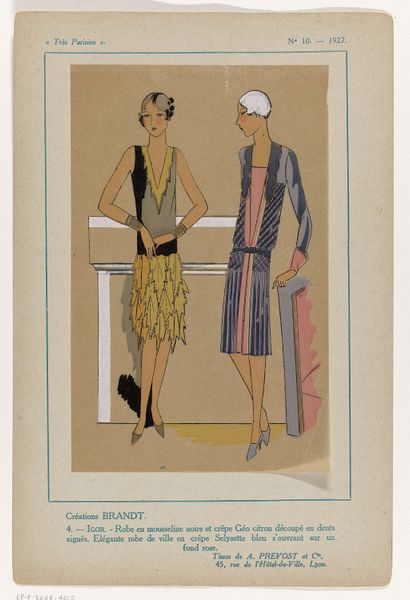
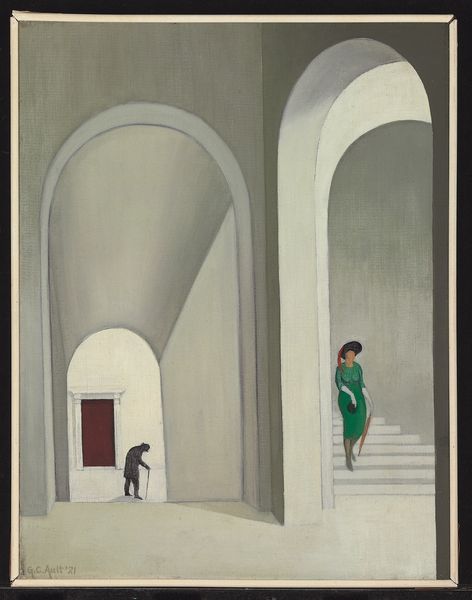
Curator: This is "Black and white", a captivating 1929 painting by Jose de Almada-Negreiros. What's your initial response to it? Editor: My eye goes right to the materiality of the painting itself. I wonder what kind of pigments he was working with and what influenced the palette. Curator: Almada-Negreiros painted with oils. I see this painting as something of a riddle wrapped in elegance. There's a haunting, almost melancholy quality about it. The women seem confined, though the cityscape behind them suggests possibility. Editor: Confined is the perfect word. Those vertical bars read as more of a barrier. It feels significant they're leaning on a structure built, and thus made available through particular social means and access to production, as much as for support as they are to keep the residents inside a construct or out in the world. It makes you wonder if Almada-Negreiros was concerned about societal confines in his period. Curator: Yes! And then the almost dreamlike rendering. What feels very modern and clean with strong lines in their features meets this very soft atmospheric and emotional aura around the women. Their world is not real, or perhaps just unreachable. It's so strange. Do you see Art Deco and Modernist styles in its architecture? Editor: It does indeed; seeing it makes me reflect upon those very movements: what type of labor was encouraged and the place those types of styles held within production itself, and how it can be perceived through those figures' positioning and stature. I have never felt this type of melancholy you have expressed toward the work until now, it might just be how material changes you. Curator: Material informs experience and understanding! Almada-Negreiros invites us to weave our own stories into their tableau. It's as though each viewing offers a new layer of understanding and a whisper of shared, though untold, narratives. What final reflection do you have about the work? Editor: Its display creates room for reflecting about the role materials take on display when examining such societal impacts of work like that. And that art in that sense continues the cycle by holding the viewer accountable for partaking. Curator: The echoes of society! A haunting reminder of those who construct the material around us. Thank you!
Comments
No comments
Be the first to comment and join the conversation on the ultimate creative platform.
 Collect
 React
React Comment
More like this