About this artwork
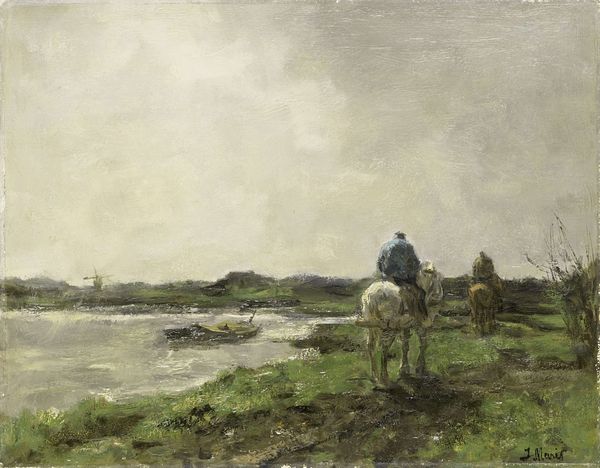
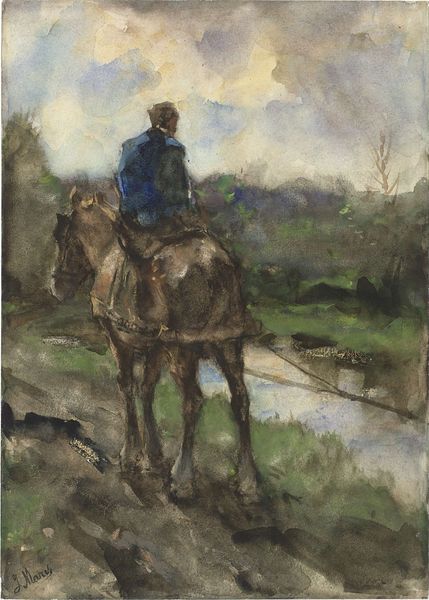
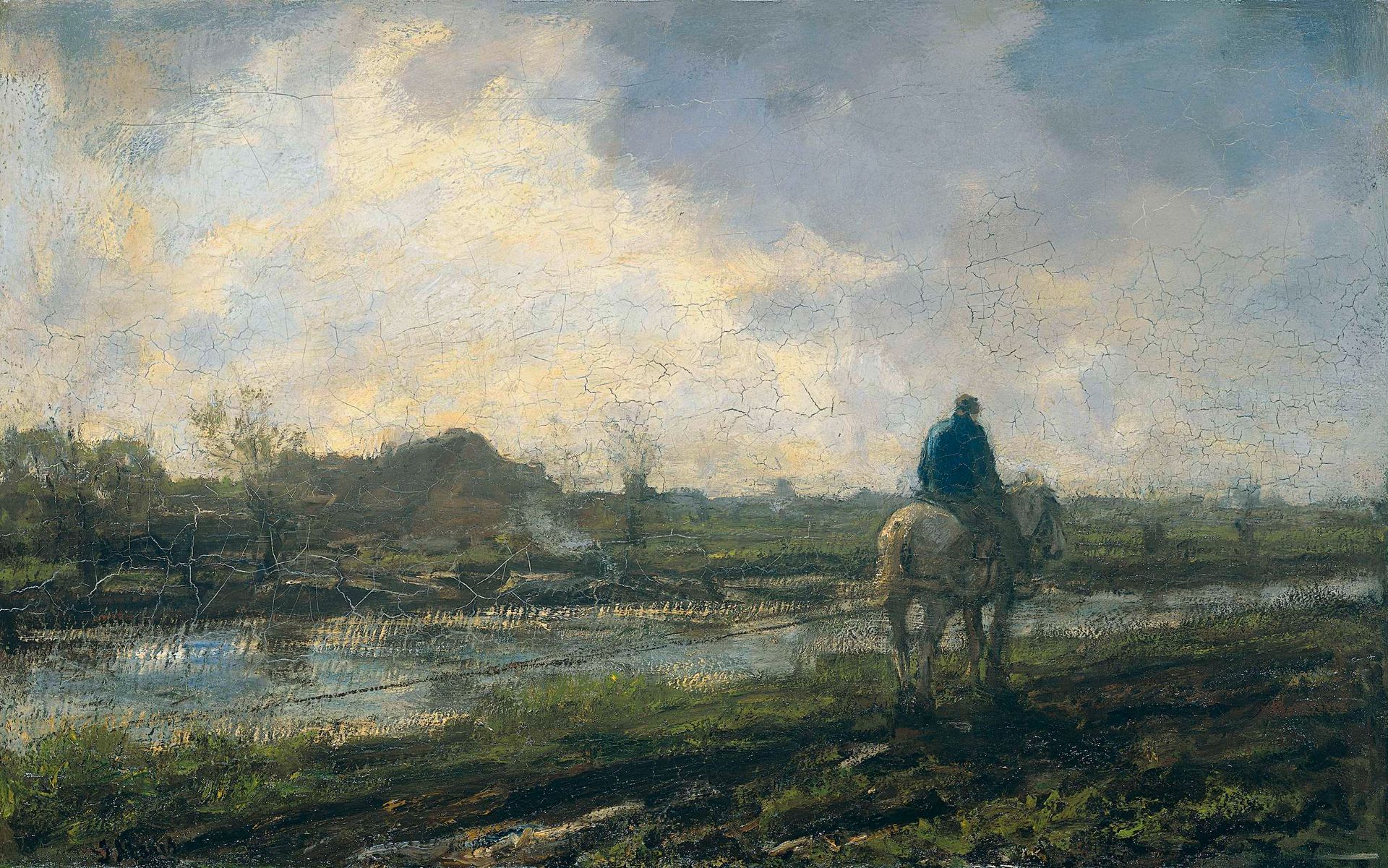
Jacob Maris painted Jaagpad using oil on canvas, capturing a serene yet melancholic Dutch landscape. Born in 1837, Maris was a key figure in the Hague School, a movement known for its realistic depictions of daily life and the Dutch countryside. This painting invites us to reflect on the relationship between humanity and nature. A lone figure on horseback is seen from the back, pulling a barge along a canal. The overcast sky and muted colors evoke a sense of solitude and introspection. During the late 19th century, industrialization was rapidly changing the Dutch landscape. Artists like Maris sought to preserve the beauty of the traditional way of life, even as it was disappearing. The artist's focus on the quiet, unassuming moments of rural existence challenges traditional heroic narratives. Instead, we are presented with a scene that celebrates the dignity of labor and the simple beauty of the natural world, creating a poignant commentary on the changing social and economic landscape of the time.

Artwork details
- Dimensions
- height 50 cm, width 79.5 cm, depth 11.5 cm, weight 17 kg
- Location
- Rijksmuseum
- Copyright
- Rijks Museum: Open Domain
Comments
Share your thoughts
About this artwork
Jacob Maris painted Jaagpad using oil on canvas, capturing a serene yet melancholic Dutch landscape. Born in 1837, Maris was a key figure in the Hague School, a movement known for its realistic depictions of daily life and the Dutch countryside. This painting invites us to reflect on the relationship between humanity and nature. A lone figure on horseback is seen from the back, pulling a barge along a canal. The overcast sky and muted colors evoke a sense of solitude and introspection. During the late 19th century, industrialization was rapidly changing the Dutch landscape. Artists like Maris sought to preserve the beauty of the traditional way of life, even as it was disappearing. The artist's focus on the quiet, unassuming moments of rural existence challenges traditional heroic narratives. Instead, we are presented with a scene that celebrates the dignity of labor and the simple beauty of the natural world, creating a poignant commentary on the changing social and economic landscape of the time.
Comments
Share your thoughts