About this artwork
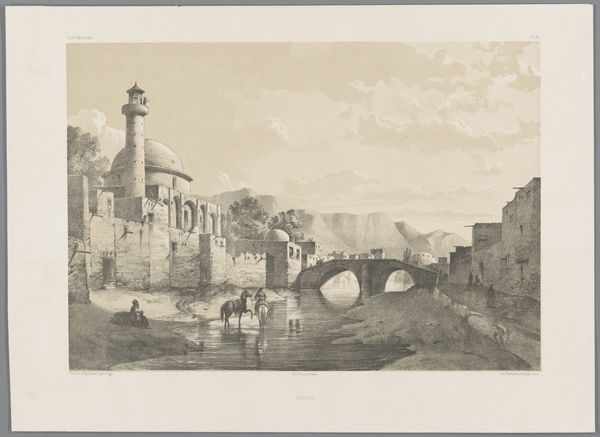
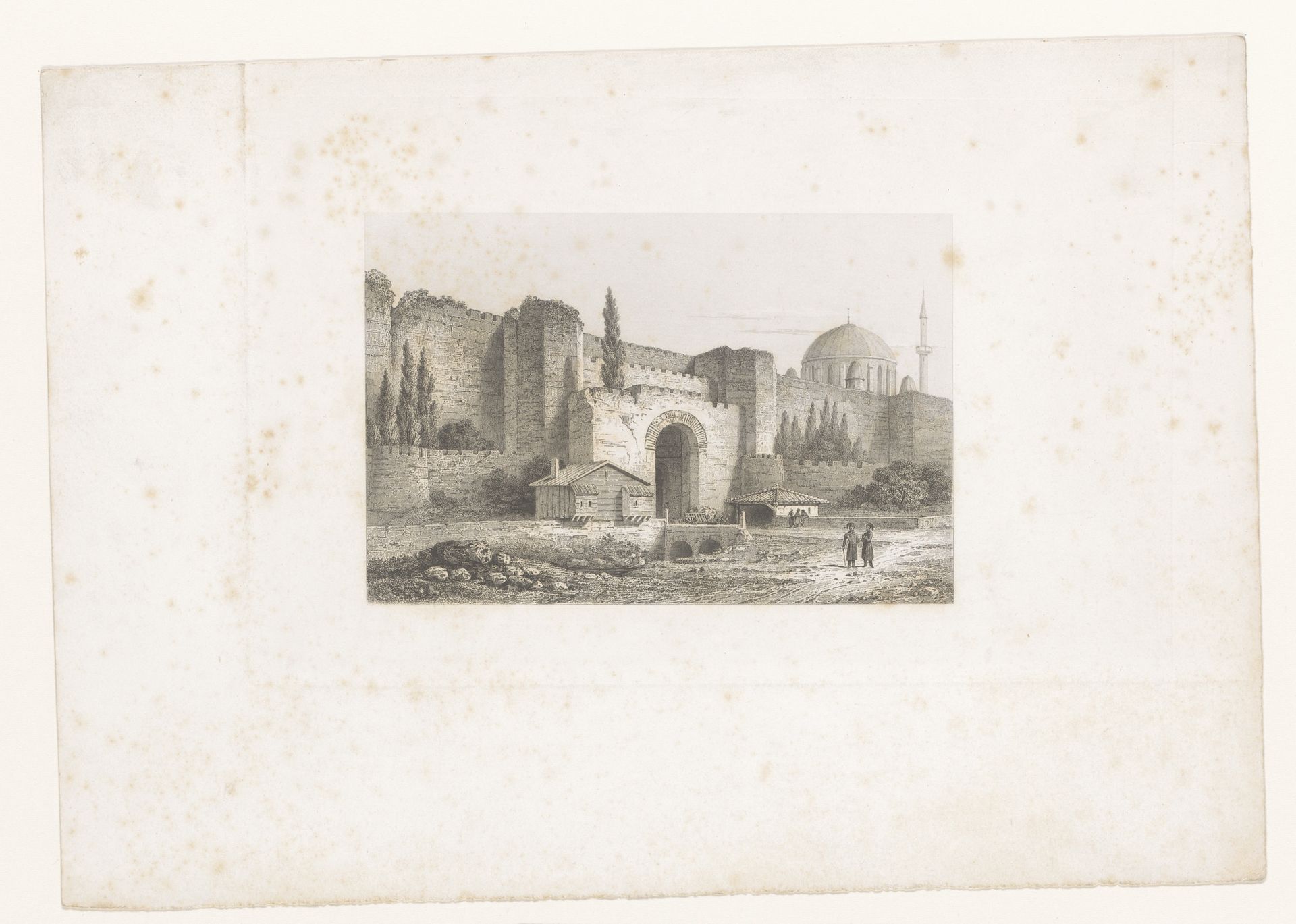
Editor: This is "Gezicht op een stadsmuur met poort en daarachter een moskee" by Auguste Numans, created sometime between 1833 and 1880. It looks like an ink print, possibly a lithograph, on aged paper. The scene is really quite beautiful, but there’s a palpable sense of decay, wouldn’t you say? What kind of narratives do you think a work like this engages with? Curator: The portrayal of urban spaces, particularly those featuring architectural landmarks like city walls and mosques, was politically charged. Works like this offered viewers a window into these spaces but also participated in shaping perceptions of these cultures and the relationship between Europe and the East. The crumbling walls you mentioned can symbolize many things – the decline of empires, the effects of time on civilization. But I would also argue they reveal a subtle power dynamic at play. Editor: Power dynamic, how so? Curator: By depicting these places as "in decay", artists from Western Europe constructed a narrative of progress with Europe at its center. It's easy to appreciate the scene’s composition, but think about how it affects public understanding of history and non-Western cultures. Who controlled the means of representation at that time, and how did this image serve the political goals? Editor: So, it’s more than just a pretty picture… it reflects the socio-political views and power structures of that era? Curator: Exactly. Numans' print should be examined not just for its aesthetic qualities but for the socio-historical narrative. Consider where such prints were displayed: How might viewing them in private collections versus public exhibitions shape the viewer’s understanding of Ottoman history? Editor: This has certainly changed how I view the print. I'll pay more attention to the cultural and political implications. Curator: Likewise, revisiting images with a deeper understanding enriches their meanings and historical dialogues.
Gezicht op een stadsmuur met poort en daarachter een moskee
1833 - 1880

Artwork details
- Dimensions
- height 216 mm, width 310 mm
- Copyright
- Rijks Museum: Open Domain
Tags
photo of handprinted image
aged paper
toned paper
light pencil work
ink paper printed
parchment
light coloured
white palette
fading type
watercolor
Comments
Be the first to share your thoughts about this work.
About this artwork
Editor: This is "Gezicht op een stadsmuur met poort en daarachter een moskee" by Auguste Numans, created sometime between 1833 and 1880. It looks like an ink print, possibly a lithograph, on aged paper. The scene is really quite beautiful, but there’s a palpable sense of decay, wouldn’t you say? What kind of narratives do you think a work like this engages with? Curator: The portrayal of urban spaces, particularly those featuring architectural landmarks like city walls and mosques, was politically charged. Works like this offered viewers a window into these spaces but also participated in shaping perceptions of these cultures and the relationship between Europe and the East. The crumbling walls you mentioned can symbolize many things – the decline of empires, the effects of time on civilization. But I would also argue they reveal a subtle power dynamic at play. Editor: Power dynamic, how so? Curator: By depicting these places as "in decay", artists from Western Europe constructed a narrative of progress with Europe at its center. It's easy to appreciate the scene’s composition, but think about how it affects public understanding of history and non-Western cultures. Who controlled the means of representation at that time, and how did this image serve the political goals? Editor: So, it’s more than just a pretty picture… it reflects the socio-political views and power structures of that era? Curator: Exactly. Numans' print should be examined not just for its aesthetic qualities but for the socio-historical narrative. Consider where such prints were displayed: How might viewing them in private collections versus public exhibitions shape the viewer’s understanding of Ottoman history? Editor: This has certainly changed how I view the print. I'll pay more attention to the cultural and political implications. Curator: Likewise, revisiting images with a deeper understanding enriches their meanings and historical dialogues.
Comments
Be the first to share your thoughts about this work.