1591
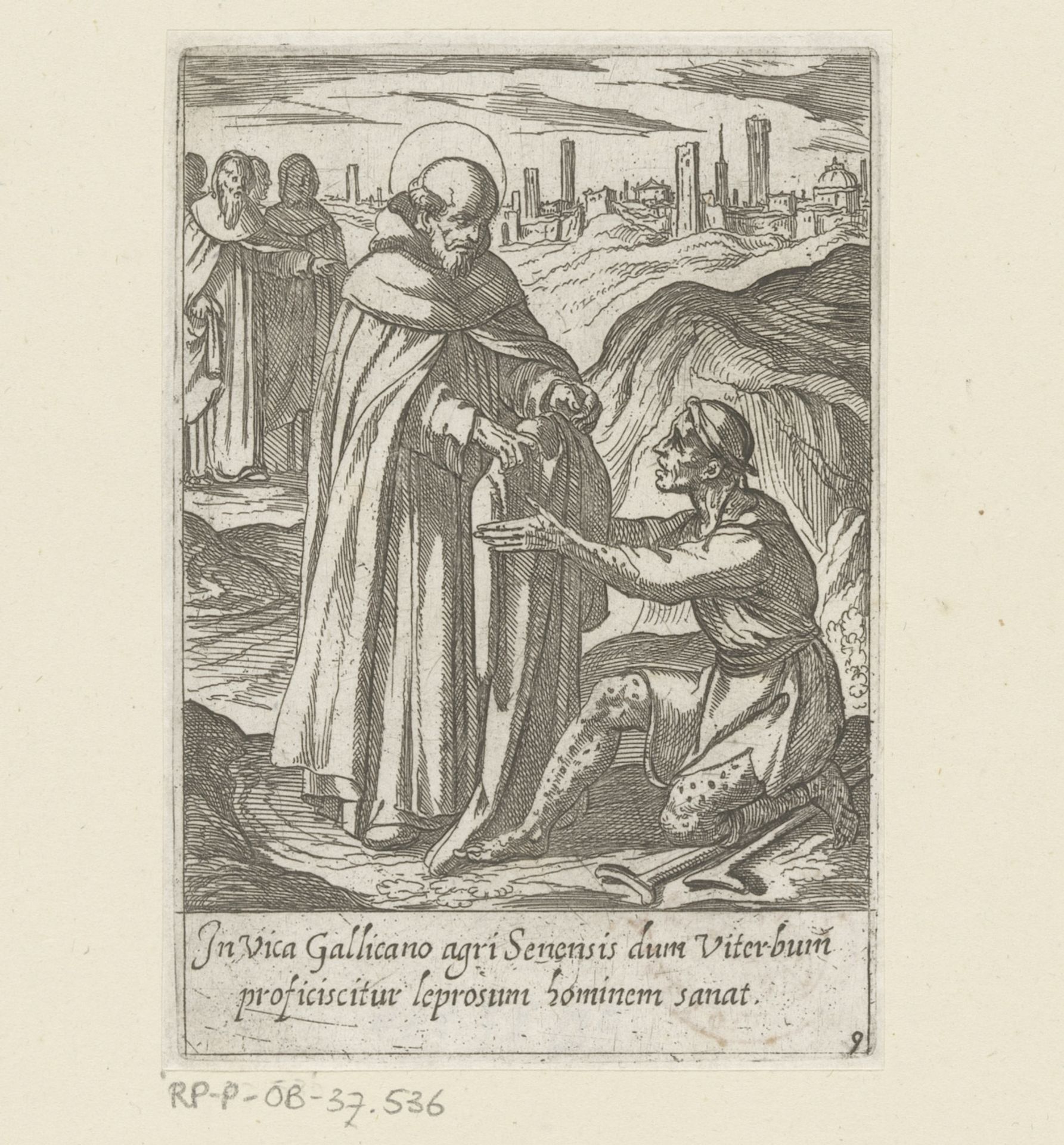
De heilige Philippus geneest een leproos

Antonio Tempesta
1555 - 1630Location
RijksmuseumListen to curator's interpretation
Curatorial notes
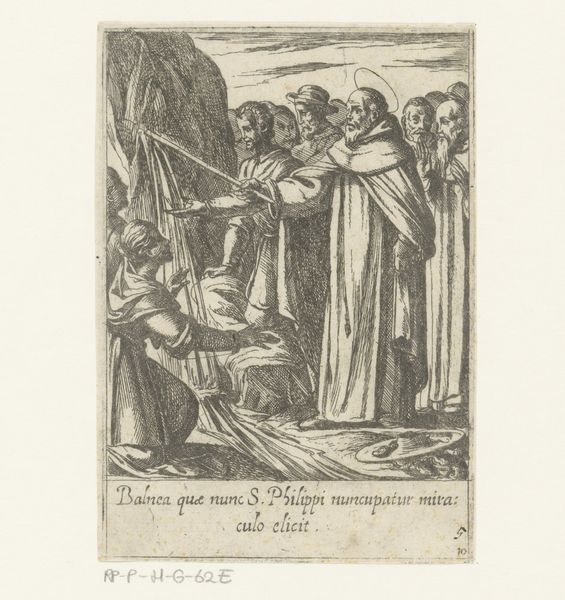
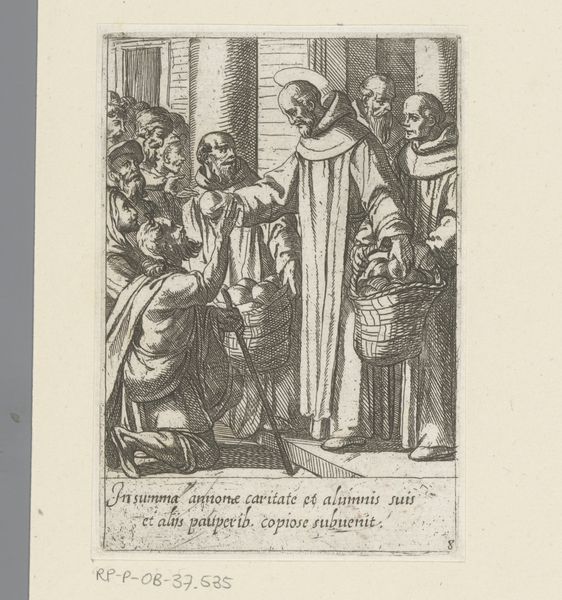
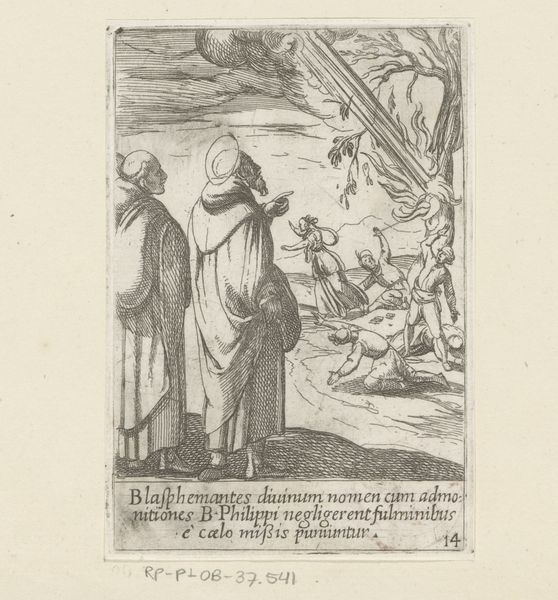
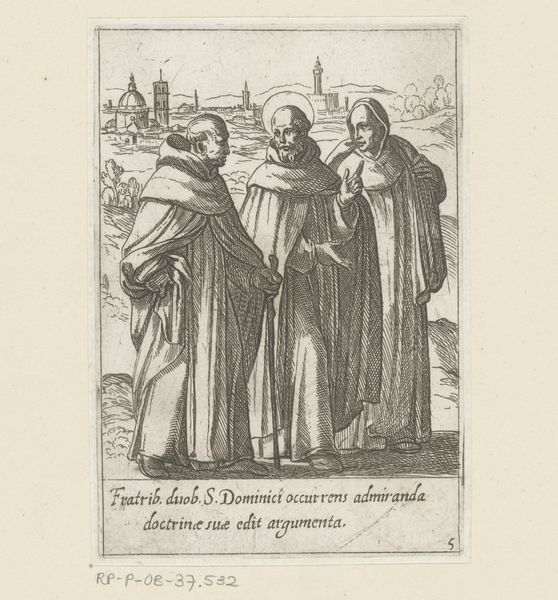
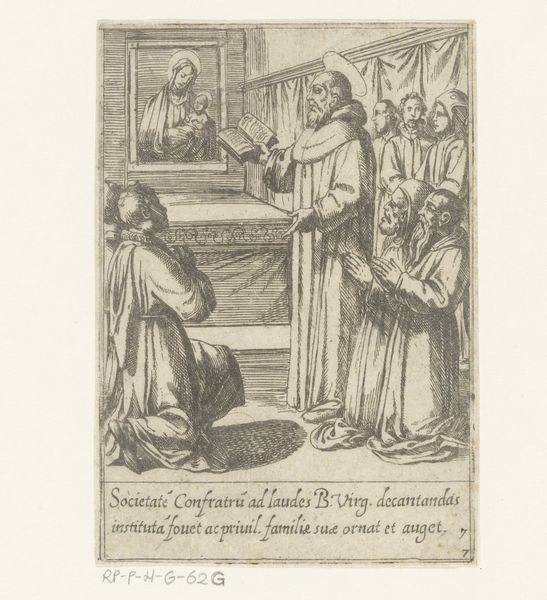
Antonio Tempesta made this print, depicting Saint Phillip healing a leper, around the turn of the 17th century. It is an etching, meaning the artist covered a metal plate with a wax resist, drew this image into the wax, and then submerged the plate in acid. The acid bit into the exposed metal, leaving behind an impression that could then be inked and printed. The relatively fine lines of the print are characteristic of this process, allowing for considerable detail. This was crucial for Tempesta, who specialized in precisely rendered battle scenes. Notice the incredible detail in the landscape, and the contrast between the smoothness of Phillip’s robes and the leper’s skin. Etching was a relatively recent technology at this time. The wide circulation of prints allowed artists like Tempesta to reach broader audiences, democratizing images for those who couldn't afford paintings. In this way, the print participates in a larger shift in art history, where the status of the ‘unique’ artwork is tested by the power of reproduction.