About this artwork
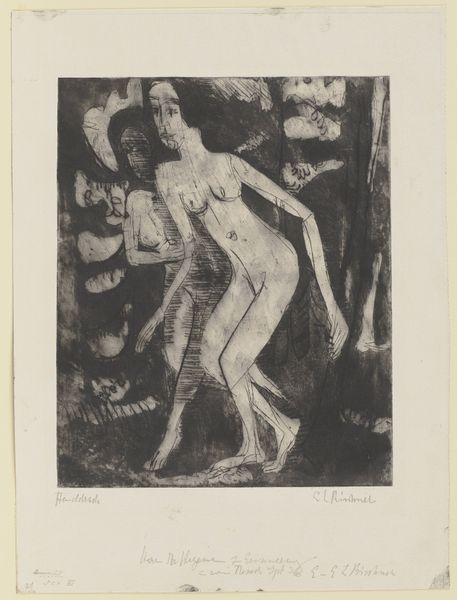
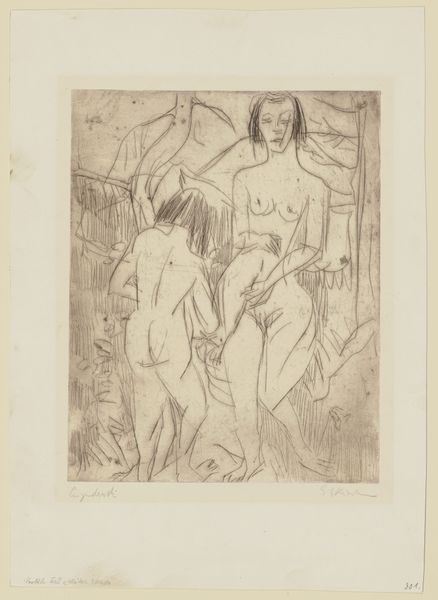
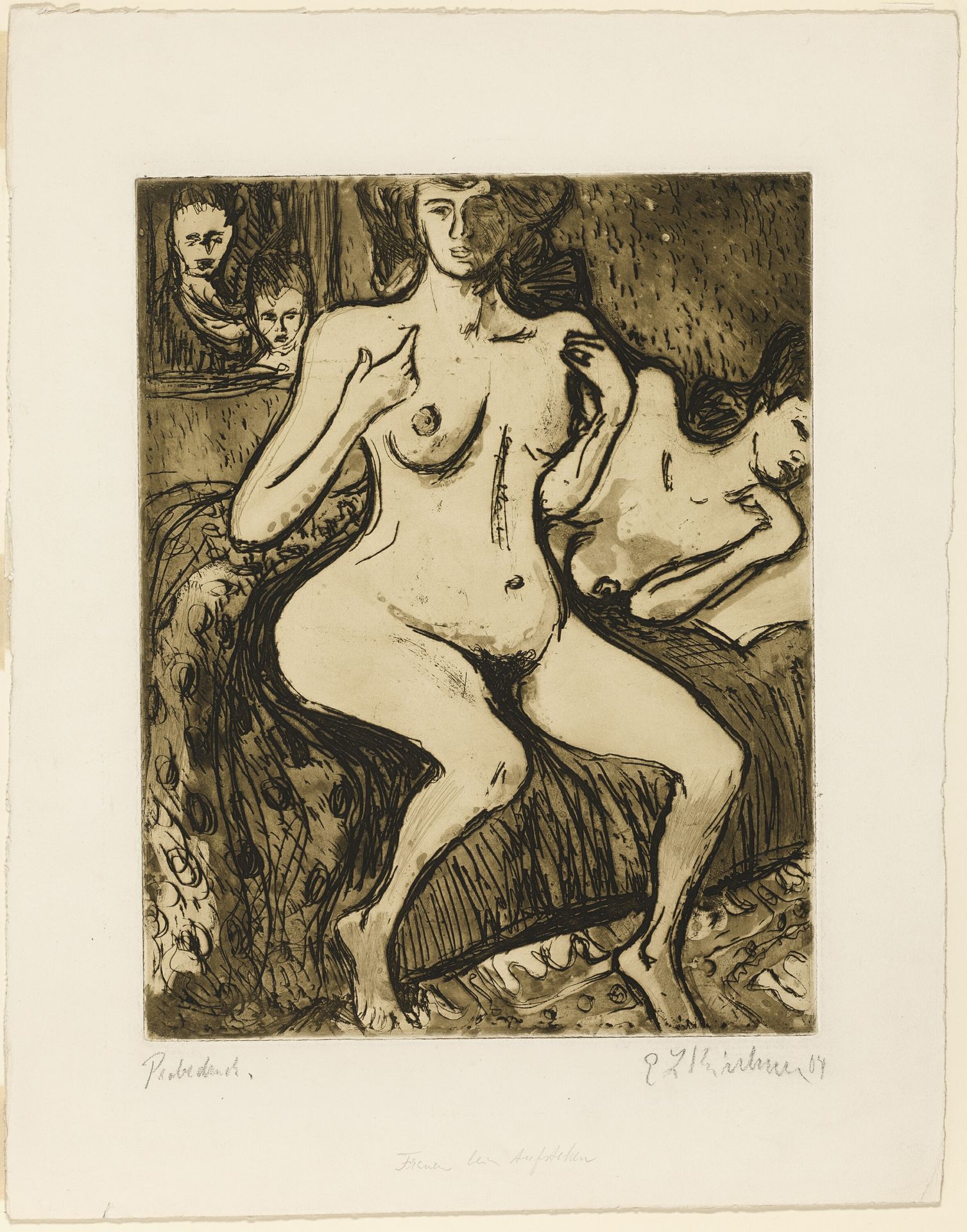
Ernst Ludwig Kirchner made this print, Two Sisters, with etching and drypoint. It has such a raw, immediate feel to it. You can almost see him dragging the drypoint needle across the plate. Look at the textures he’s created! The cross-hatching behind the reclining sister feels almost chaotic, a jumble of lines. But then, there are these more deliberate, flowing lines that define the figures themselves. It's like he's mapping their energy, their presence in the space. And, the faces peering in from the top left corner are so strange. Kirchner was part of Die Brücke, a group of artists who were really pushing the boundaries of expression. He’s definitely an artist that feels connected to Munch, or maybe even later to someone like Francis Bacon, in how he gets at these uncomfortable emotional states. Ultimately, art is an ongoing conversation, and Kirchner’s work continues to speak to us in a way that’s both unsettling and beautiful.
Two Sisters 1908


Artwork details
- Medium
- drawing, print, etching, paper
- Dimensions
- 396 × 308 mm (plate); 545 × 430 mm (sheet)
- Location
- The Art Institute of Chicago
- Copyright
- Public Domain
Tags
portrait
drawing
etching
caricature
figuration
paper
pencil drawing
expressionism
nude
Comments
No comments
About this artwork
Ernst Ludwig Kirchner made this print, Two Sisters, with etching and drypoint. It has such a raw, immediate feel to it. You can almost see him dragging the drypoint needle across the plate. Look at the textures he’s created! The cross-hatching behind the reclining sister feels almost chaotic, a jumble of lines. But then, there are these more deliberate, flowing lines that define the figures themselves. It's like he's mapping their energy, their presence in the space. And, the faces peering in from the top left corner are so strange. Kirchner was part of Die Brücke, a group of artists who were really pushing the boundaries of expression. He’s definitely an artist that feels connected to Munch, or maybe even later to someone like Francis Bacon, in how he gets at these uncomfortable emotional states. Ultimately, art is an ongoing conversation, and Kirchner’s work continues to speak to us in a way that’s both unsettling and beautiful.
Comments
No comments