c. 1840
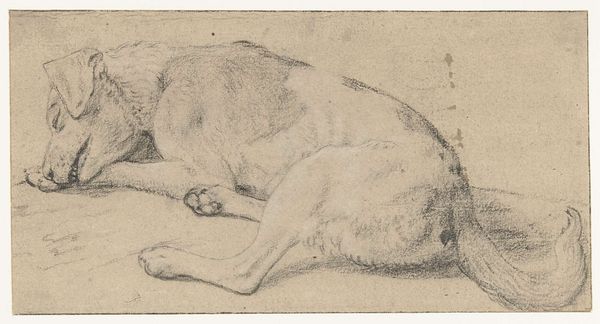
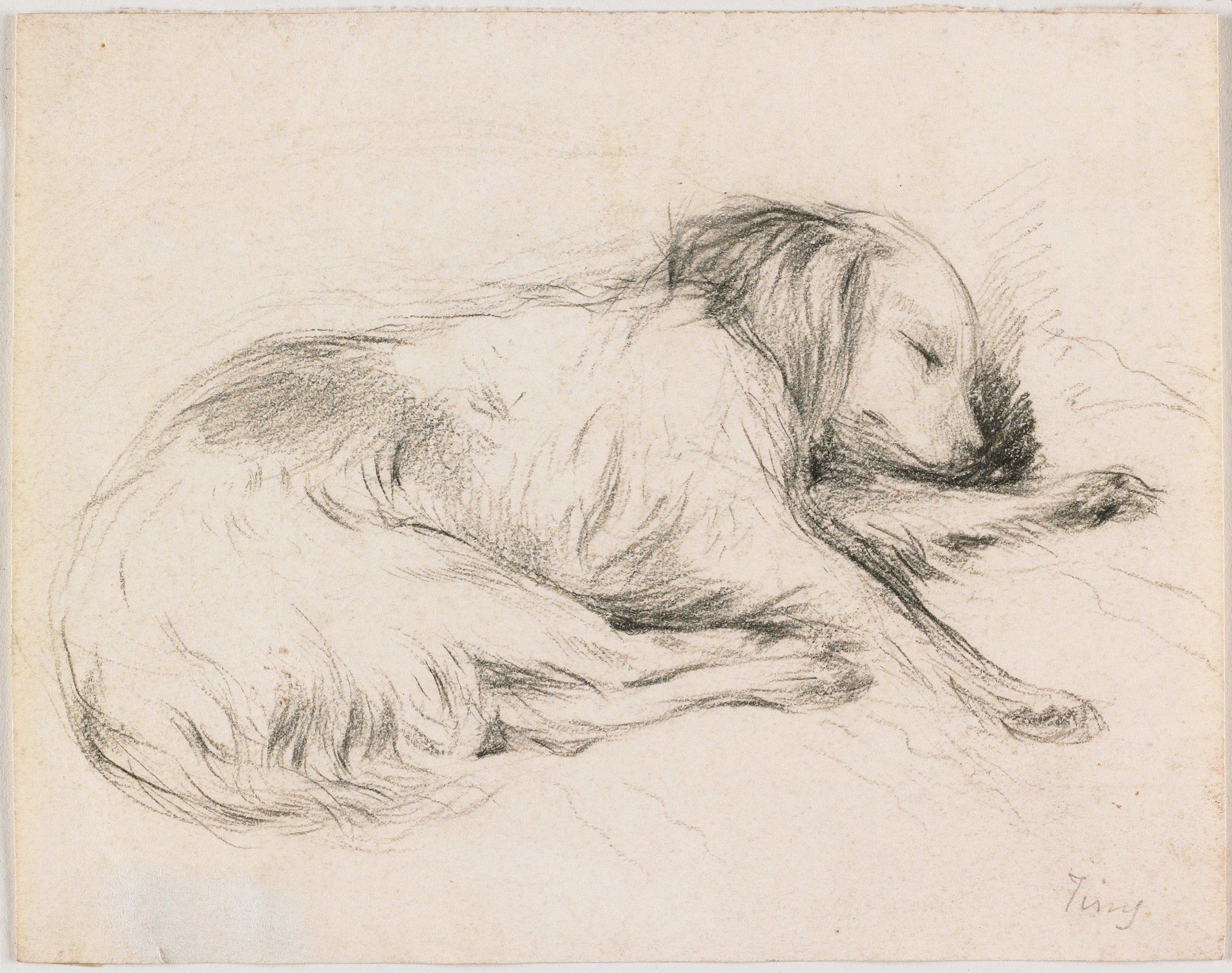
Sleeping Dog


Listen to curator's interpretation
Curatorial notes
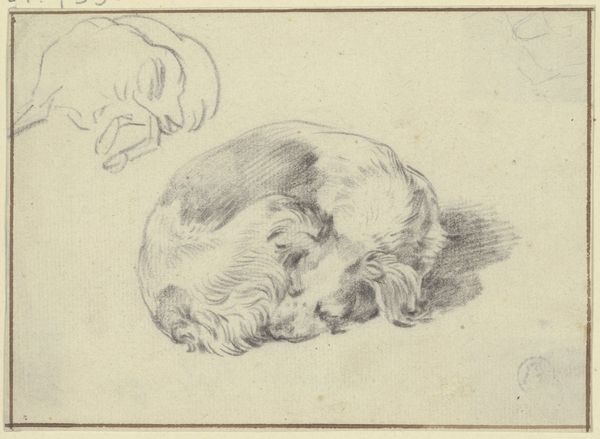
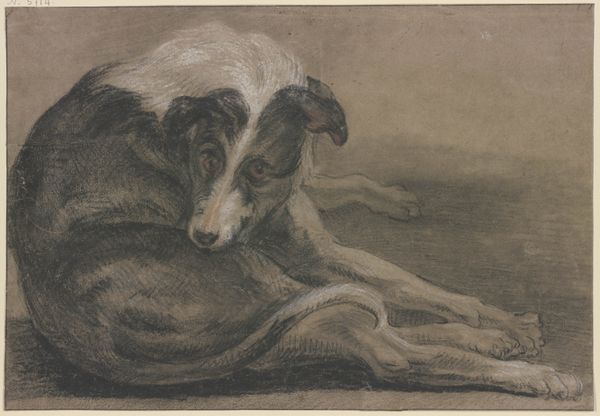
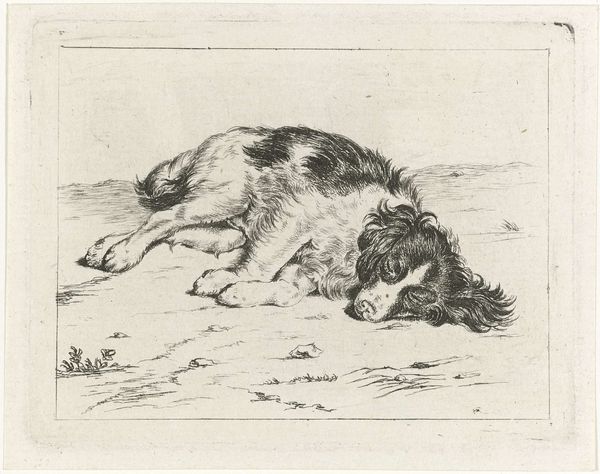
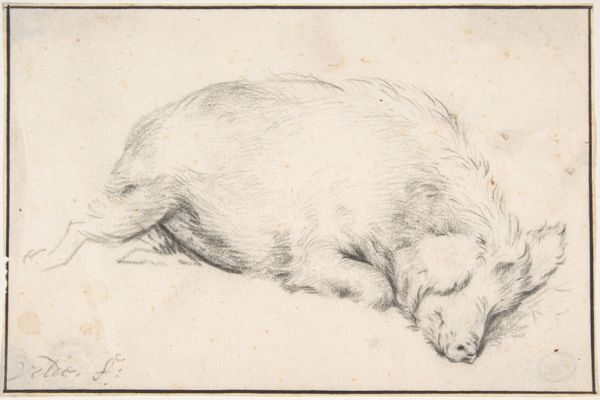
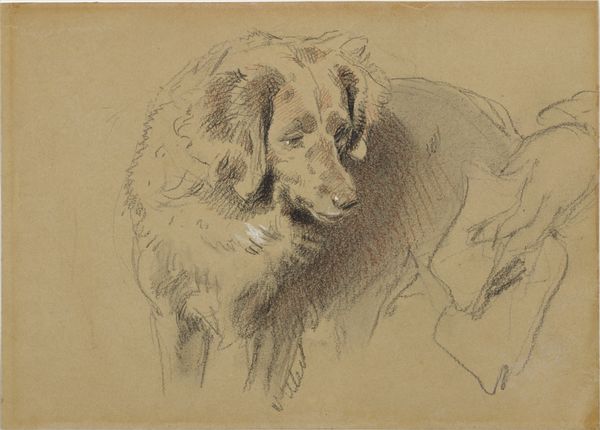
Editor: We’re looking at "Sleeping Dog," a graphite drawing from around 1840. The artist is currently listed as anonymous, which is already intriguing! It has a tenderness that I wasn't expecting, actually. How do you interpret this work? Curator: That tenderness you identify is critical. Consider how depictions of animals, especially dogs, have often reflected societal values and power dynamics. What does it mean to see a dog depicted in such a vulnerable state, seemingly without any imposed purpose or symbolic weight beyond its own being? Is it a portrait, an allegory, or social commentary? Editor: I see what you mean. Most of the historical animal portraits are meant to display their importance such as hunting dogs etc, rather than seeing a glimpse of their inner life like here... Does the anonymity of the artist impact the reading, perhaps? Curator: Absolutely. The absence of a known author decenters the traditional art historical narrative. It prompts us to consider whose perspectives are often marginalized and how social and cultural values shape visibility and representation. Was this perhaps done by a woman? By someone outside the traditional art world? How does this shift our understanding? Editor: That's fascinating, this wasn't a point I considered at first. It makes me think about the kinds of stories we usually prioritize within art history, too, and how something so quiet as a sleeping dog might actually challenge those norms, questioning these notions. Curator: Exactly. Art isn’t created in a vacuum. By exploring these undercurrents, we not only enrich our understanding of this particular work but also question larger, overarching cultural frameworks. The beauty in that subtle challenge...