About this artwork
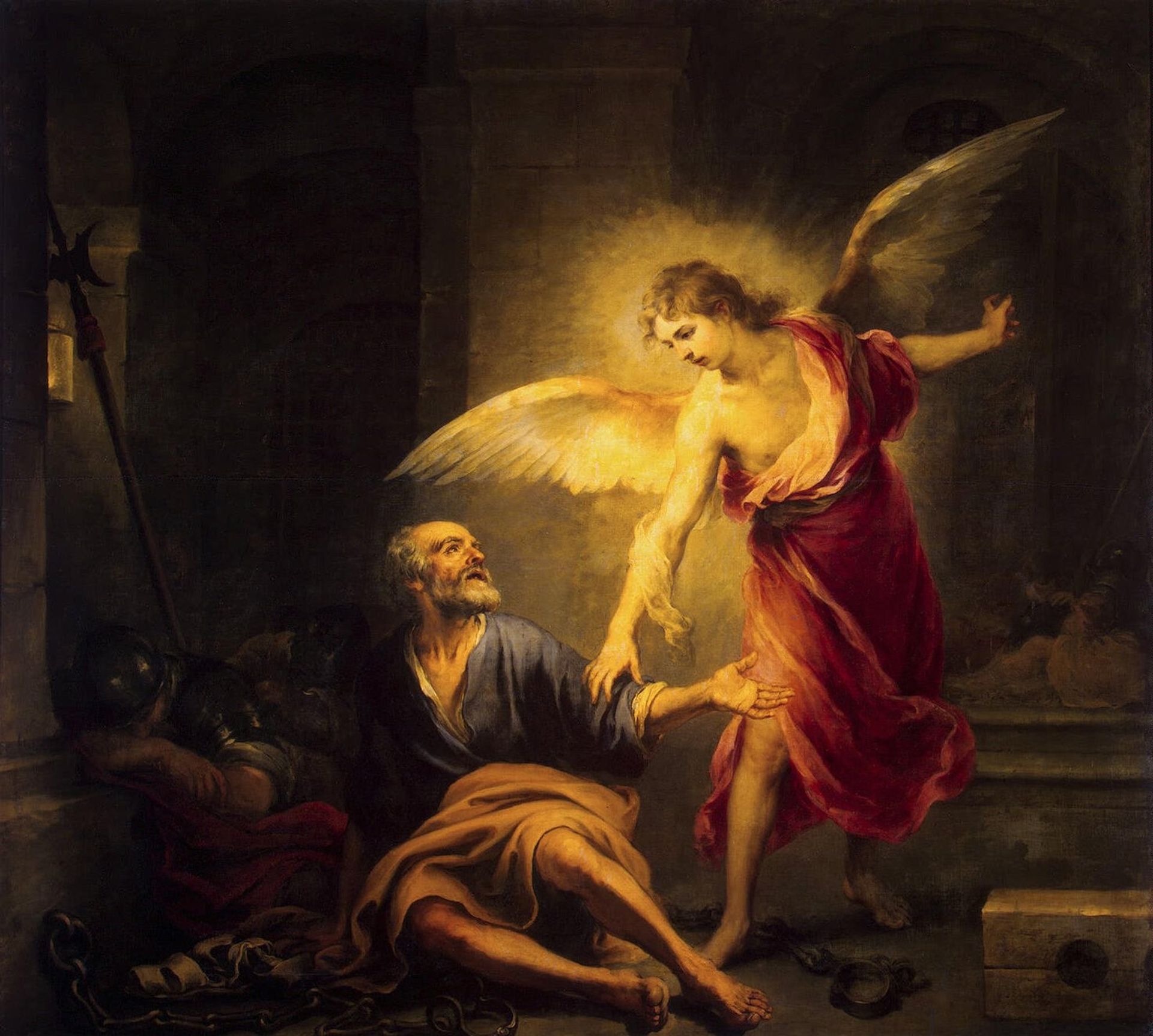
Bartolomé Estebán Murillo’s oil on canvas, "Liberation of St. Peter," presents a dramatic interpretation of a biblical scene, full of cultural meaning. Painted in Spain, a country at the heart of Catholic power, the work reflects the religious fervor of the era. Murillo uses light and shadow to emphasize the divine intervention, as an angel frees St. Peter from his chains. The contrast between the brightly lit angel and the dark prison symbolizes the triumph of faith over earthly confinement. The painting also speaks to the social conditions of Murillo's time. The Catholic Church was a major institution, and art often served as a means of religious instruction and propaganda. Murillo’s work reinforces the church’s authority and the power of divine intervention in human affairs. Understanding this piece requires us to delve into the religious and political history of 17th-century Spain, using archival records and theological texts to fully appreciate its cultural significance.
Liberation of St. Peter
1667

Bartolomé Estebán Murillo
1617 - 1682
The State Hermitage Museum
Hermitage Museum, Saint Petersburg, RussiaArtwork details
- Medium
- painting, oil-paint
- Dimensions
- 238 x 260 cm
- Location
- Hermitage Museum, Saint Petersburg, Russia
- Copyright
- Public domain
Tags
Comments
Share your thoughts
About this artwork
Bartolomé Estebán Murillo’s oil on canvas, "Liberation of St. Peter," presents a dramatic interpretation of a biblical scene, full of cultural meaning. Painted in Spain, a country at the heart of Catholic power, the work reflects the religious fervor of the era. Murillo uses light and shadow to emphasize the divine intervention, as an angel frees St. Peter from his chains. The contrast between the brightly lit angel and the dark prison symbolizes the triumph of faith over earthly confinement. The painting also speaks to the social conditions of Murillo's time. The Catholic Church was a major institution, and art often served as a means of religious instruction and propaganda. Murillo’s work reinforces the church’s authority and the power of divine intervention in human affairs. Understanding this piece requires us to delve into the religious and political history of 17th-century Spain, using archival records and theological texts to fully appreciate its cultural significance.
Comments
Share your thoughts