About this artwork
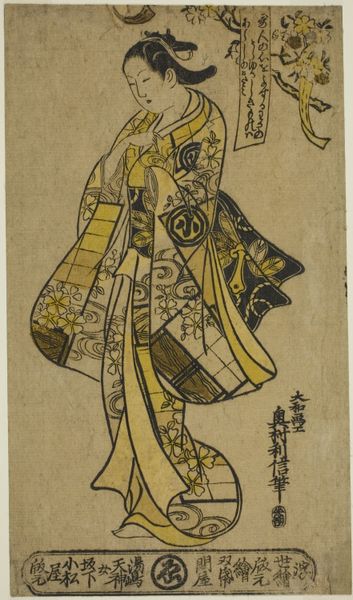
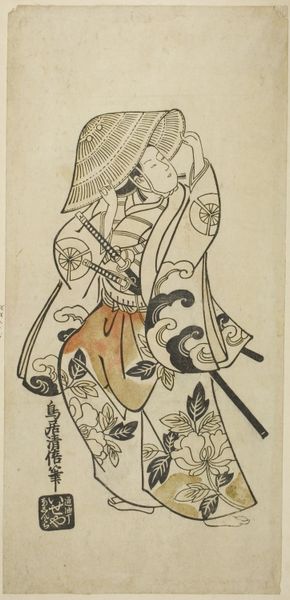
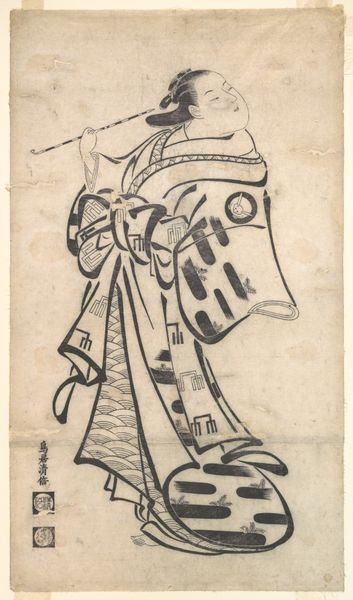
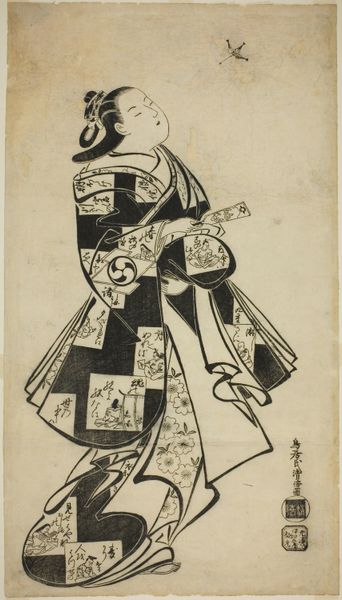
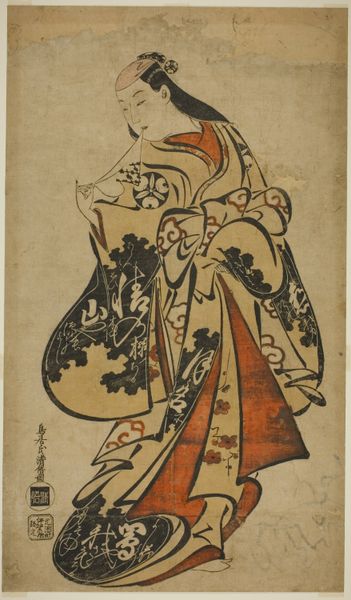
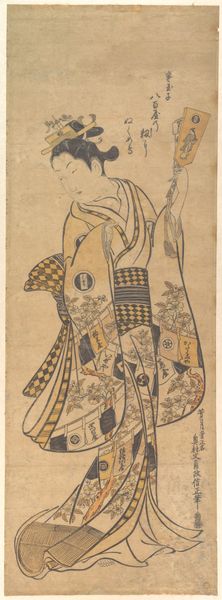
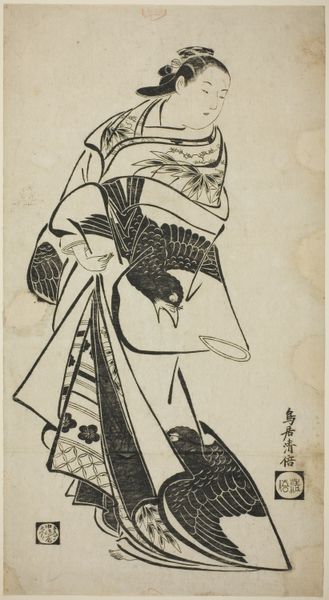
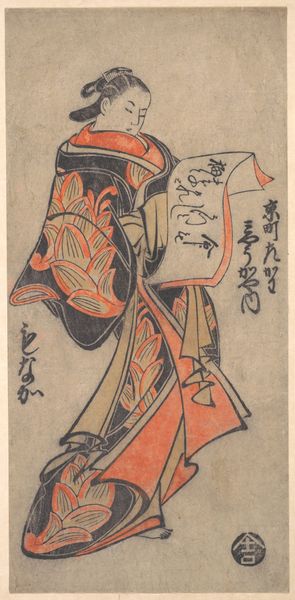
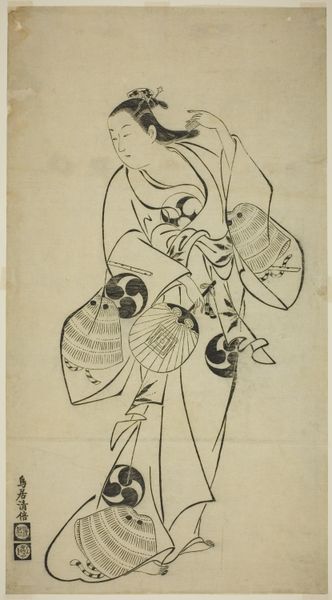
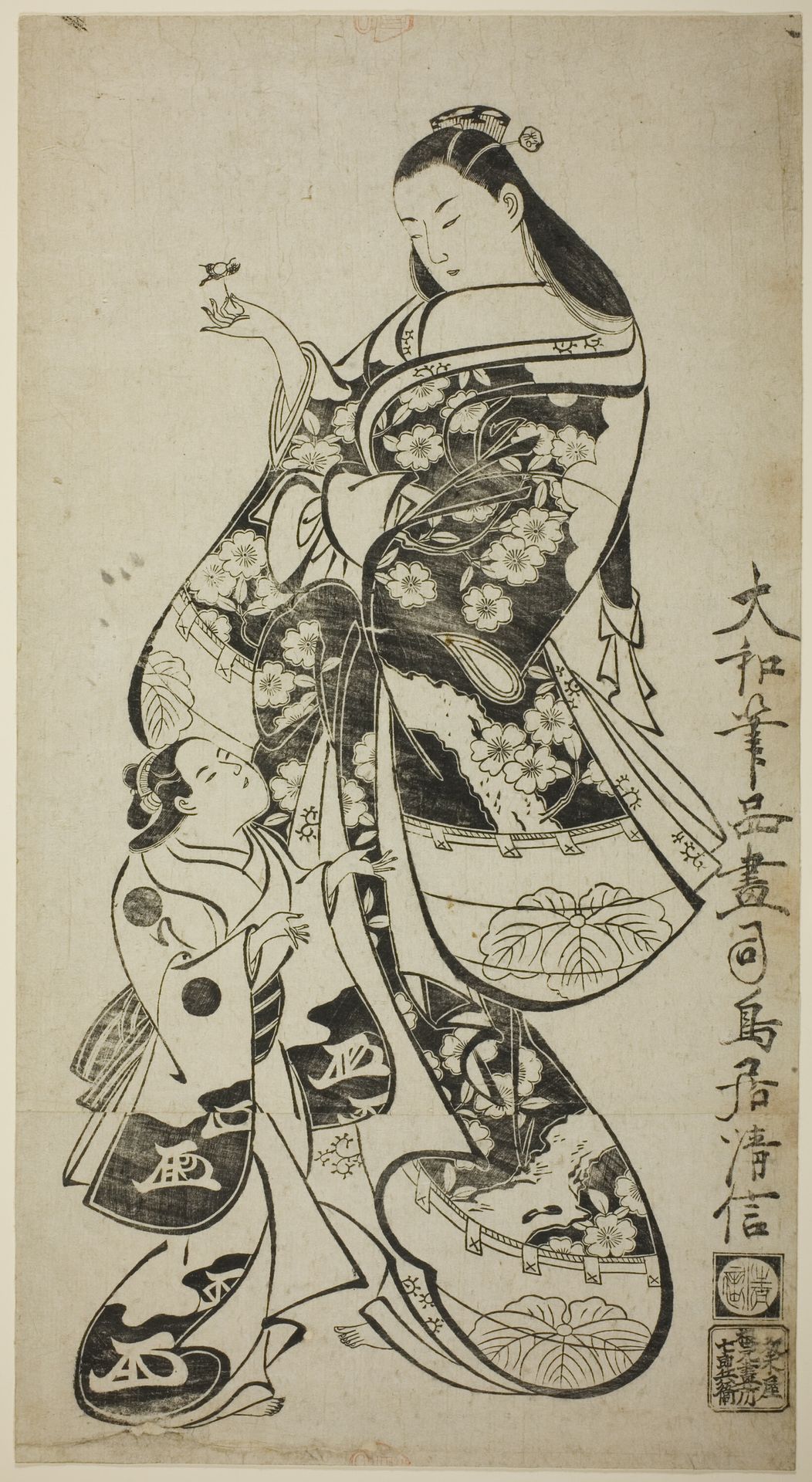
Torii Kiyonobu I made this woodblock print of a courtesan and her child attendant in Japan, sometime in the late 17th or early 18th century. It gives us a glimpse into the social world of the Edo period. Prints like this one were part of a thriving urban culture, catering to the merchant class. The image presents a high-ranking courtesan, known for her beauty, fashion, and artistic talents. She is depicted in elaborate robes, and her refined appearance reflects the values of elegance and sophistication. The child attendant reflects the institutionalised system of child labour in houses of entertainment. As art historians, we can delve into the complex social structures of Edo-period Japan through prints such as this. By studying contemporary literature, theatre, and other visual sources, we gain a deeper understanding of the cultural values, gender roles, and power dynamics that shaped the lives of people like the figures in the artwork.
A Courtesan with Her Child Attendant c. 1715


Artwork details
- Medium
- drawing, print, paper, ink, woodblock-print
- Dimensions
- 23 × 12 1/4 in.
- Location
- The Art Institute of Chicago
- Copyright
- Public Domain
Tags
portrait
drawing
ink drawing
asian-art
ukiyo-e
figuration
paper
personal sketchbook
ink
ink drawing experimentation
woodblock-print
genre-painting
Comments
No comments
About this artwork
Torii Kiyonobu I made this woodblock print of a courtesan and her child attendant in Japan, sometime in the late 17th or early 18th century. It gives us a glimpse into the social world of the Edo period. Prints like this one were part of a thriving urban culture, catering to the merchant class. The image presents a high-ranking courtesan, known for her beauty, fashion, and artistic talents. She is depicted in elaborate robes, and her refined appearance reflects the values of elegance and sophistication. The child attendant reflects the institutionalised system of child labour in houses of entertainment. As art historians, we can delve into the complex social structures of Edo-period Japan through prints such as this. By studying contemporary literature, theatre, and other visual sources, we gain a deeper understanding of the cultural values, gender roles, and power dynamics that shaped the lives of people like the figures in the artwork.
Comments
No comments