About this artwork
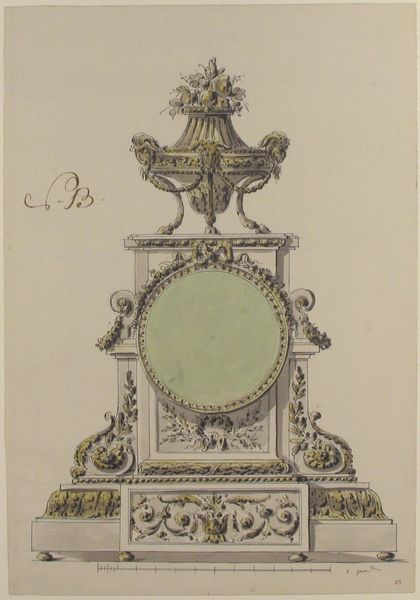
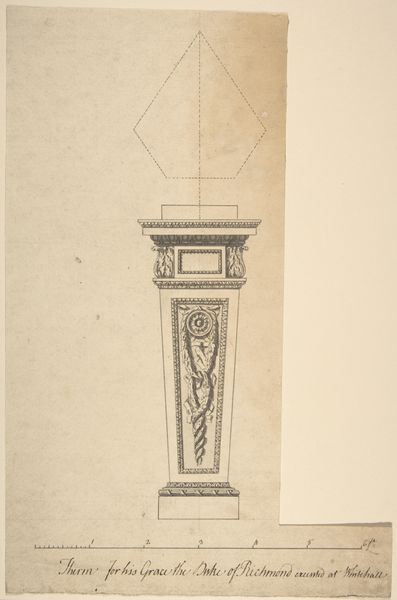
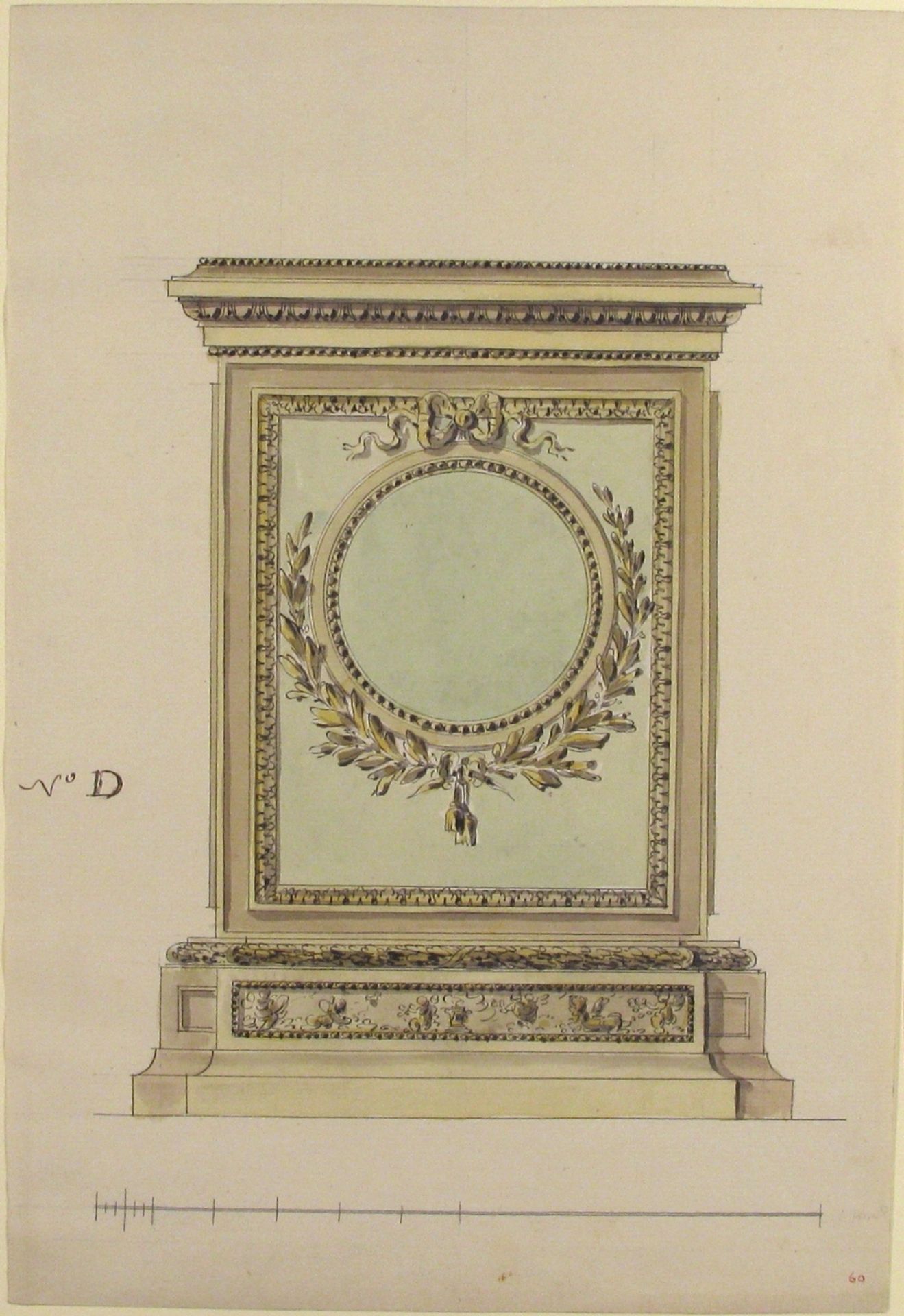
This Design for a Clock was made by an anonymous artist using pen, ink, and watercolor on paper. The drawing depicts a clock design which consists of a rectangular structure with a circular opening for the clock face, surrounded by decorative elements. The draftsmanship suggests a detailed carving in wood or plaster, and an interest in classical motifs – wreaths, ribbons, and precise moldings. These details wouldn't just be ornamental, but integral to the clock’s function as a status symbol. The clock was not just about telling time, it was about telling everyone that you had the resources to commission this piece. Consider the labor involved in creating such an intricate design, from the initial sketch to the skilled artisan bringing it to life. The object represents more than aesthetics; it embodies social status, consumption, and the intricate interplay between design, production, and class. By looking closely at the materials and the making, we can understand the full meaning of this anonymous design.
Design for a Clock
1765 - 1790


Artwork details
- Medium
- drawing, print, paper, architecture
- Dimensions
- 13 3/4 x 9 7/16 in. (35 x 23.9 cm)
- Location
- Metropolitan Museum of Art, New York, NY
- Copyright
- Public Domain
Tags
Comments
Share your thoughts
About this artwork
This Design for a Clock was made by an anonymous artist using pen, ink, and watercolor on paper. The drawing depicts a clock design which consists of a rectangular structure with a circular opening for the clock face, surrounded by decorative elements. The draftsmanship suggests a detailed carving in wood or plaster, and an interest in classical motifs – wreaths, ribbons, and precise moldings. These details wouldn't just be ornamental, but integral to the clock’s function as a status symbol. The clock was not just about telling time, it was about telling everyone that you had the resources to commission this piece. Consider the labor involved in creating such an intricate design, from the initial sketch to the skilled artisan bringing it to life. The object represents more than aesthetics; it embodies social status, consumption, and the intricate interplay between design, production, and class. By looking closely at the materials and the making, we can understand the full meaning of this anonymous design.
Comments
Share your thoughts