About this artwork
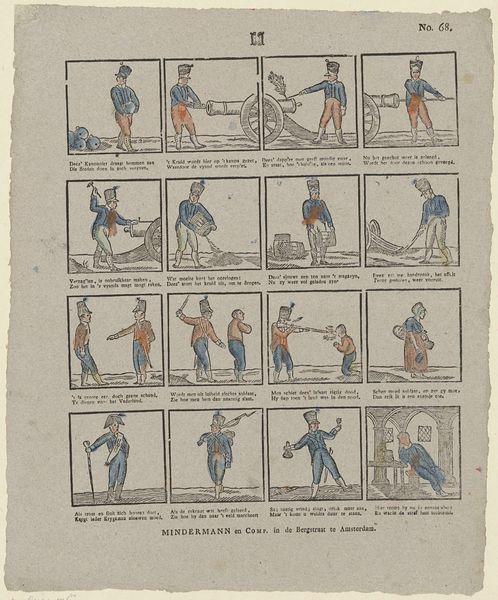
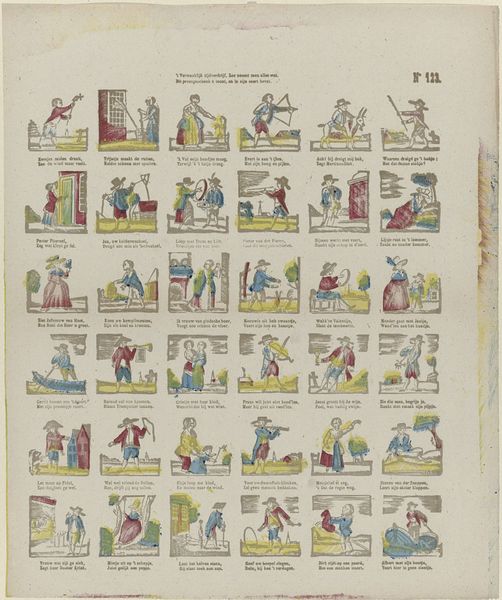
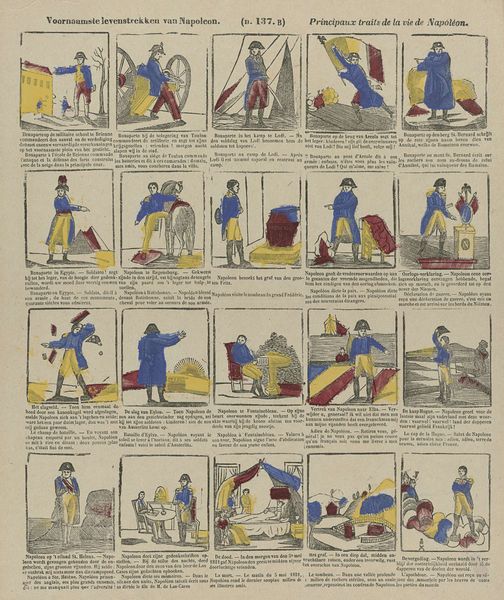
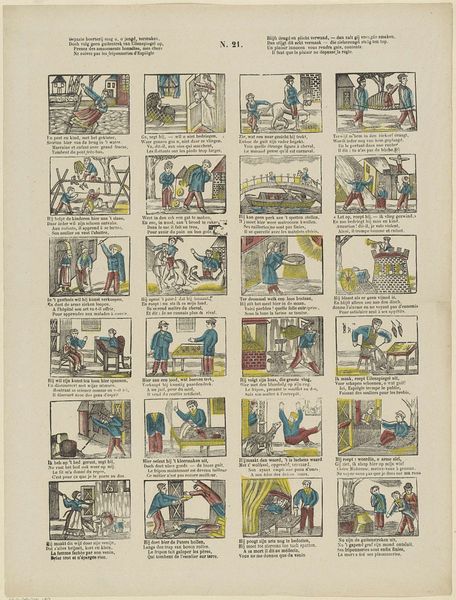
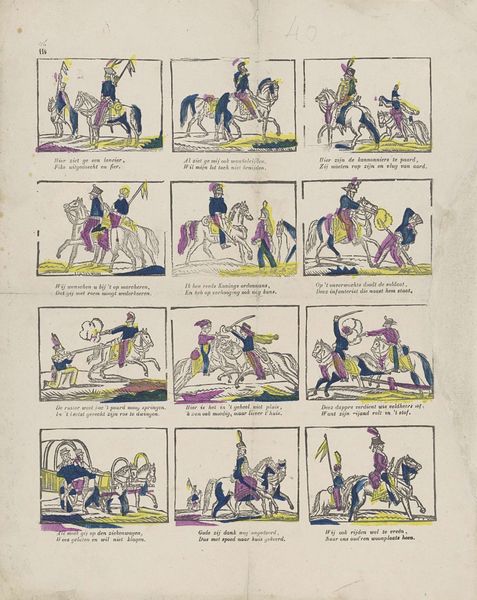
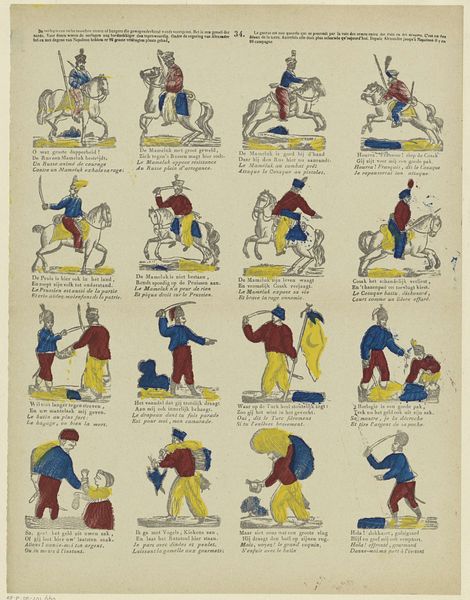
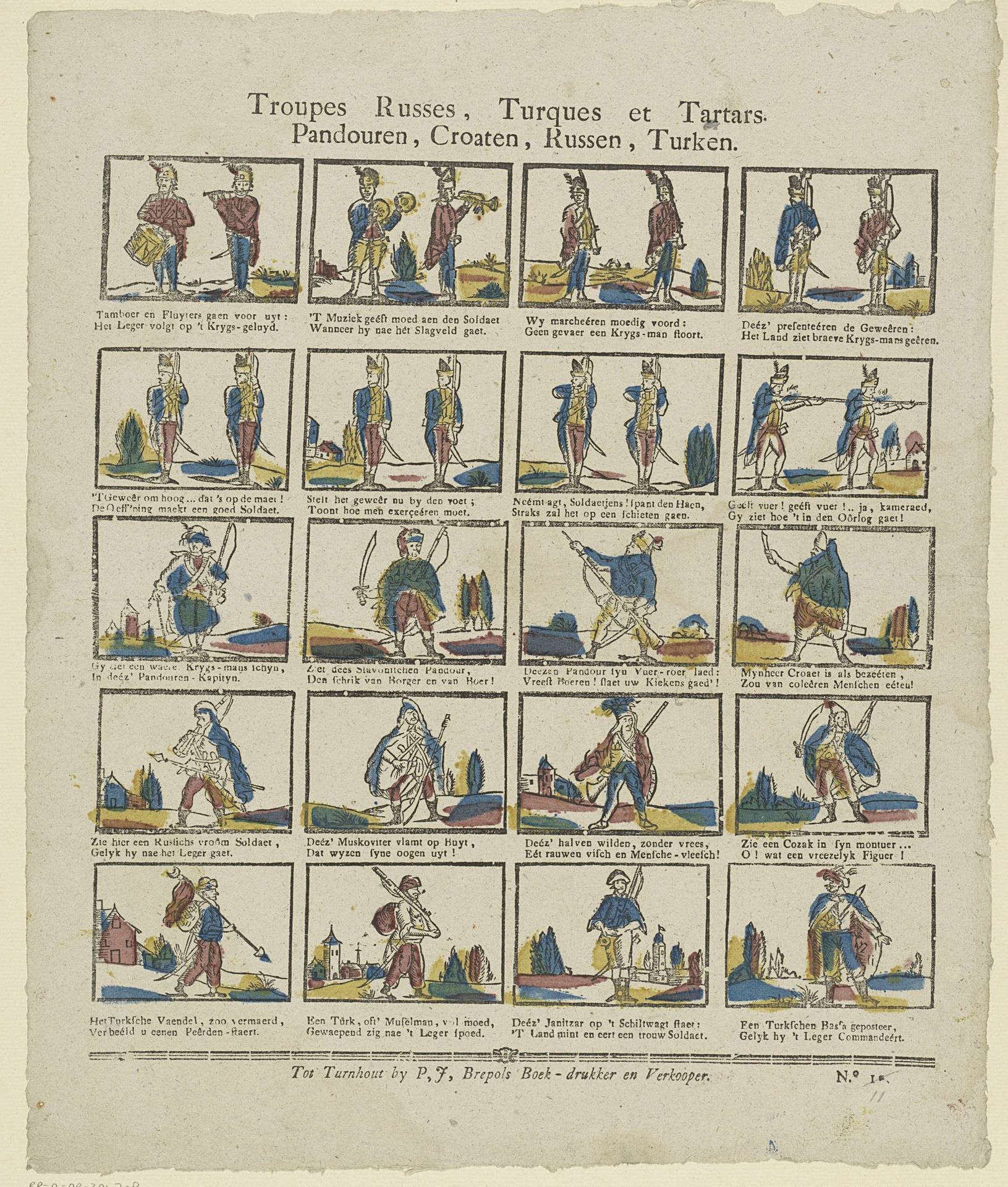
This print, "Troupes Russes, Turques et Tartars" by Philippus Jacobus Brepols, likely from the early 19th century, presents a regimented display of soldiers, each a symbol laden with cultural and historical significance. Observe the swords brandished by the figures. The sword is not merely a weapon; it is a potent emblem of power, justice, and defense. We see the sword echoing through time, from ancient Roman gladii to medieval knights' armaments, each carrying a history of battles fought and civilizations defended. The gesture of raising the sword is reminiscent of classical depictions of triumph and authority. Consider how this motif recurs in Renaissance paintings of victorious generals, or even in religious art, symbolizing divine power overcoming earthly challenges. This non-linear progression reveals a constant, cyclical return of symbols that resonate across epochs, subtly shaping our collective psyche. The sword’s enduring presence speaks to its powerful ability to engage us on a subconscious level.
Troupes Russes, Turques et Tartars / Pandouren, Croaten, Russen, Turken
1800 - 1833

Philippus Jacobus Brepols
1778 - 1845Location
RijksmuseumArtwork details
- Medium
- graphic-art, print
- Dimensions
- height 395 mm, width 327 mm
- Location
- Rijksmuseum
- Copyright
- Rijks Museum: Open Domain
Tags
Comments
Share your thoughts
About this artwork
This print, "Troupes Russes, Turques et Tartars" by Philippus Jacobus Brepols, likely from the early 19th century, presents a regimented display of soldiers, each a symbol laden with cultural and historical significance. Observe the swords brandished by the figures. The sword is not merely a weapon; it is a potent emblem of power, justice, and defense. We see the sword echoing through time, from ancient Roman gladii to medieval knights' armaments, each carrying a history of battles fought and civilizations defended. The gesture of raising the sword is reminiscent of classical depictions of triumph and authority. Consider how this motif recurs in Renaissance paintings of victorious generals, or even in religious art, symbolizing divine power overcoming earthly challenges. This non-linear progression reveals a constant, cyclical return of symbols that resonate across epochs, subtly shaping our collective psyche. The sword’s enduring presence speaks to its powerful ability to engage us on a subconscious level.
Comments
Share your thoughts