About this artwork
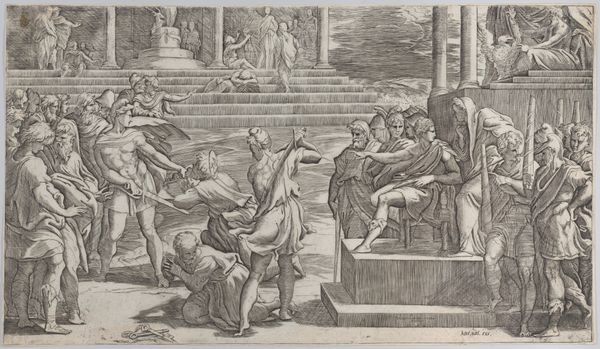
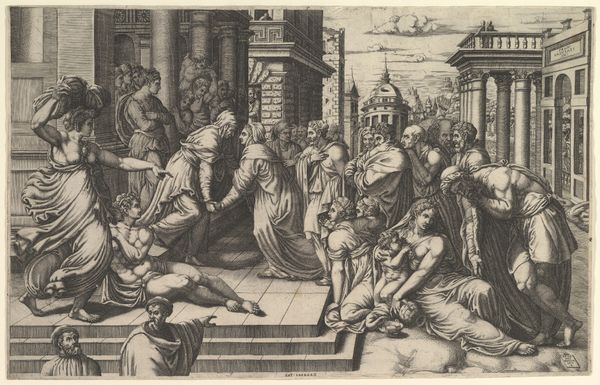
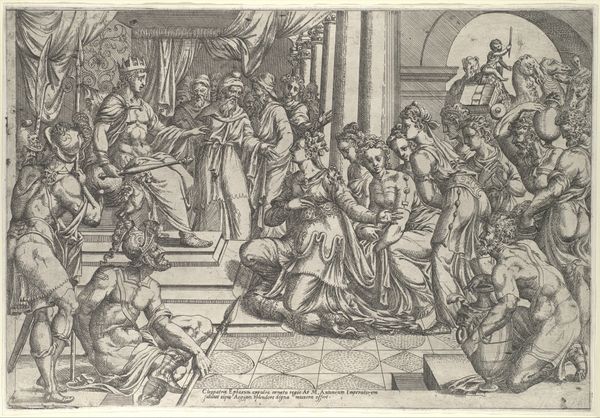
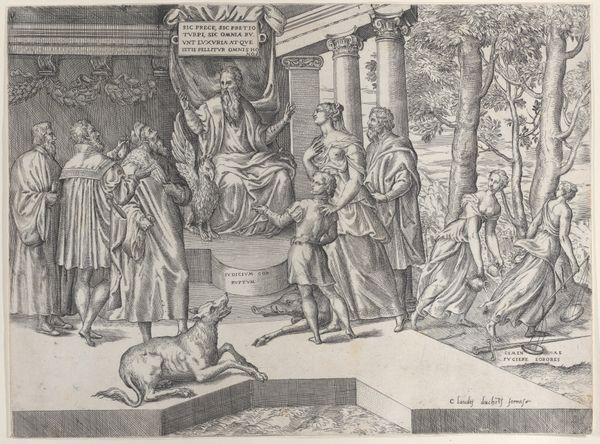
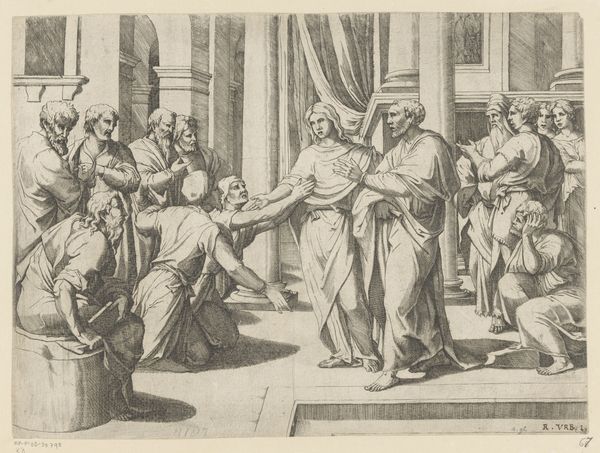
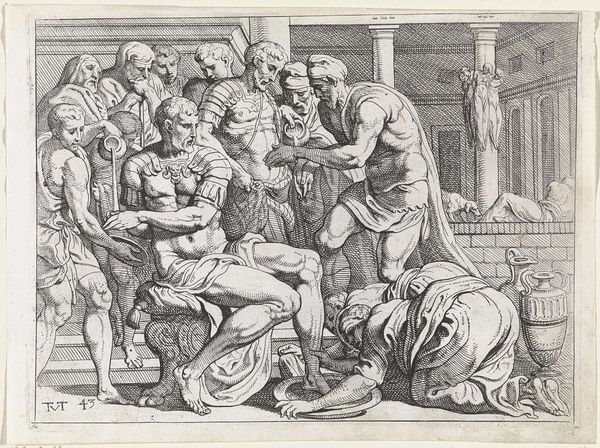
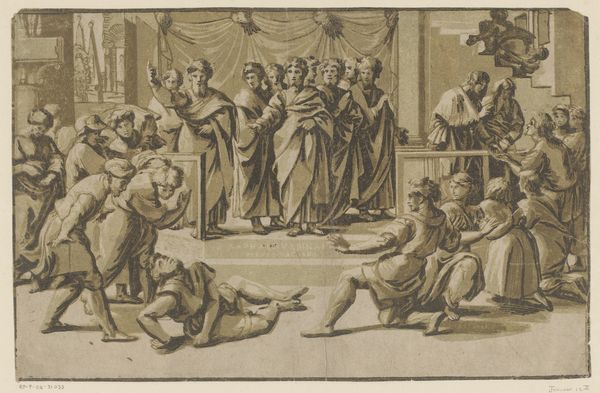
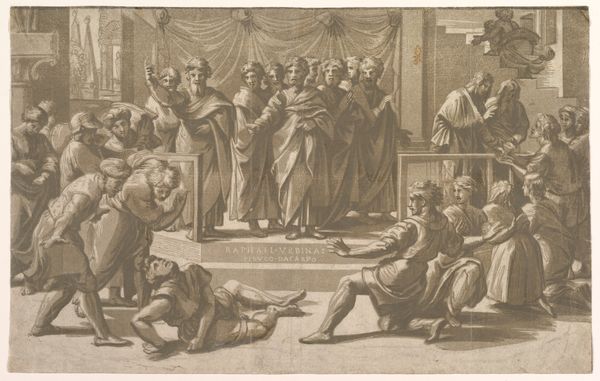
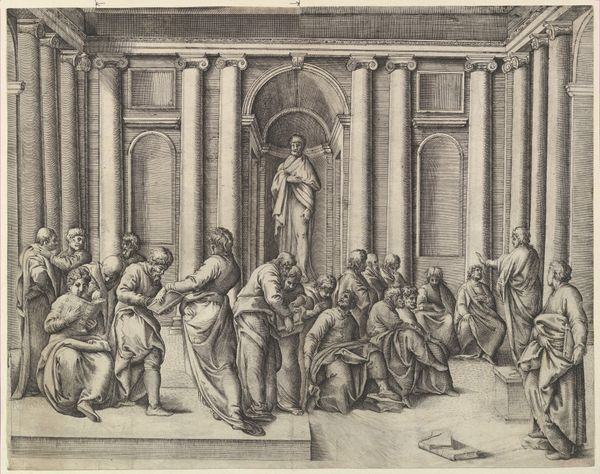
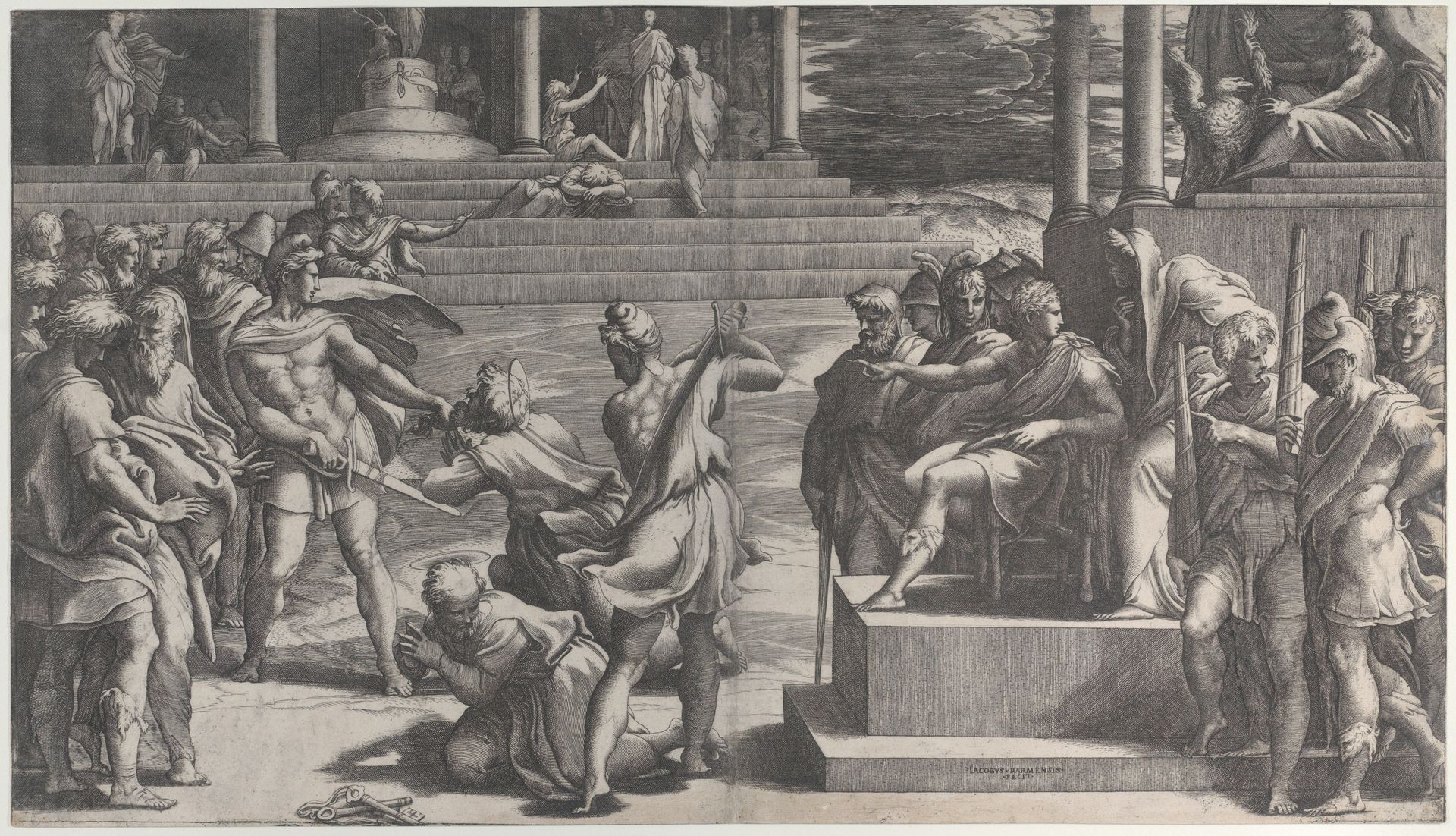
Giovanni Jacopo Caraglio made this print, The Martyrdom of Saint Paul and the Condemnation of Saint Peter, using engraving. Notice how the composition is structured around classical architecture, which serves as a stage for the dramatic events unfolding. The stark contrast of light and shadow, achieved through dense, meticulous lines, heightens the emotional intensity. The figures are rendered with pronounced musculature and expressive gestures, typical of Renaissance art. The print visualizes power dynamics. The seated ruler and the executioner represent the state authority, while the saints, depicted in moments of intense suffering, embody spiritual resistance. The symmetry of the architecture versus the chaotic arrangement of figures creates tension, reflecting the struggle between law and faith. Caraglio's use of line and form not only conveys a biblical narrative but also engages with broader Renaissance ideas of justice, sacrifice, and the individual's relationship to authority. The work invites us to consider how visual structures reflect and challenge dominant ideologies.
The martyrdom of Saint Paul and the condemnation of Saint Peter
1524 - 1527

Giovanni Jacopo Caraglio
1500 - 1565
The Metropolitan Museum of Art
Metropolitan Museum of Art, New York, NYArtwork details
- Medium
- drawing, print, engraving
- Dimensions
- Sheet (Trimmed): 10 3/16 × 17 11/16 in. (25.8 × 45 cm)
- Location
- Metropolitan Museum of Art, New York, NY
- Copyright
- Public Domain
Tags
drawing
narrative-art
figuration
history-painting
italian-renaissance
engraving
Comments
Be the first to share your thoughts about this work.
About this artwork
Giovanni Jacopo Caraglio made this print, The Martyrdom of Saint Paul and the Condemnation of Saint Peter, using engraving. Notice how the composition is structured around classical architecture, which serves as a stage for the dramatic events unfolding. The stark contrast of light and shadow, achieved through dense, meticulous lines, heightens the emotional intensity. The figures are rendered with pronounced musculature and expressive gestures, typical of Renaissance art. The print visualizes power dynamics. The seated ruler and the executioner represent the state authority, while the saints, depicted in moments of intense suffering, embody spiritual resistance. The symmetry of the architecture versus the chaotic arrangement of figures creates tension, reflecting the struggle between law and faith. Caraglio's use of line and form not only conveys a biblical narrative but also engages with broader Renaissance ideas of justice, sacrifice, and the individual's relationship to authority. The work invites us to consider how visual structures reflect and challenge dominant ideologies.
Comments
Be the first to share your thoughts about this work.