About this artwork
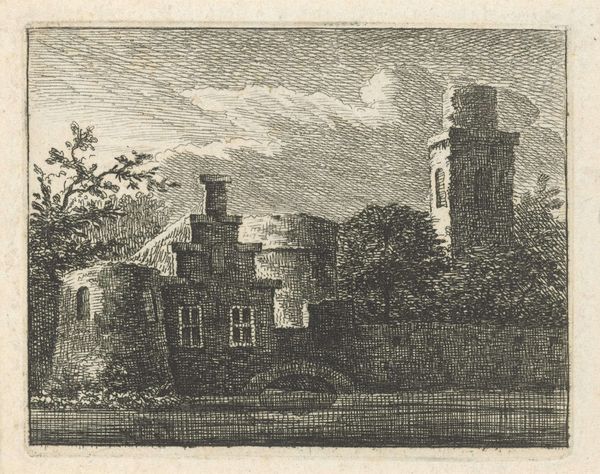
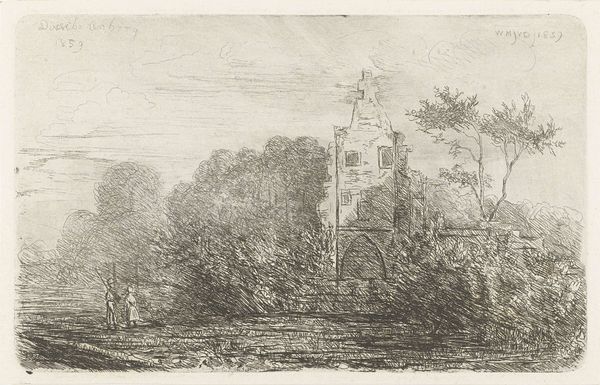
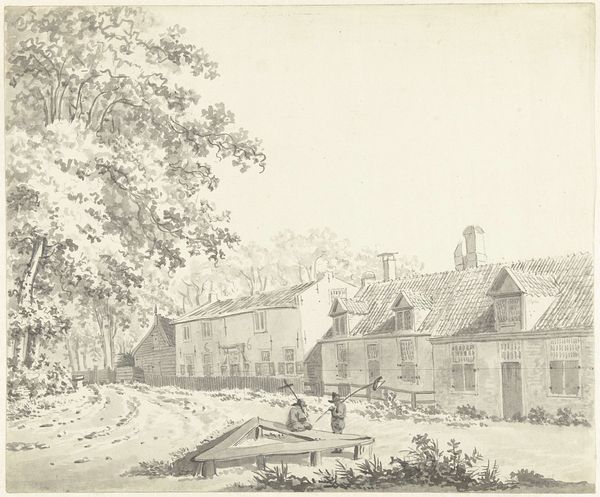
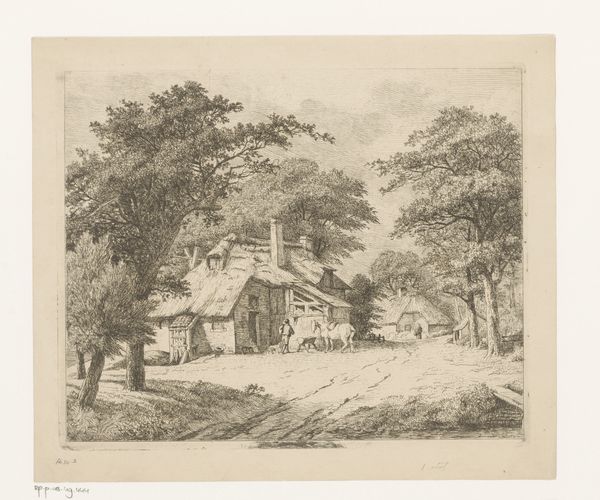
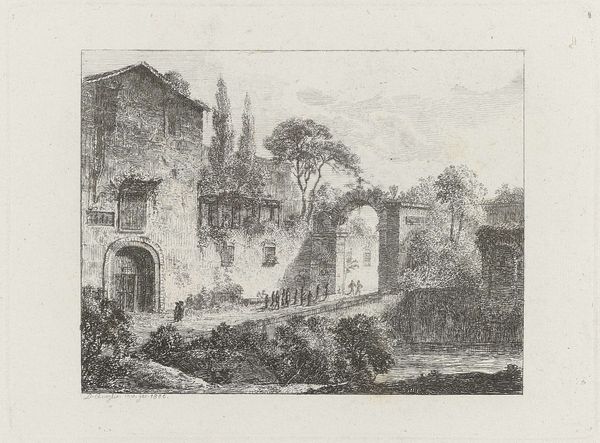
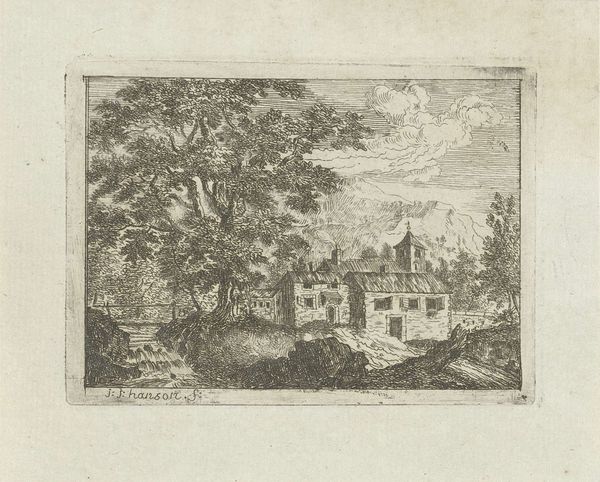
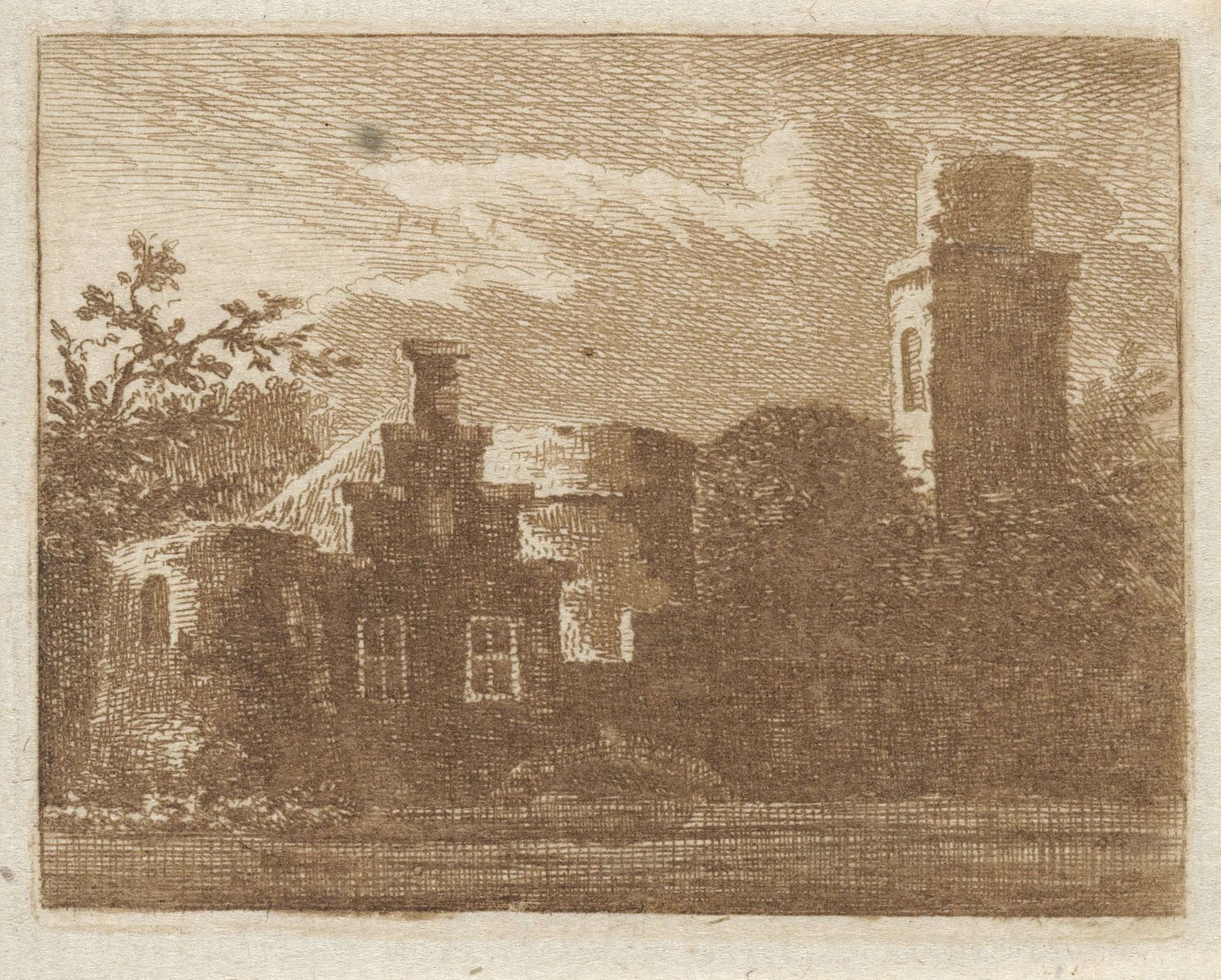
Editor: Here we have "Gezicht op huis met trapgevel," or "View of a house with a stepped gable," an etching by Caspar Jacobsz. Philips from 1766. It reminds me of a stage set, but for what story? What draws your eye in this print? Curator: What I notice immediately is the artist's concentration on verticality; how the etched lines lift the eye upwards, mimicking the aspiration found in Northern European architecture of this period. The stepped gable is a cultural marker of wealth, but it also signals something deeper. Editor: Deeper how? Curator: Think of the Tower of Babel: ascending structures frequently stand for ambition, not always in a positive light. Philips uses the dark and light to highlight areas in ruin, cloaked under vegetation. Editor: So, is he commenting on the fleeting nature of wealth or status? Curator: Perhaps, or is he simply observing how time and nature reclaim all things? Ask yourself how often buildings function as allegories, reminding us of human frailty through the symbolism of decay and endurance. The contrast of order and disorder makes this seemingly simple landscape surprisingly profound. Editor: I hadn’t thought about that contrast before. It does give a rather different, more philosophical feel to what seemed like a mere landscape. Curator: It’s the tension that keeps the image alive centuries later! Hopefully this gives our listeners a new way to look at a seemingly "simple" image.

Artwork details
- Medium
- print, etching
- Dimensions
- height 51 mm, width 66 mm
- Location
- Rijksmuseum
- Copyright
- Rijks Museum: Open Domain
Tags
etching
landscape
15_18th-century
Comments
No comments
About this artwork
Editor: Here we have "Gezicht op huis met trapgevel," or "View of a house with a stepped gable," an etching by Caspar Jacobsz. Philips from 1766. It reminds me of a stage set, but for what story? What draws your eye in this print? Curator: What I notice immediately is the artist's concentration on verticality; how the etched lines lift the eye upwards, mimicking the aspiration found in Northern European architecture of this period. The stepped gable is a cultural marker of wealth, but it also signals something deeper. Editor: Deeper how? Curator: Think of the Tower of Babel: ascending structures frequently stand for ambition, not always in a positive light. Philips uses the dark and light to highlight areas in ruin, cloaked under vegetation. Editor: So, is he commenting on the fleeting nature of wealth or status? Curator: Perhaps, or is he simply observing how time and nature reclaim all things? Ask yourself how often buildings function as allegories, reminding us of human frailty through the symbolism of decay and endurance. The contrast of order and disorder makes this seemingly simple landscape surprisingly profound. Editor: I hadn’t thought about that contrast before. It does give a rather different, more philosophical feel to what seemed like a mere landscape. Curator: It’s the tension that keeps the image alive centuries later! Hopefully this gives our listeners a new way to look at a seemingly "simple" image.
Comments
No comments