About this artwork
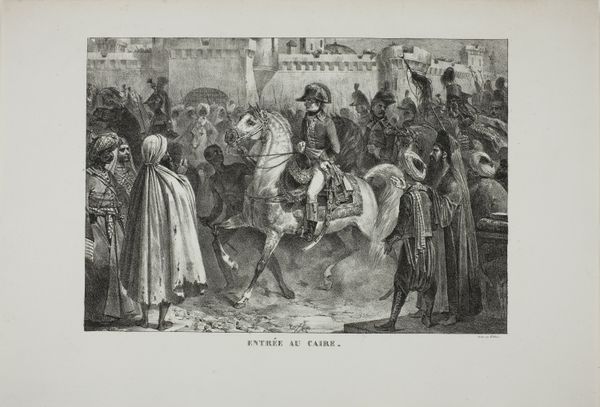
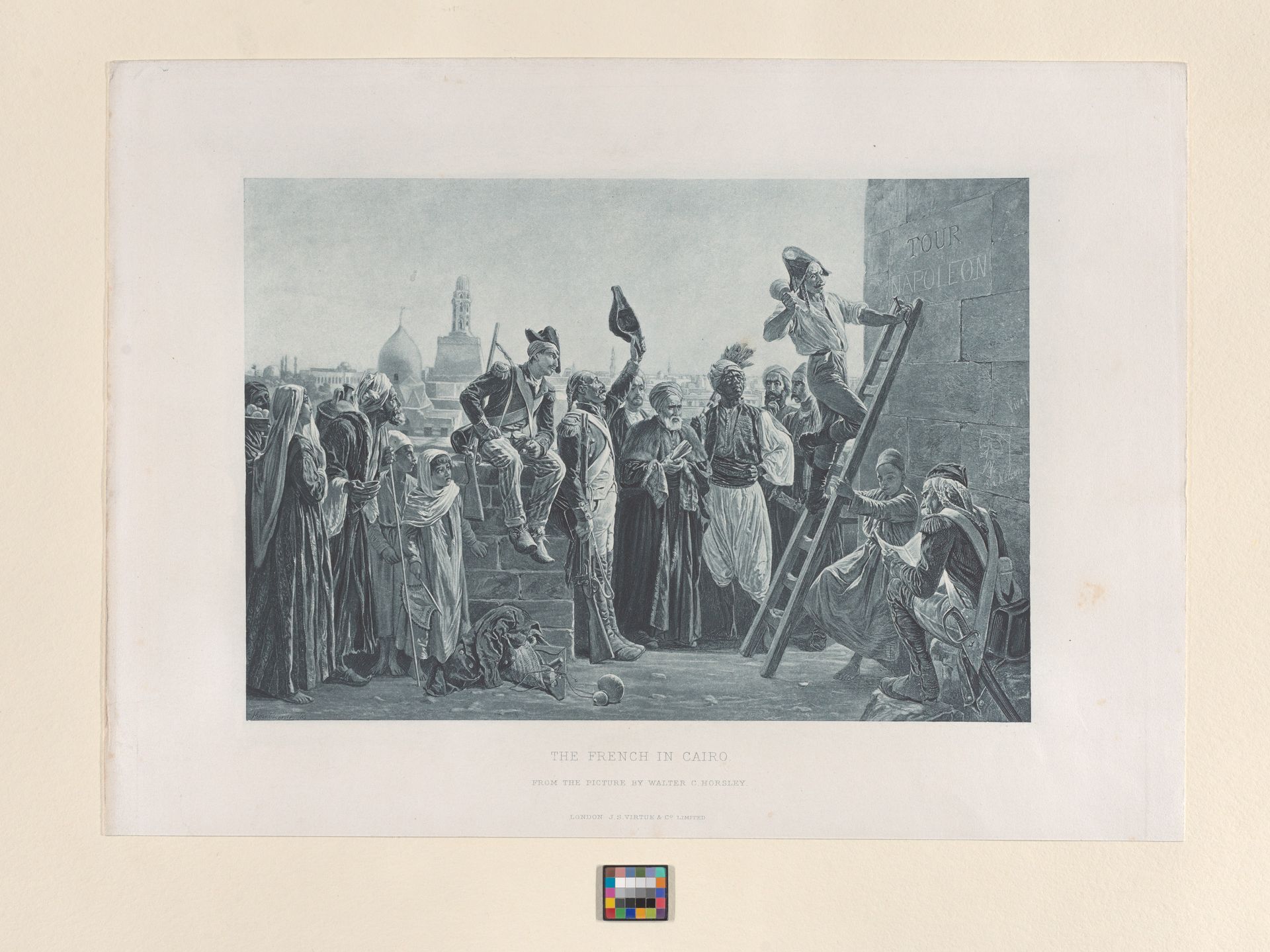
"The French in Cairo," by Walter Charles Horsley, captures a moment laden with historical tension and cultural exchange. The print comes from "The Art Journal," a publication that disseminated images of empire to a wide audience. Here we observe a scene that seems to depict the Napoleonic campaign in Egypt, where French soldiers are interacting with the local population of Cairo. Horsley presents an intricate tableau of cultural encounter and colonial imposition. French soldiers appear to be inscribing a wall, while the locals watch. The image offers a glimpse into the complex dynamic between colonizers and colonized, raising questions about power, representation, and cultural memory. Whose story is being told, and how does the act of inscription reflect the assertion of dominance? Horsley invites us to consider the lasting impact of historical events. There are layers of meaning in the expressions of the figures portrayed, leaving you to consider their roles within a colonial narrative.
The French in Cairo, from "The Art Journal"
1885

Walter Charles Horsley
1855 - 1934
The Metropolitan Museum of Art
Metropolitan Museum of Art, New York, NYArtwork details
- Medium
- drawing, print
- Dimensions
- Sheet: 9 1/2 × 13 1/4 in. (24.2 × 33.7 cm)
- Location
- Metropolitan Museum of Art, New York, NY
- Copyright
- Public Domain
Tags
drawing
orientalism
men
history-painting
realism
Comments
Be the first to share your thoughts about this work.
About this artwork
"The French in Cairo," by Walter Charles Horsley, captures a moment laden with historical tension and cultural exchange. The print comes from "The Art Journal," a publication that disseminated images of empire to a wide audience. Here we observe a scene that seems to depict the Napoleonic campaign in Egypt, where French soldiers are interacting with the local population of Cairo. Horsley presents an intricate tableau of cultural encounter and colonial imposition. French soldiers appear to be inscribing a wall, while the locals watch. The image offers a glimpse into the complex dynamic between colonizers and colonized, raising questions about power, representation, and cultural memory. Whose story is being told, and how does the act of inscription reflect the assertion of dominance? Horsley invites us to consider the lasting impact of historical events. There are layers of meaning in the expressions of the figures portrayed, leaving you to consider their roles within a colonial narrative.
Comments
Be the first to share your thoughts about this work.