About this artwork
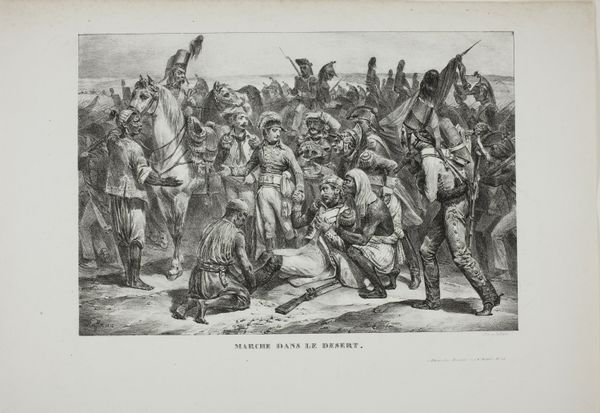
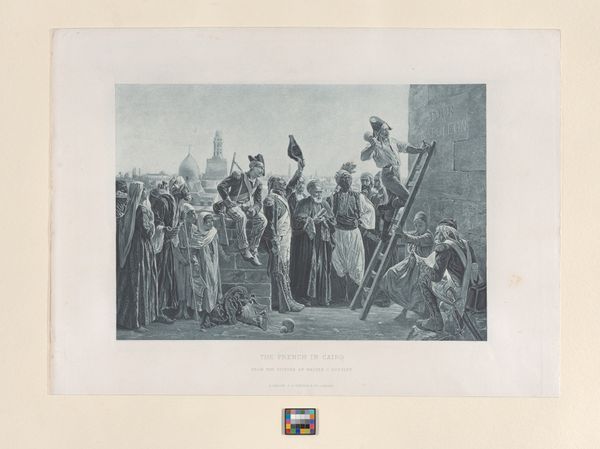
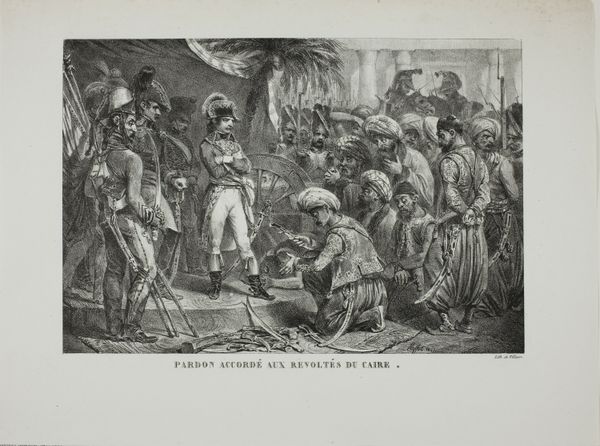
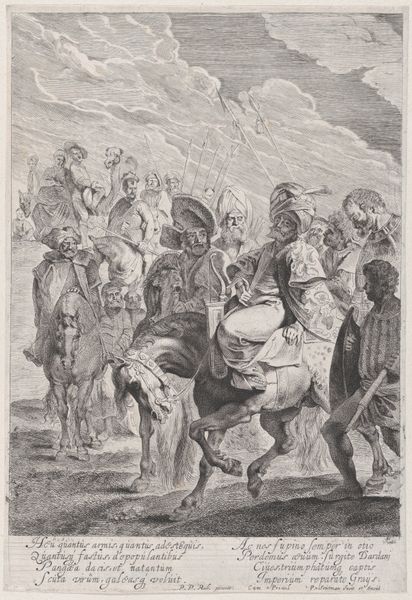
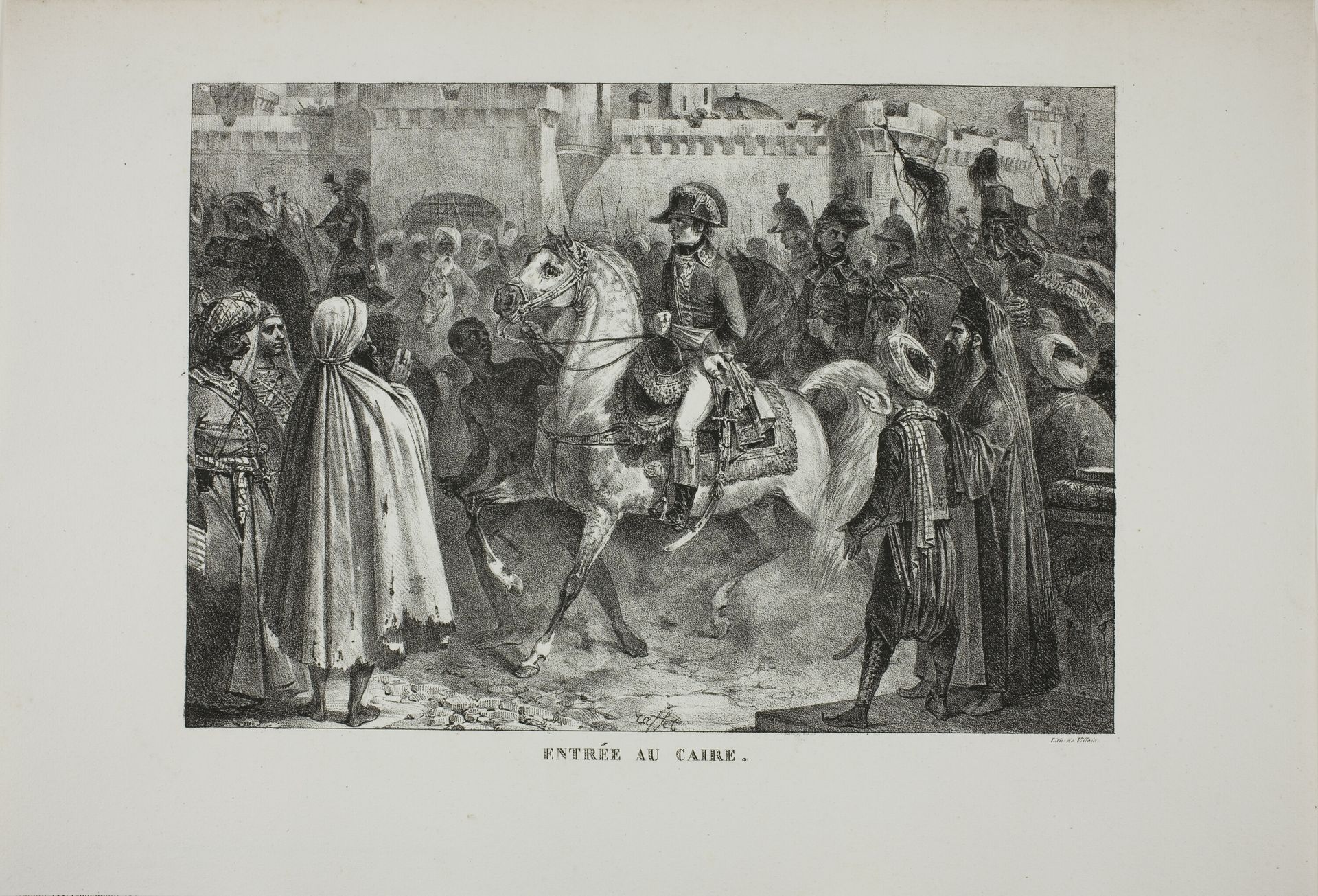
Editor: This is "Entering Cairo" by Auguste Raffet, a lithograph from 1827. It looks like a bustling scene, full of figures welcoming someone important. Who are these people and what is the historical context surrounding this arrival? Curator: That’s a fantastic observation. Raffet created this print within the broader movement of Orientalism. It depicts a Westerner, likely a military leader, entering Cairo. Think about what was happening at that time – what kind of narrative is Raffet constructing, and for whom? Editor: So, this is more than just a record of an event; it's a constructed image with a specific purpose. The 'exotic' locals seem to be celebrating a colonizer. Curator: Precisely. Raffet is participating in the construction of an imperial fantasy. Note the details - how are the figures posed? What's the relationship between the European figure and the gathered crowds? These choices shape the viewer's perception of power and authority. Editor: It seems to highlight European power while simultaneously exoticizing the Egyptian people. So even a seemingly straightforward historical scene carries a lot of ideological weight. Are there ways that its reception and understanding have changed over time? Curator: Absolutely. Consider how audiences today, compared to 19th-century viewers, might interpret Raffet’s depiction of cultural exchange and power dynamics. Museums showcasing this piece now must address the historical context, inviting audiences to critically examine the relationship between art, imperialism, and representation. Editor: It's interesting how an artwork can serve as a reflection of its own time, and as a site for re-interpretation and discussion in our current context. Thank you! Curator: My pleasure. It’s important to remember that art doesn't exist in a vacuum, and understanding the historical forces behind an artwork can deeply enrich our viewing experience.
Entering Cairo 1827


Artwork details
- Medium
- drawing, lithograph, print, paper
- Dimensions
- 210 × 302 mm (image); 295 × 431 mm (sheet)
- Location
- The Art Institute of Chicago
- Copyright
- Public Domain
Tags
drawing
narrative-art
lithograph
landscape
figuration
paper
romanticism
orientalism
france
history-painting
tonal art
remaining negative space
Comments
No comments
About this artwork
Editor: This is "Entering Cairo" by Auguste Raffet, a lithograph from 1827. It looks like a bustling scene, full of figures welcoming someone important. Who are these people and what is the historical context surrounding this arrival? Curator: That’s a fantastic observation. Raffet created this print within the broader movement of Orientalism. It depicts a Westerner, likely a military leader, entering Cairo. Think about what was happening at that time – what kind of narrative is Raffet constructing, and for whom? Editor: So, this is more than just a record of an event; it's a constructed image with a specific purpose. The 'exotic' locals seem to be celebrating a colonizer. Curator: Precisely. Raffet is participating in the construction of an imperial fantasy. Note the details - how are the figures posed? What's the relationship between the European figure and the gathered crowds? These choices shape the viewer's perception of power and authority. Editor: It seems to highlight European power while simultaneously exoticizing the Egyptian people. So even a seemingly straightforward historical scene carries a lot of ideological weight. Are there ways that its reception and understanding have changed over time? Curator: Absolutely. Consider how audiences today, compared to 19th-century viewers, might interpret Raffet’s depiction of cultural exchange and power dynamics. Museums showcasing this piece now must address the historical context, inviting audiences to critically examine the relationship between art, imperialism, and representation. Editor: It's interesting how an artwork can serve as a reflection of its own time, and as a site for re-interpretation and discussion in our current context. Thank you! Curator: My pleasure. It’s important to remember that art doesn't exist in a vacuum, and understanding the historical forces behind an artwork can deeply enrich our viewing experience.
Comments
No comments