About this artwork
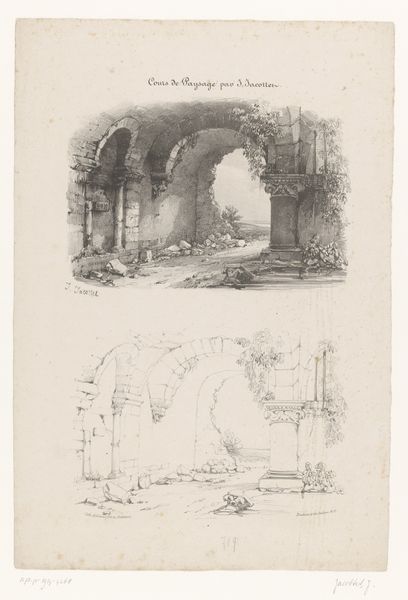
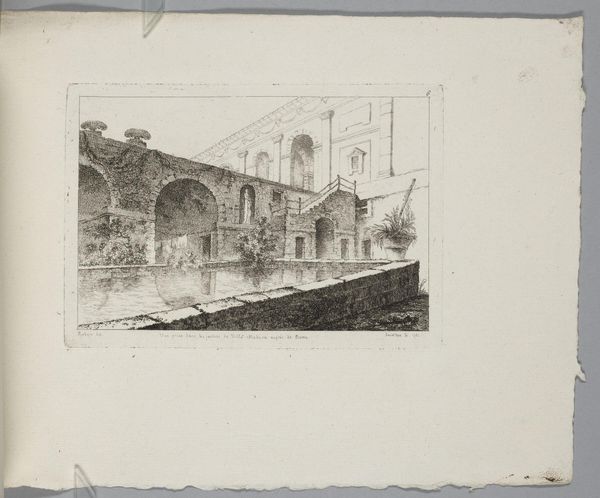
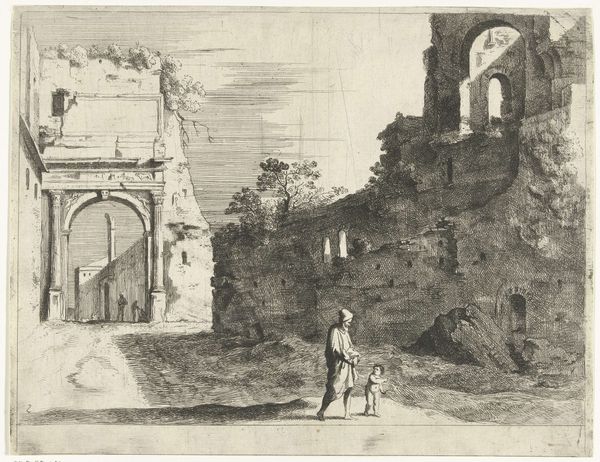
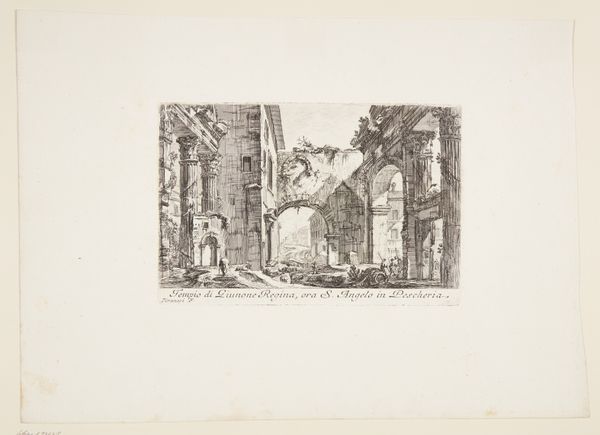
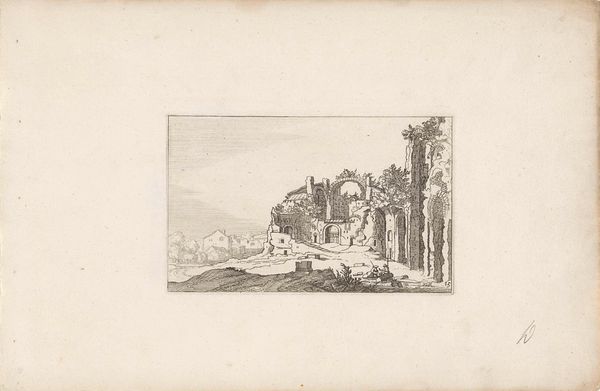
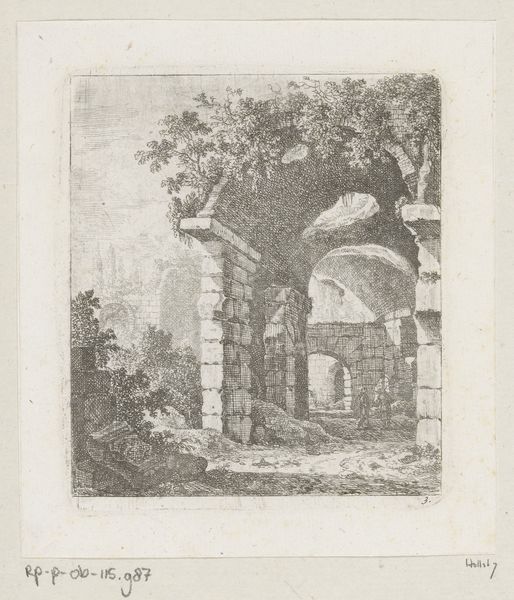
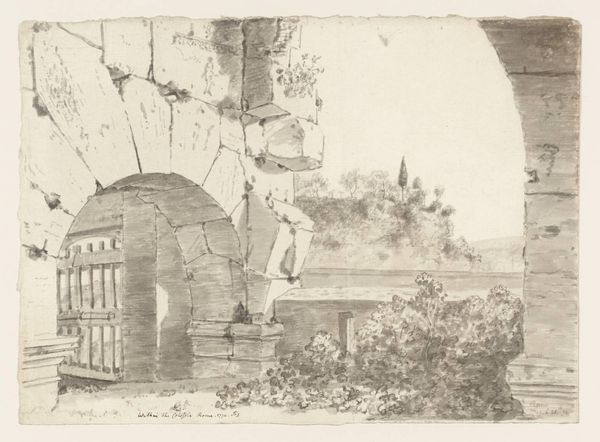
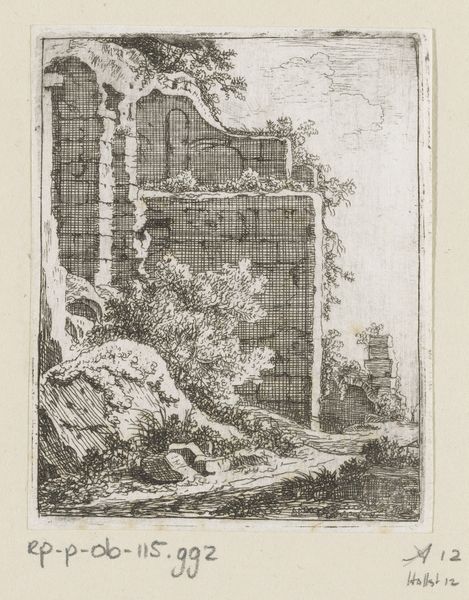
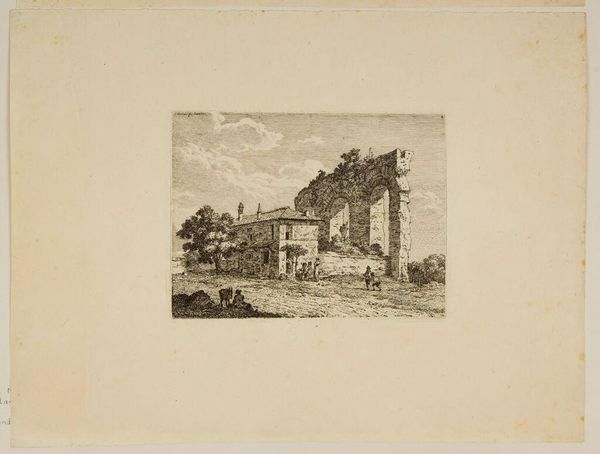
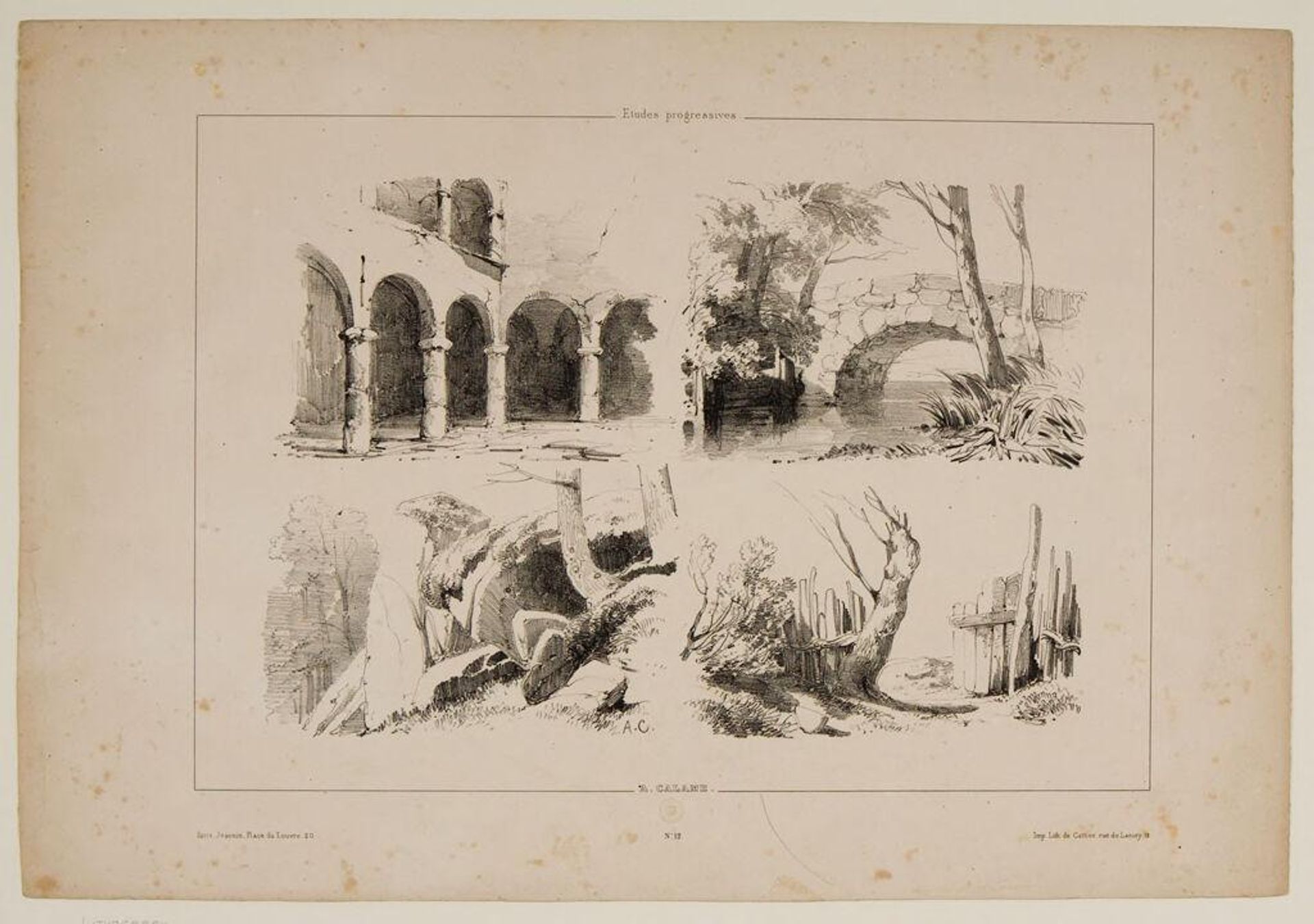
Curator: Alexandre Calame, born in 1810, crafted this collection of Sketches of an Arcade, a Bridge, Mossy Rocks, and a Fence. It feels like a visual diary. Editor: It's charming, but it feels a bit like a sample sheet. Like he's practicing different textures: stone, water, wood. I wonder what the printmaking process was. Curator: Exactly! He's exploring how to translate the grandeur of nature into something reproducible. Each sketch feels like a fragment of a larger feeling, a memory. Editor: Given the period, probably etching or engraving. The detail in the stone of the arcade is particularly striking. And what kind of paper, you know? Was it handmade? Curator: Perhaps. The paper itself becomes a stage. It’s funny how these little glimpses, these 'sketches', offer such a window into Calame’s mind, don’t you think? Editor: I’m just wondering about the consumption of prints like this. Were they for students? Amateurs? It feels like a very democratic medium for landscape. Curator: Ultimately, this artwork feels like a celebration of fleeting moments, captured with such gentle precision. It's really lovely. Editor: I agree. It makes you think about the means through which these landscapes were made accessible to broader audiences. Food for thought.
Sketches of an Arcade, a Bridge, Mossy Rocks, and a Fence
c. 19th century


Artwork details
- Location
- Harvard Art Museums
- Copyright
- CC0 1.0
Comments
Share your thoughts
About this artwork
Curator: Alexandre Calame, born in 1810, crafted this collection of Sketches of an Arcade, a Bridge, Mossy Rocks, and a Fence. It feels like a visual diary. Editor: It's charming, but it feels a bit like a sample sheet. Like he's practicing different textures: stone, water, wood. I wonder what the printmaking process was. Curator: Exactly! He's exploring how to translate the grandeur of nature into something reproducible. Each sketch feels like a fragment of a larger feeling, a memory. Editor: Given the period, probably etching or engraving. The detail in the stone of the arcade is particularly striking. And what kind of paper, you know? Was it handmade? Curator: Perhaps. The paper itself becomes a stage. It’s funny how these little glimpses, these 'sketches', offer such a window into Calame’s mind, don’t you think? Editor: I’m just wondering about the consumption of prints like this. Were they for students? Amateurs? It feels like a very democratic medium for landscape. Curator: Ultimately, this artwork feels like a celebration of fleeting moments, captured with such gentle precision. It's really lovely. Editor: I agree. It makes you think about the means through which these landscapes were made accessible to broader audiences. Food for thought.
Comments
Share your thoughts