About this artwork
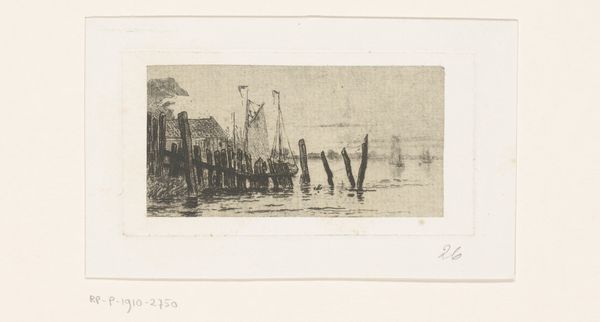
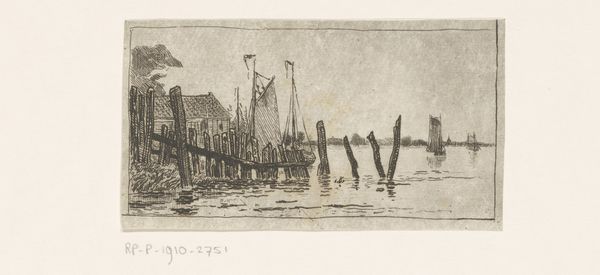
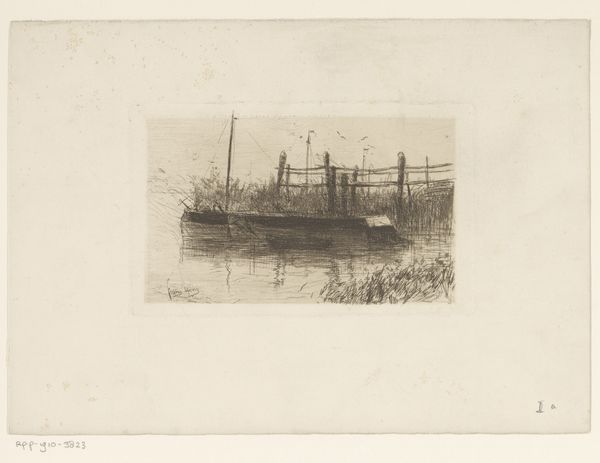
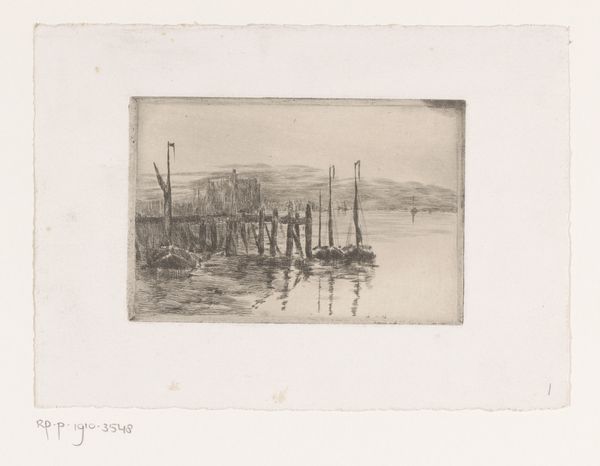
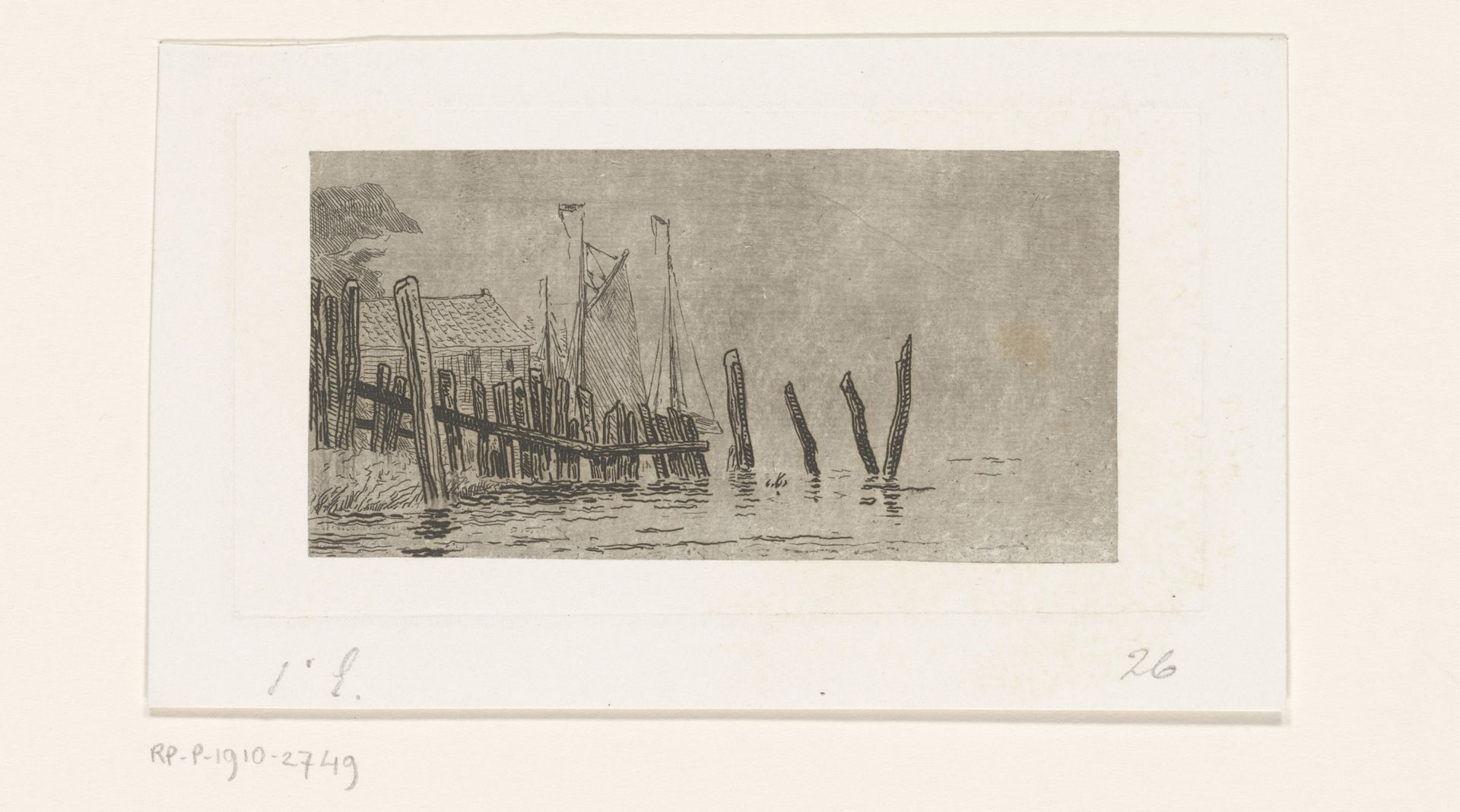
Carel Nicolaas Storm van 's-Gravesande made this etching, "Staketsel bij Burcht aan de Schelde," using black ink. The image evokes the cultural and economic life of the Netherlands, probably in the late 19th century. The scene depicts a stake fence near a harbor on the Schelde river; the river was the economic life-blood of the country as it connected to the port of Antwerp. Visual codes such as a modest building and small boats suggest a working-class environment dependent on maritime activities. Historically, the Schelde has been both a source of prosperity and a point of contention, influencing the region’s social and political landscape. To fully understand this work, one might consult historical records of maritime trade, local archives detailing the socio-economic conditions of communities along the Schelde, and the institutional history of Dutch art. In doing so, we may better understand the public role of art and its relationship to social structures.
Staketsel bij Burcht aan de Schelde c. 1872

Carel Nicolaas Storm van 's-Gravesande
1841 - 1924Location
RijksmuseumArtwork details
- Medium
- drawing, paper, ink
- Dimensions
- height 60 mm, width 115 mm
- Location
- Rijksmuseum
- Copyright
- Rijks Museum: Open Domain
Tags
drawing
landscape
river
paper
ink
realism
Comments
No comments
About this artwork
Carel Nicolaas Storm van 's-Gravesande made this etching, "Staketsel bij Burcht aan de Schelde," using black ink. The image evokes the cultural and economic life of the Netherlands, probably in the late 19th century. The scene depicts a stake fence near a harbor on the Schelde river; the river was the economic life-blood of the country as it connected to the port of Antwerp. Visual codes such as a modest building and small boats suggest a working-class environment dependent on maritime activities. Historically, the Schelde has been both a source of prosperity and a point of contention, influencing the region’s social and political landscape. To fully understand this work, one might consult historical records of maritime trade, local archives detailing the socio-economic conditions of communities along the Schelde, and the institutional history of Dutch art. In doing so, we may better understand the public role of art and its relationship to social structures.
Comments
No comments