About this artwork
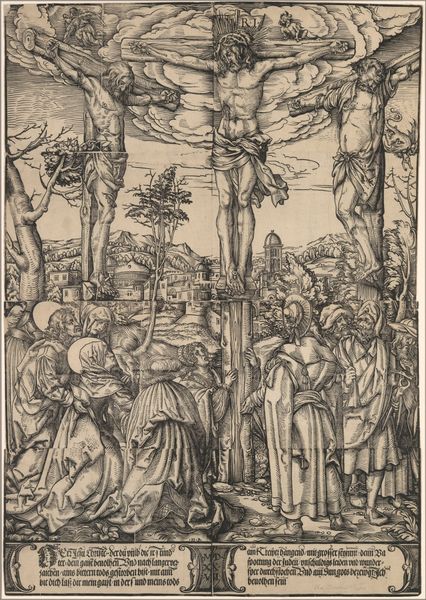
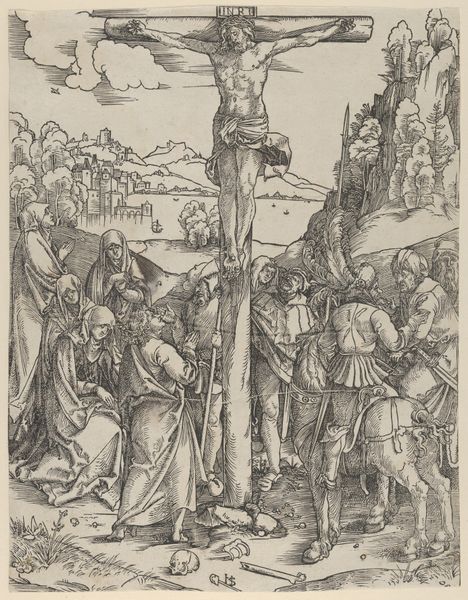
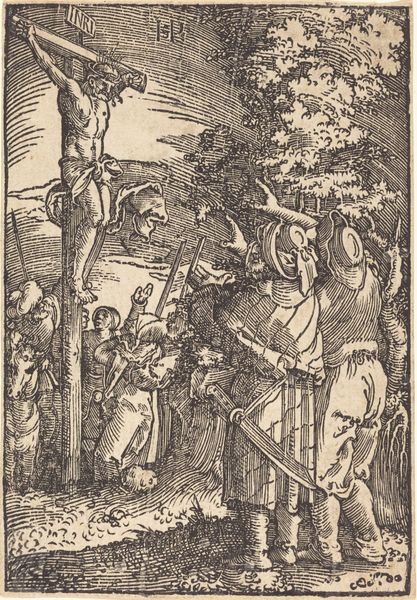
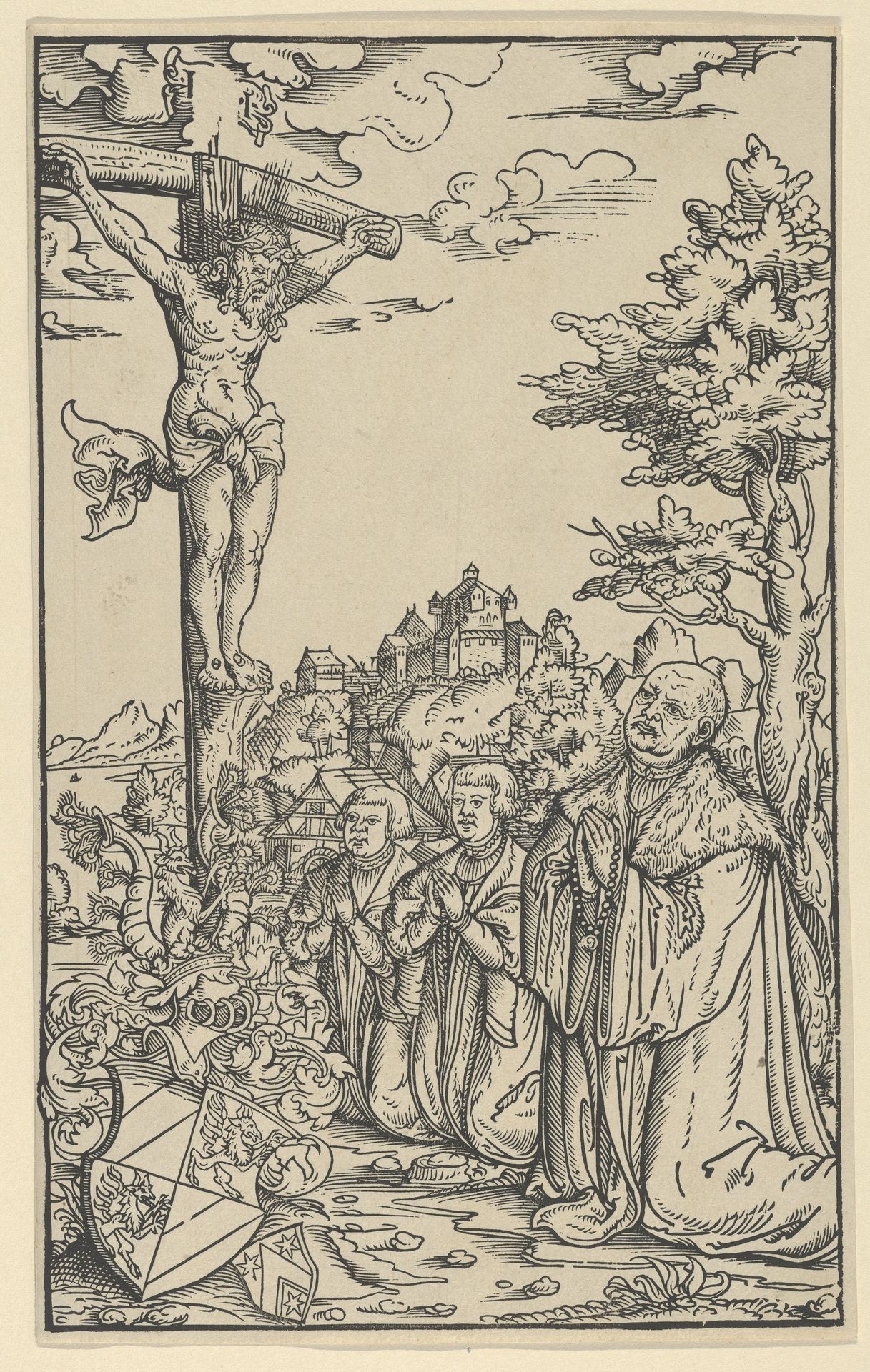
This woodcut bookplate by Lucas Cranach the Younger depicts the crucifixion, with patrons kneeling in pious devotion. Here, the icon of the crucifixion serves as a powerful emblem of faith, sacrifice, and redemption deeply embedded in the cultural psyche of 16th-century Europe. The image of the cross, of course, echoes through centuries, from early Christian symbols to its pervasive presence in medieval art. But observe, if you will, how the act of kneeling— a gesture of humility and supplication— recurs across cultures and epochs. Think of the pharaohs kneeling before their gods or medieval knights before their kings. The emotional resonance is palpable. The cross elicits not just religious reverence, but also primal responses of sorrow, empathy, and a longing for transcendence. The act of witnessing Christ's suffering becomes a cathartic experience, a collective mourning ritual re-enacted through art. Thus, the image carries within it layers of meaning, continuously evolving, yet forever tethered to its origins.
Book-Plate of Christoph Scheurl
1535 - 1599

Lucas Cranach the Younger
1515 - 1586
The Metropolitan Museum of Art
Metropolitan Museum of Art, New York, NYArtwork details
- Medium
- drawing, print, woodcut, engraving
- Dimensions
- Sheet: 9 1/4 × 5 13/16 in. (23.5 × 14.7 cm)
- Location
- Metropolitan Museum of Art, New York, NY
- Copyright
- Public Domain
Tags
Comments
Share your thoughts
About this artwork
This woodcut bookplate by Lucas Cranach the Younger depicts the crucifixion, with patrons kneeling in pious devotion. Here, the icon of the crucifixion serves as a powerful emblem of faith, sacrifice, and redemption deeply embedded in the cultural psyche of 16th-century Europe. The image of the cross, of course, echoes through centuries, from early Christian symbols to its pervasive presence in medieval art. But observe, if you will, how the act of kneeling— a gesture of humility and supplication— recurs across cultures and epochs. Think of the pharaohs kneeling before their gods or medieval knights before their kings. The emotional resonance is palpable. The cross elicits not just religious reverence, but also primal responses of sorrow, empathy, and a longing for transcendence. The act of witnessing Christ's suffering becomes a cathartic experience, a collective mourning ritual re-enacted through art. Thus, the image carries within it layers of meaning, continuously evolving, yet forever tethered to its origins.
Comments
Share your thoughts