About this artwork
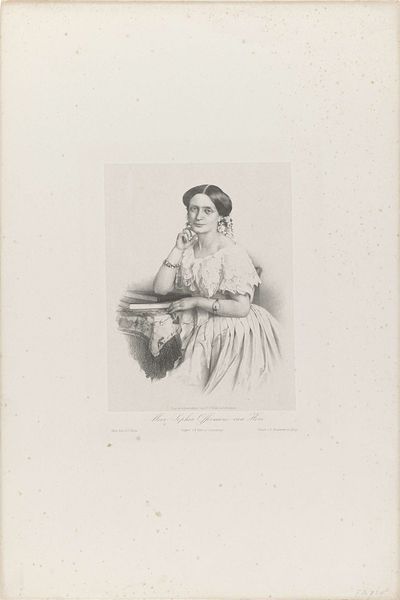
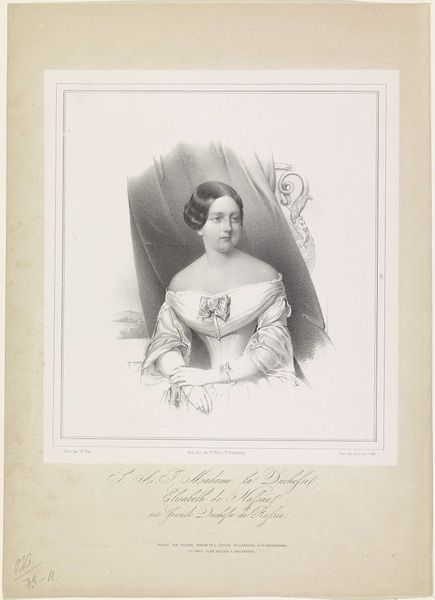
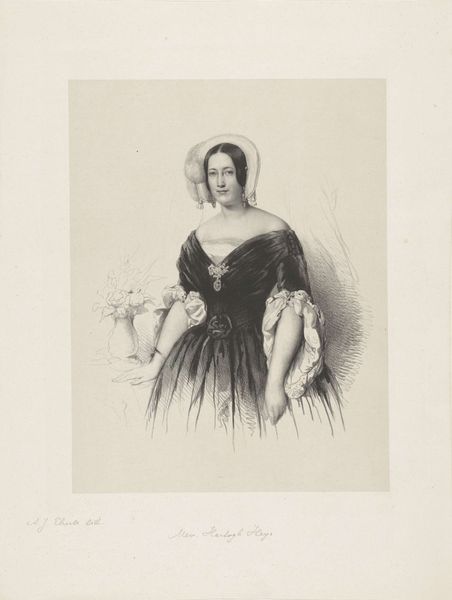
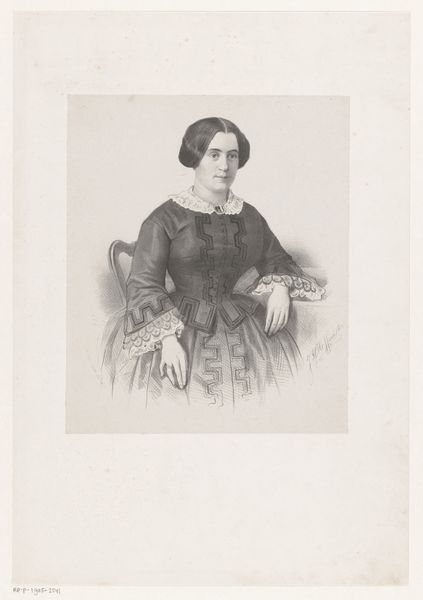
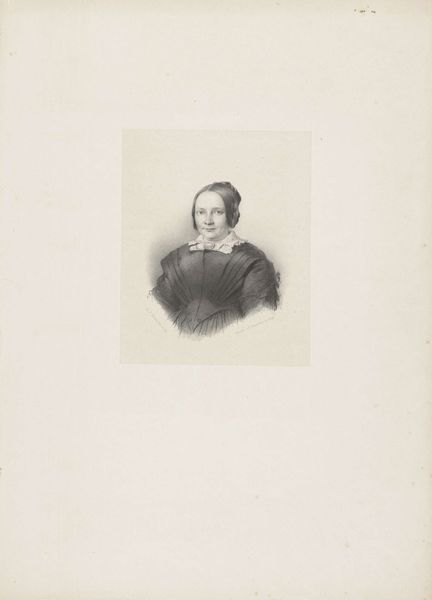
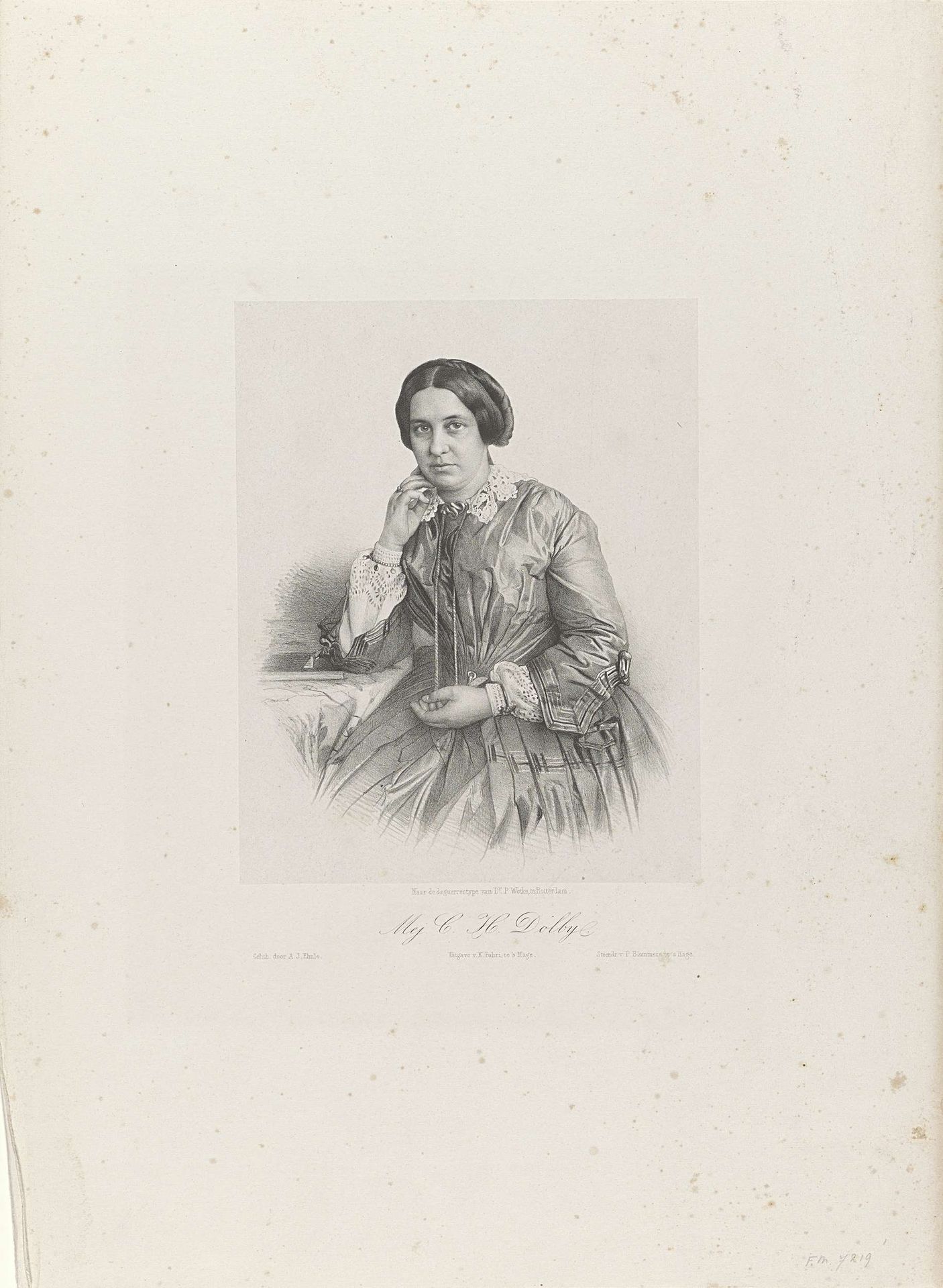
This is a portrait of Miss C.H. Dolby, made in 1854 by Adrianus Johannes Ehnle, using lithography. Portraits in the mid-19th century Netherlands reflected the values and social structures of the time, often serving as symbols of status, wealth and family lineage. Miss Dolby’s attire, a fashionable dress with lace detailing, speaks to her position within the Dutch middle class. Ehnle’s artistic output reveals aspects of institutional history; his work being held in the Rijksprentenkabinet—the National Print Collection—demonstrates the importance given to printed images in preserving and disseminating cultural memory. He uses lithography, which allowed for the mass production of images, making art more accessible to a broader audience. As historians, it is important to consult resources such as period newspapers, fashion plates, and genealogical records in order to understand this piece more fully. Only then can we really begin to understand the role of art as a cultural and historical document.

Artwork details
- Medium
- print, engraving
- Dimensions
- height 495 mm, width 365 mm
- Location
- Rijksmuseum
- Copyright
- Rijks Museum: Open Domain
Tags
Comments
Share your thoughts
About this artwork
This is a portrait of Miss C.H. Dolby, made in 1854 by Adrianus Johannes Ehnle, using lithography. Portraits in the mid-19th century Netherlands reflected the values and social structures of the time, often serving as symbols of status, wealth and family lineage. Miss Dolby’s attire, a fashionable dress with lace detailing, speaks to her position within the Dutch middle class. Ehnle’s artistic output reveals aspects of institutional history; his work being held in the Rijksprentenkabinet—the National Print Collection—demonstrates the importance given to printed images in preserving and disseminating cultural memory. He uses lithography, which allowed for the mass production of images, making art more accessible to a broader audience. As historians, it is important to consult resources such as period newspapers, fashion plates, and genealogical records in order to understand this piece more fully. Only then can we really begin to understand the role of art as a cultural and historical document.
Comments
Share your thoughts