About this artwork
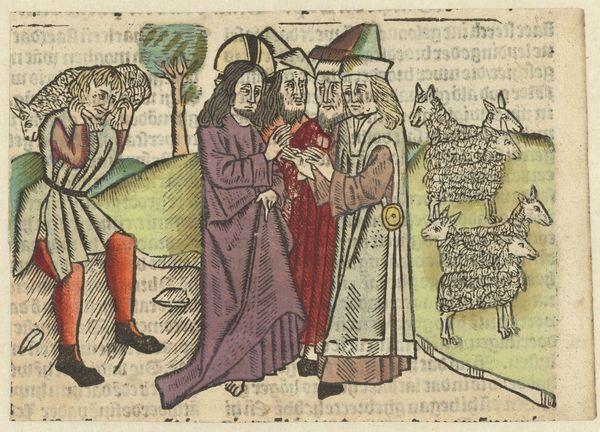
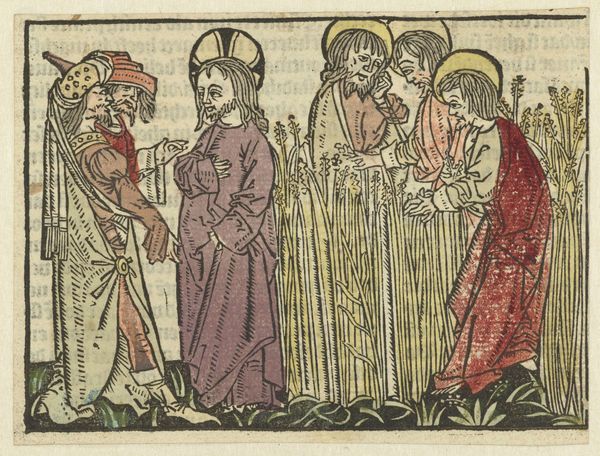
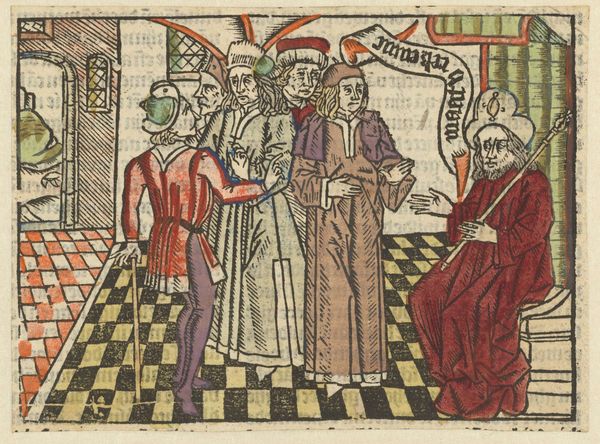
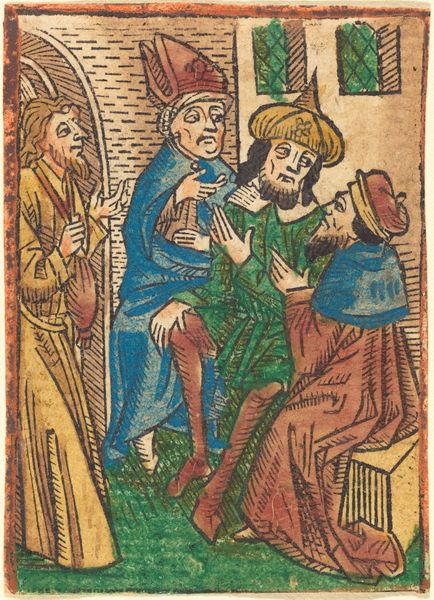
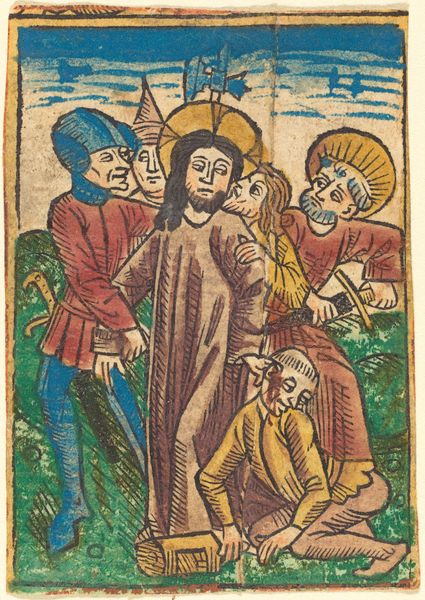
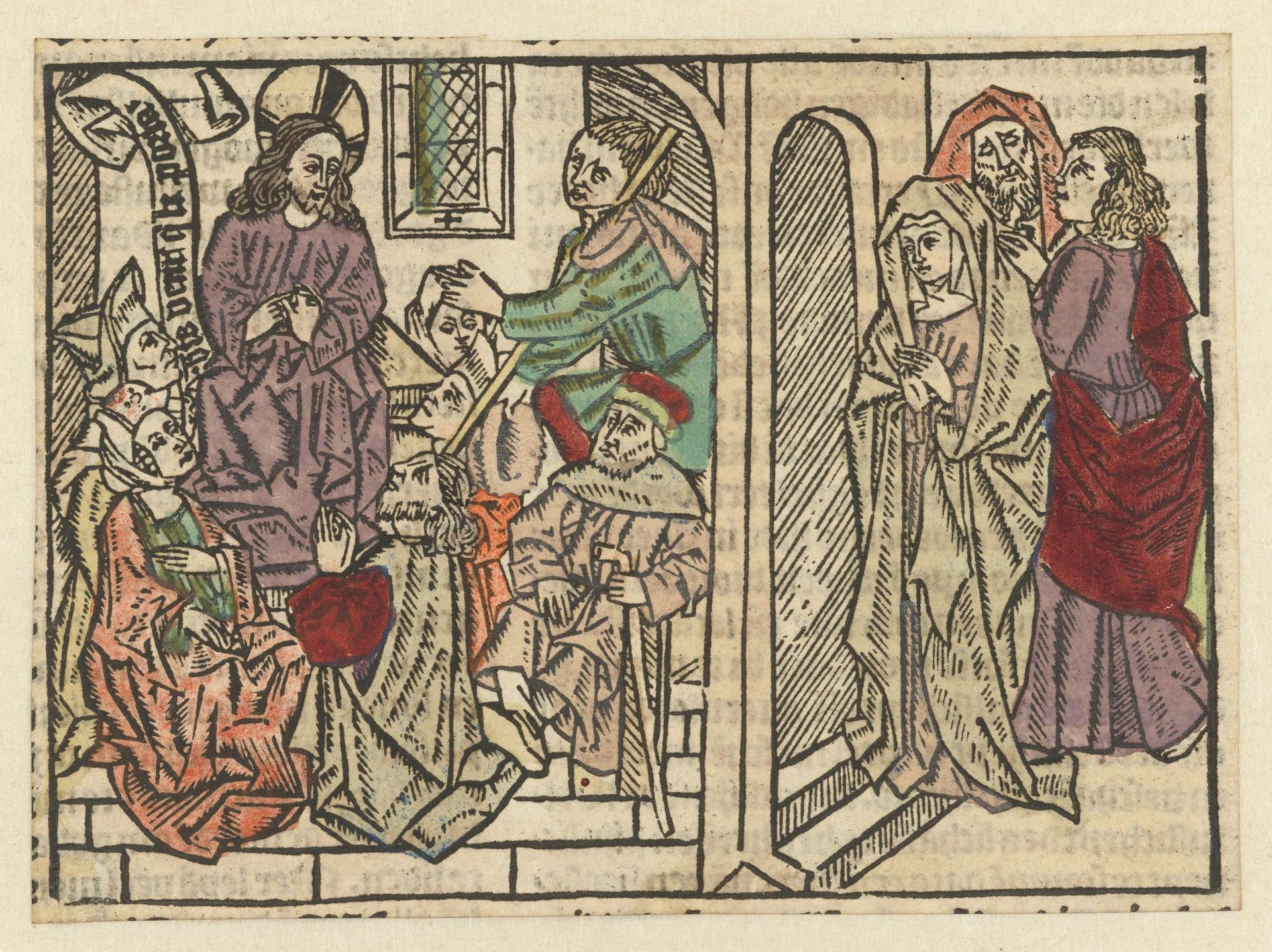
This is a woodcut from an unknown date by Meester van Antwerpen (I) depicting the moment when Christ is sought by his mother and brothers. The scene is divided into two distinct spaces, each meticulously detailed with sharp lines and bold colors. On the left, Christ sits surrounded by learned men, their faces a mixture of curiosity and reverence. The composition here is dense, with figures overlapping, creating a sense of intellectual intensity. To the right, the space opens to reveal Christ's family, their faces etched with concern. The stark contrast between these two groups serves as a powerful semiotic device. The artist invites us to consider the tension between the sacred and the familial, challenging fixed notions of duty and devotion. The use of line and color further enhances this dichotomy, creating a visual framework that destabilizes conventional interpretations of faith and kinship. Through these formal qualities, the artwork invites ongoing interpretation.
Christus wordt gezocht door zijn moeder en broeders 1485 - 1491

Artwork details
- Medium
- print, woodcut
- Dimensions
- height 95 mm, width 131 mm
- Copyright
- Rijks Museum: Open Domain
Tags
narrative-art
pen drawing
figuration
woodcut
northern-renaissance
Comments
No comments
About this artwork
This is a woodcut from an unknown date by Meester van Antwerpen (I) depicting the moment when Christ is sought by his mother and brothers. The scene is divided into two distinct spaces, each meticulously detailed with sharp lines and bold colors. On the left, Christ sits surrounded by learned men, their faces a mixture of curiosity and reverence. The composition here is dense, with figures overlapping, creating a sense of intellectual intensity. To the right, the space opens to reveal Christ's family, their faces etched with concern. The stark contrast between these two groups serves as a powerful semiotic device. The artist invites us to consider the tension between the sacred and the familial, challenging fixed notions of duty and devotion. The use of line and color further enhances this dichotomy, creating a visual framework that destabilizes conventional interpretations of faith and kinship. Through these formal qualities, the artwork invites ongoing interpretation.
Comments
No comments