About this artwork
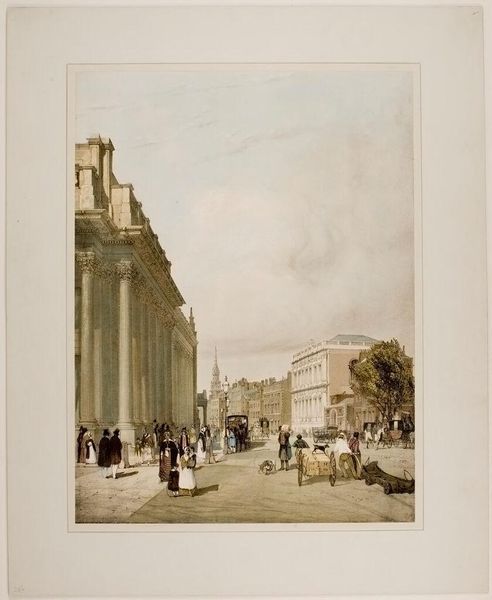
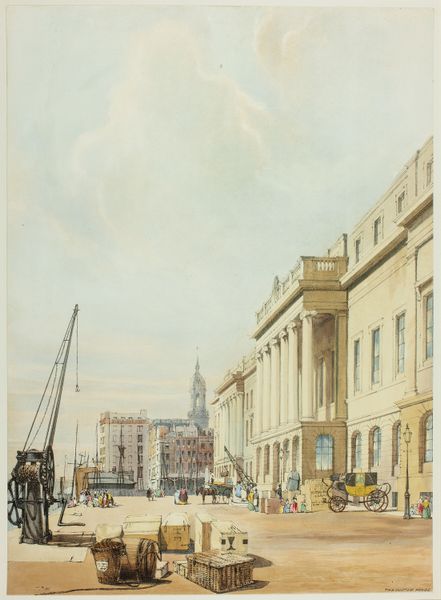
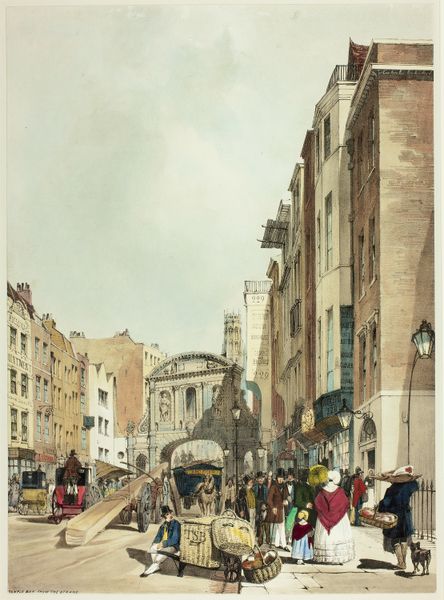
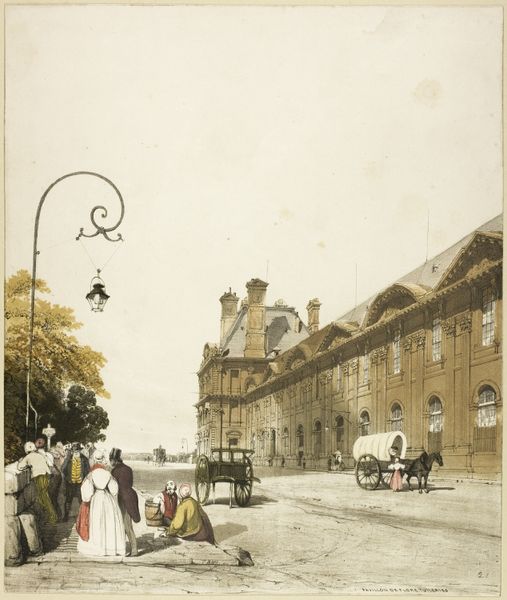
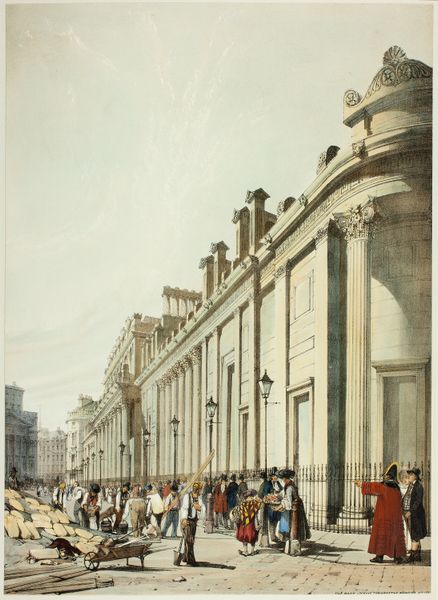
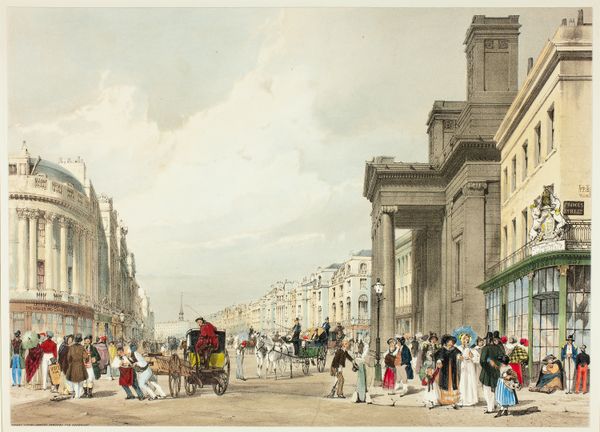
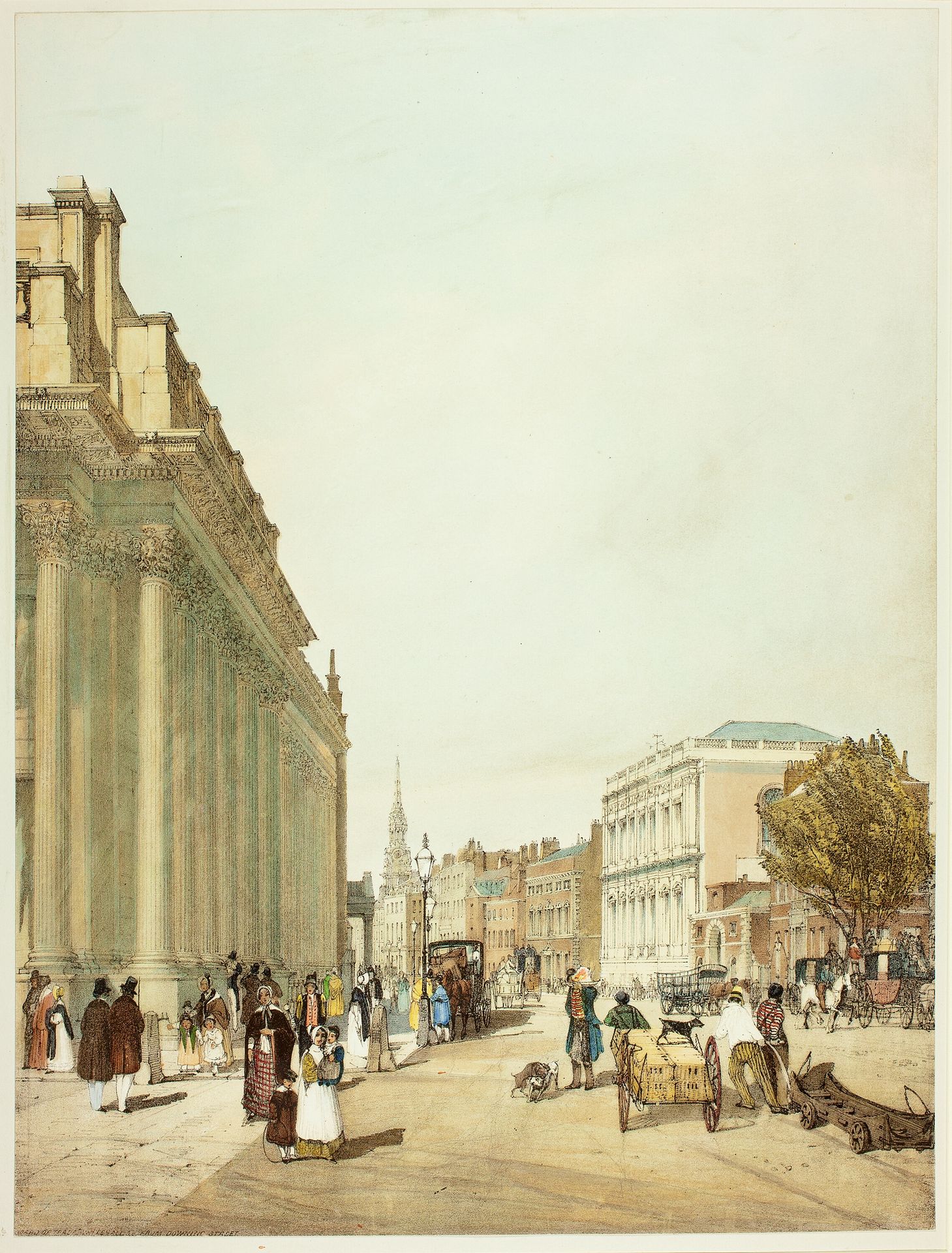
Thomas Shotter Boys created this print of the Board of Trade building in Whitehall, London, at a time when Britain was a major economic power. In the image, we see a bustling city street, complete with pedestrians, horse-drawn carriages, and workers. Yet, the massive, columned façade of the Board of Trade looms over the scene. The architecture conveys a sense of power and authority, visually reinforcing the importance of this institution in the British Empire. This was a period of rapid industrialization and global trade, so the Board played a crucial role in shaping economic policy. Boys' print can be seen as a reflection of the values of his time. It celebrates Britain's commercial prowess and the institutions that underpinned it. However, as historians, we can also examine the print critically, researching the social and economic consequences of this era, such as colonialism and wealth inequality.
Board of Trade, Whitehall, from Downing Street, plate eight from Original Views of London as It Is
1842


Artwork details
- Medium
- drawing, lithograph, print, paper, watercolor
- Dimensions
- 420 × 320 mm
- Location
- The Art Institute of Chicago
- Copyright
- Public Domain
Tags
Comments
Share your thoughts
About this artwork
Thomas Shotter Boys created this print of the Board of Trade building in Whitehall, London, at a time when Britain was a major economic power. In the image, we see a bustling city street, complete with pedestrians, horse-drawn carriages, and workers. Yet, the massive, columned façade of the Board of Trade looms over the scene. The architecture conveys a sense of power and authority, visually reinforcing the importance of this institution in the British Empire. This was a period of rapid industrialization and global trade, so the Board played a crucial role in shaping economic policy. Boys' print can be seen as a reflection of the values of his time. It celebrates Britain's commercial prowess and the institutions that underpinned it. However, as historians, we can also examine the print critically, researching the social and economic consequences of this era, such as colonialism and wealth inequality.
Comments
Share your thoughts