About this artwork
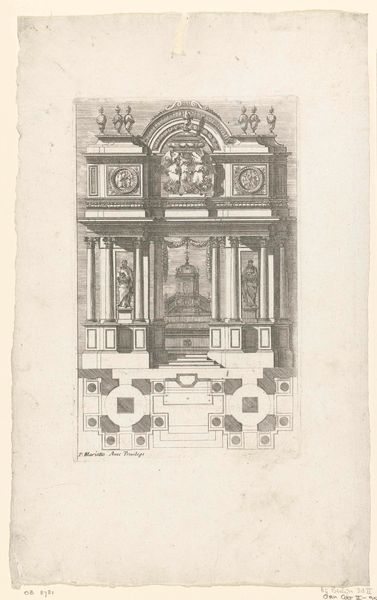
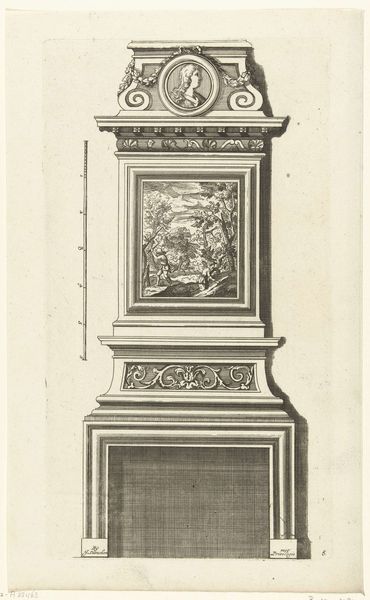
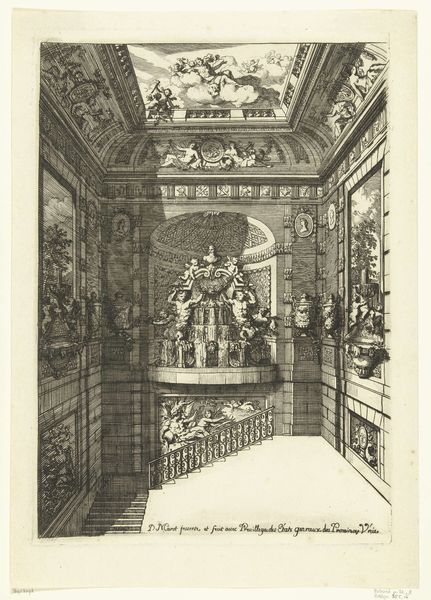
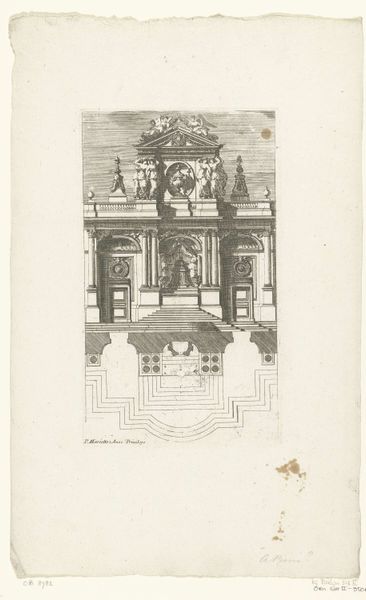
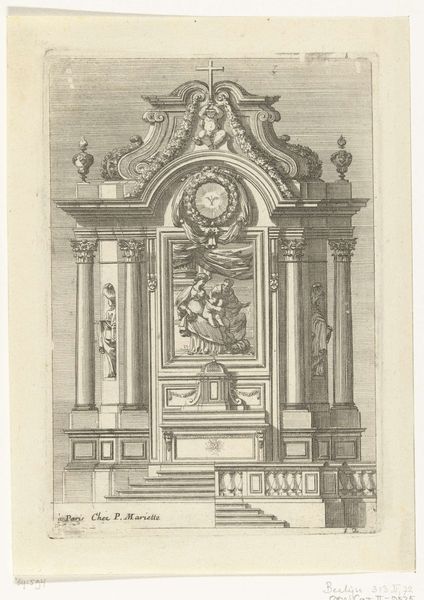
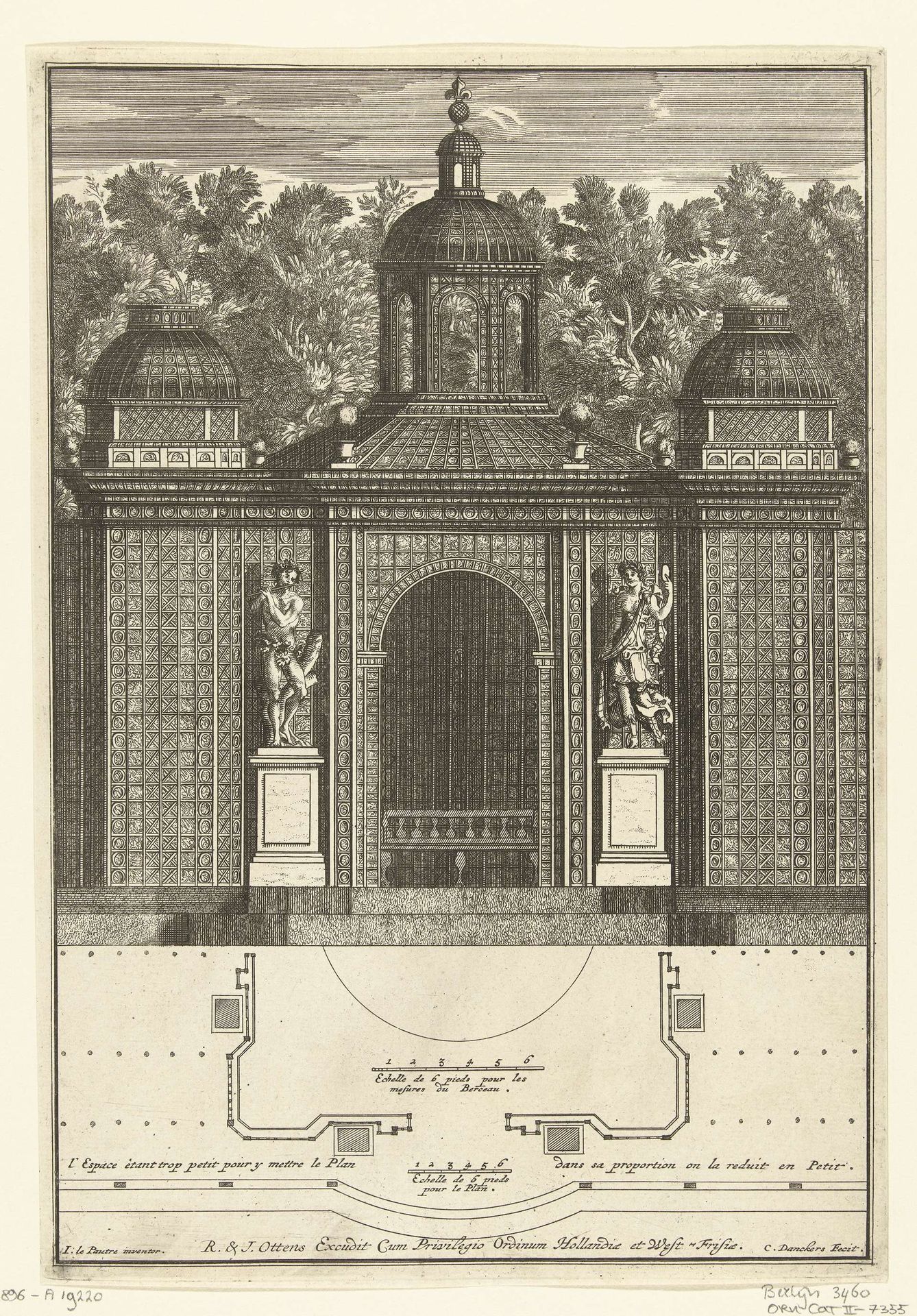
This pavilion design was etched by Cornelis Danckerts II. Dominating the composition are the two statues that guard the pavilion’s entrance. Their classical allusions are clear, evoking a lineage stretching back to antiquity. But observe how these figures stand in relation to the garden architecture. The pavilion, with its orderly latticework, symbolizes human attempts to control nature, yet the wild foliage behind it suggests nature's untamable essence. This tension between order and wilderness echoes throughout art history, reflecting our complex relationship with the natural world. Consider, for instance, the many depictions of the Garden of Eden, a space both cultivated and intrinsically wild. These motifs are not merely aesthetic choices; they engage our collective memory, stirring deep-seated feelings about control, freedom, and the inherent chaos of life. It is this emotional undercurrent that allows such imagery to resonate across centuries, reappearing in new forms, yet carrying the same potent, primal energy.
Latwerkpaviljoen met nis Possibly 1726 - 1765

Cornelis (II) Danckerts
1664 - 1717Location
RijksmuseumArtwork details
- Medium
- drawing, print, engraving, architecture
- Dimensions
- height 280 mm, width 194 mm
- Location
- Rijksmuseum
- Copyright
- Rijks Museum: Open Domain
Tags
drawing
baroque
landscape
geometric
line
engraving
architecture
Comments
No comments
About this artwork
This pavilion design was etched by Cornelis Danckerts II. Dominating the composition are the two statues that guard the pavilion’s entrance. Their classical allusions are clear, evoking a lineage stretching back to antiquity. But observe how these figures stand in relation to the garden architecture. The pavilion, with its orderly latticework, symbolizes human attempts to control nature, yet the wild foliage behind it suggests nature's untamable essence. This tension between order and wilderness echoes throughout art history, reflecting our complex relationship with the natural world. Consider, for instance, the many depictions of the Garden of Eden, a space both cultivated and intrinsically wild. These motifs are not merely aesthetic choices; they engage our collective memory, stirring deep-seated feelings about control, freedom, and the inherent chaos of life. It is this emotional undercurrent that allows such imagery to resonate across centuries, reappearing in new forms, yet carrying the same potent, primal energy.
Comments
No comments