About this artwork
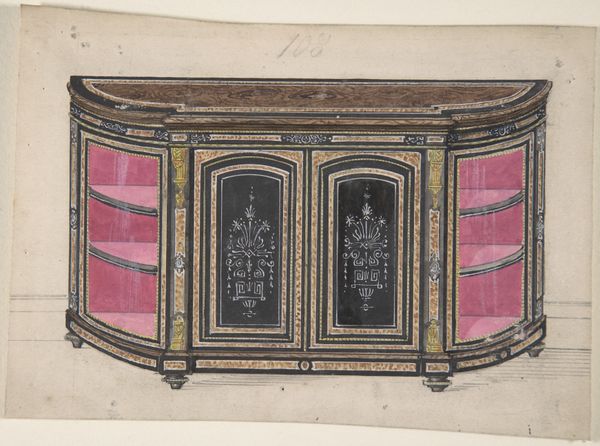
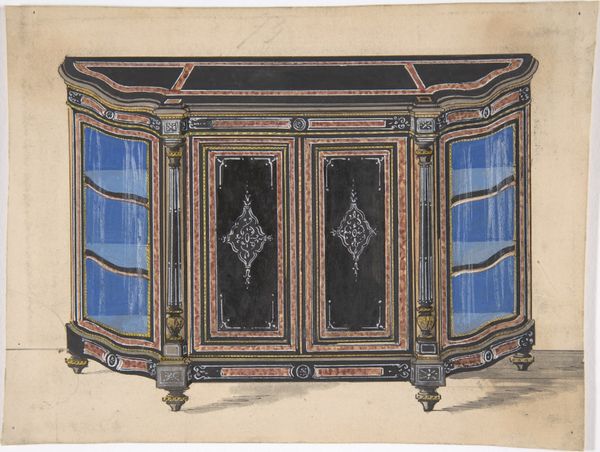
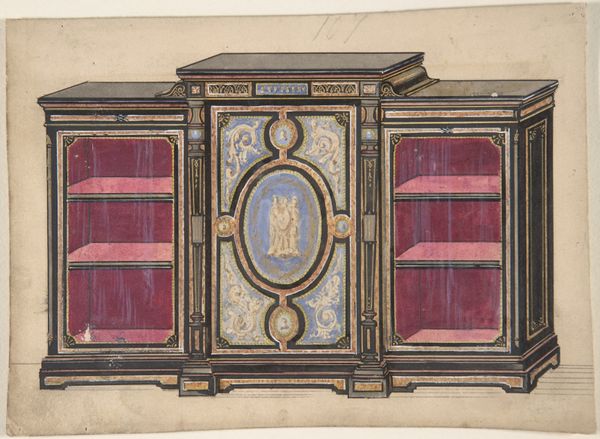
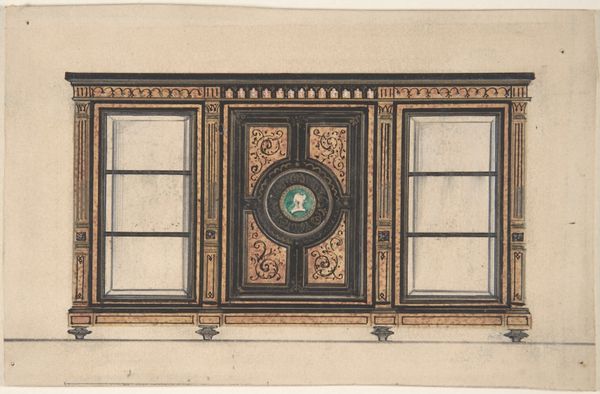
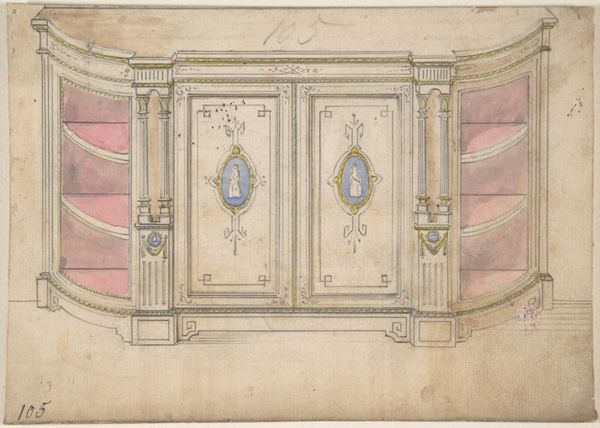
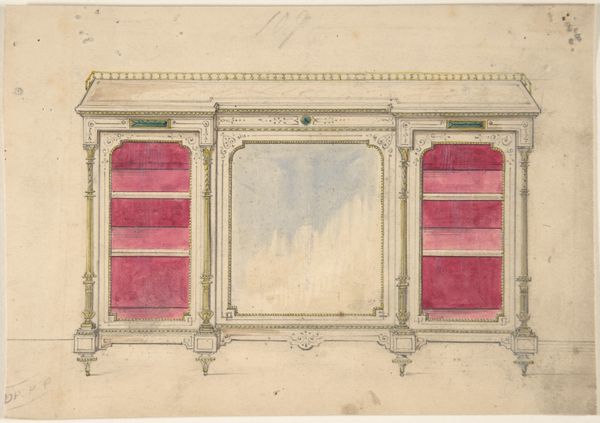
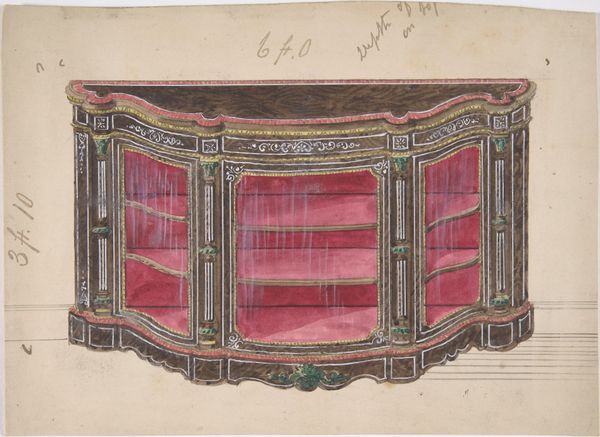
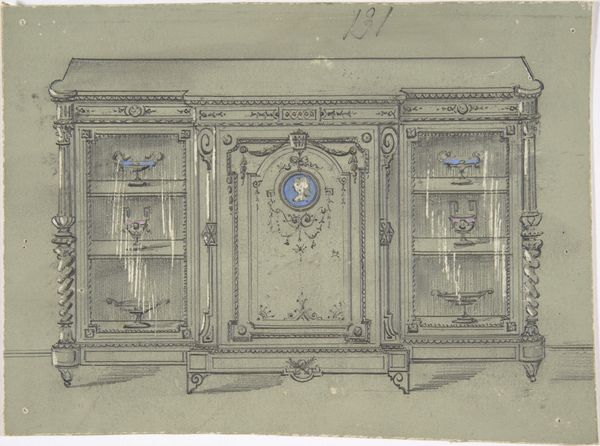
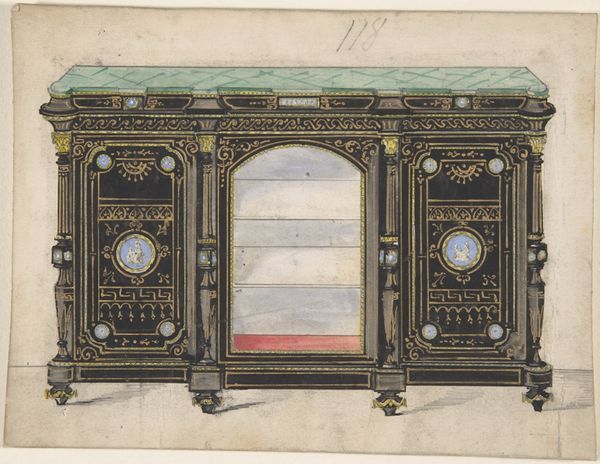
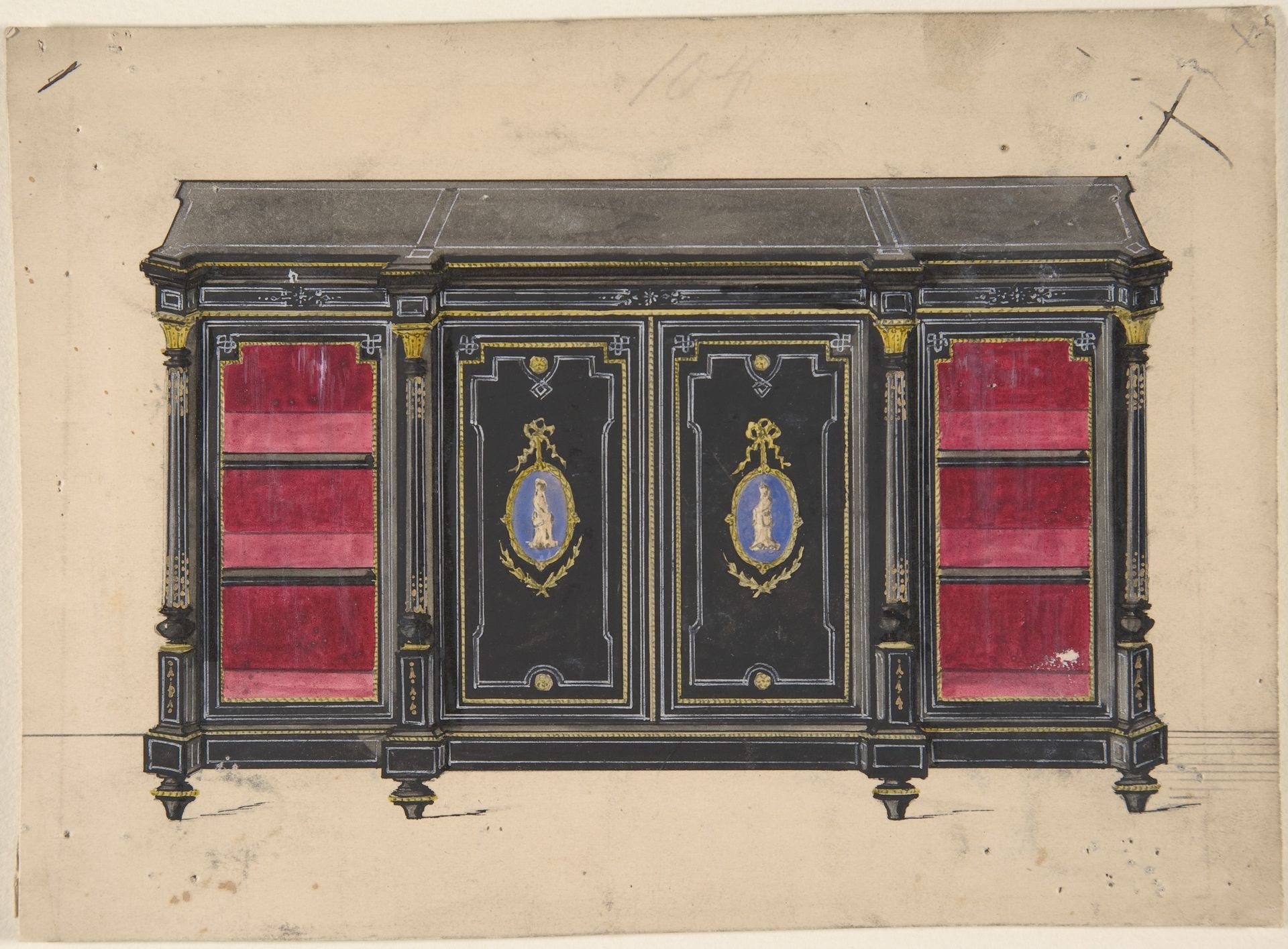
Here we have a cabinet design with porcelain plaques and red interior, created by an anonymous artist. In the absence of the artist's personal history, this detailed design provides insight into the cultural values of the period. Luxury, delicacy, and display are on full show. It offers an intimate glimpse into the aesthetics and societal norms that shaped its creation. Cabinets like this were not merely functional; they were statements of wealth and taste. The anonymous nature of the artist encourages us to think about the many skilled artisans whose names have been lost to history. Consider the red interior—a bold choice that speaks to the desire for opulence. Imagine this cabinet in a lavishly decorated room, reflecting candlelight and the rich colors of the surrounding textiles. The porcelain plaques, perhaps depicting idealized figures, reinforce the era's fascination with beauty and refinement. How does this design speak to our contemporary ideas of beauty and functionality?
Cabinet Design with Porcelain Plaques and Red Interior
1800 - 1900


Artwork details
- Medium
- drawing, print, watercolor
- Dimensions
- sheet: 5 15/16 x 8 1/8 in. (15.1 x 20.7 cm)
- Location
- Metropolitan Museum of Art, New York, NY
- Copyright
- Public Domain
Tags
Comments
Share your thoughts
About this artwork
Here we have a cabinet design with porcelain plaques and red interior, created by an anonymous artist. In the absence of the artist's personal history, this detailed design provides insight into the cultural values of the period. Luxury, delicacy, and display are on full show. It offers an intimate glimpse into the aesthetics and societal norms that shaped its creation. Cabinets like this were not merely functional; they were statements of wealth and taste. The anonymous nature of the artist encourages us to think about the many skilled artisans whose names have been lost to history. Consider the red interior—a bold choice that speaks to the desire for opulence. Imagine this cabinet in a lavishly decorated room, reflecting candlelight and the rich colors of the surrounding textiles. The porcelain plaques, perhaps depicting idealized figures, reinforce the era's fascination with beauty and refinement. How does this design speak to our contemporary ideas of beauty and functionality?
Comments
Share your thoughts