About this artwork
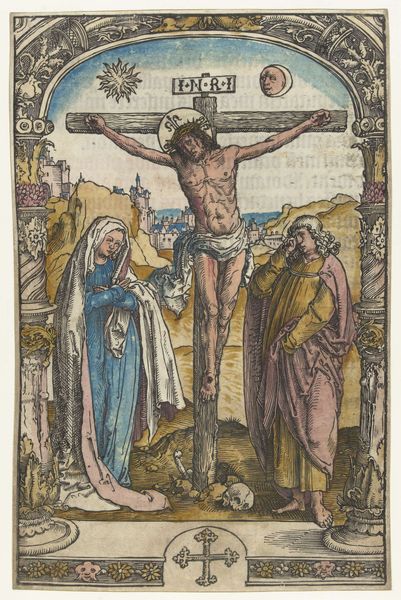
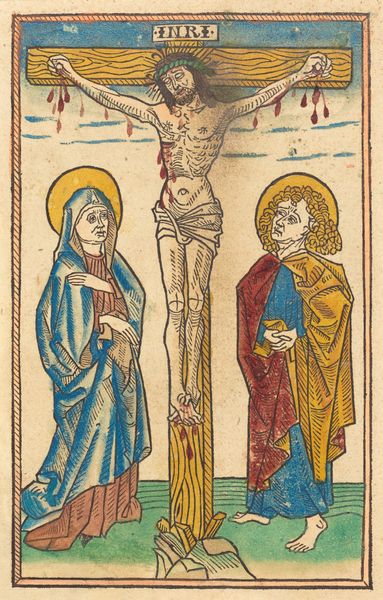
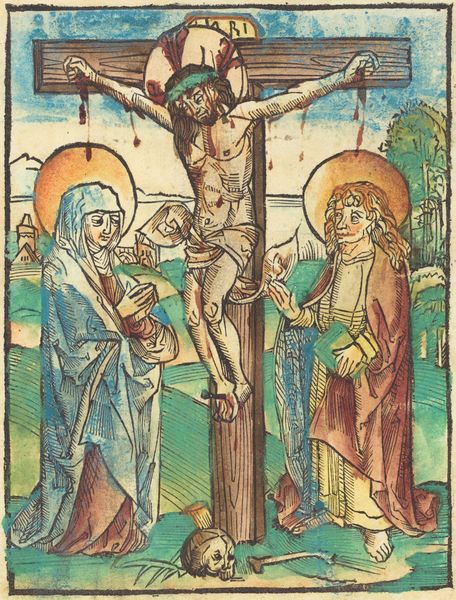
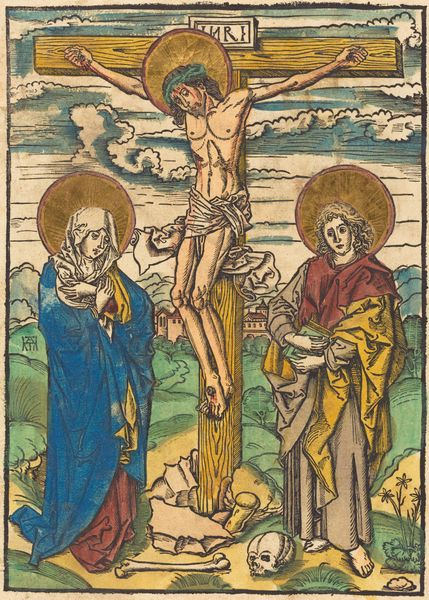
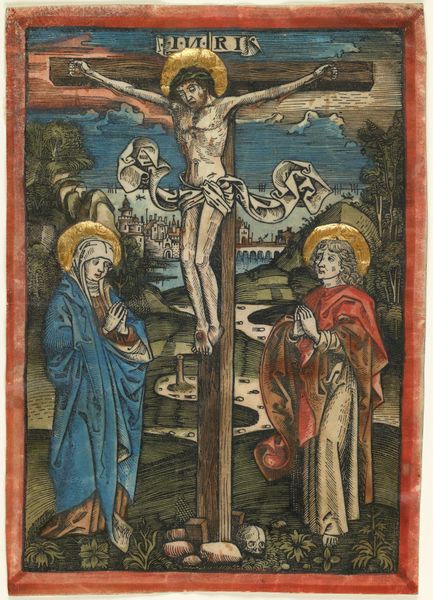
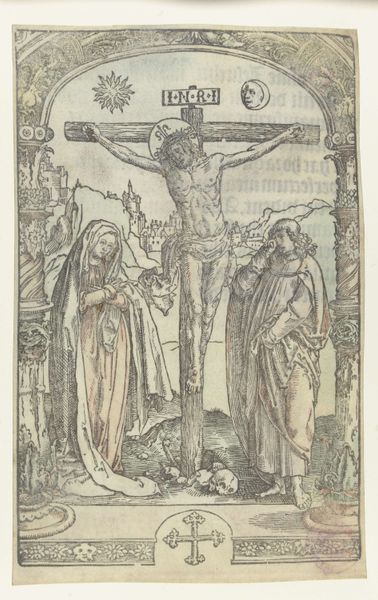
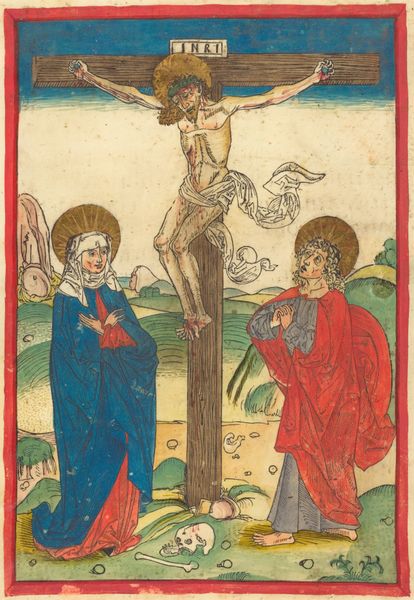
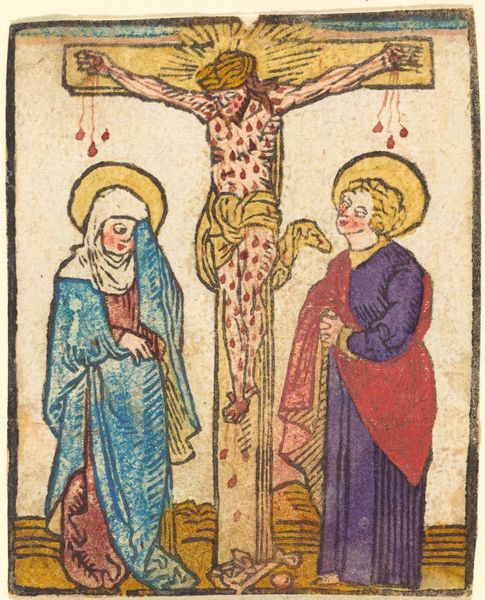
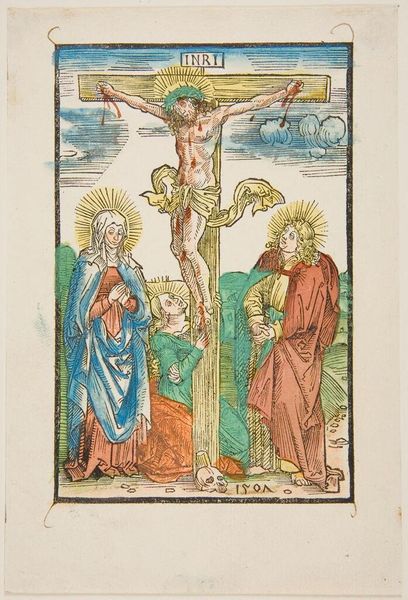
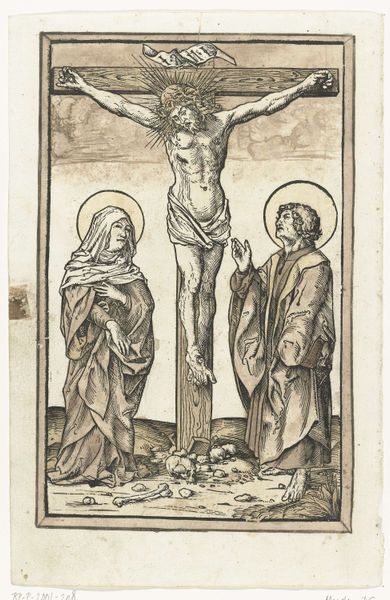
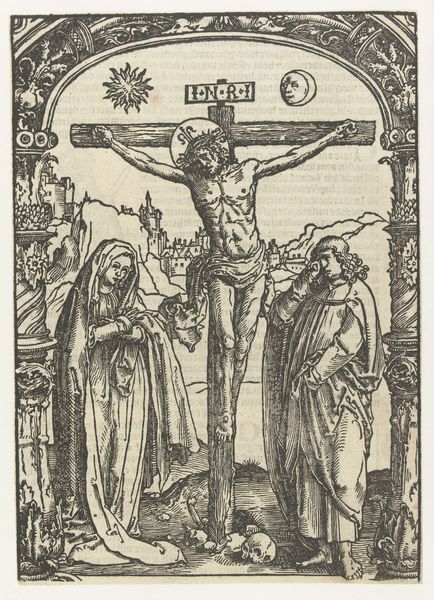
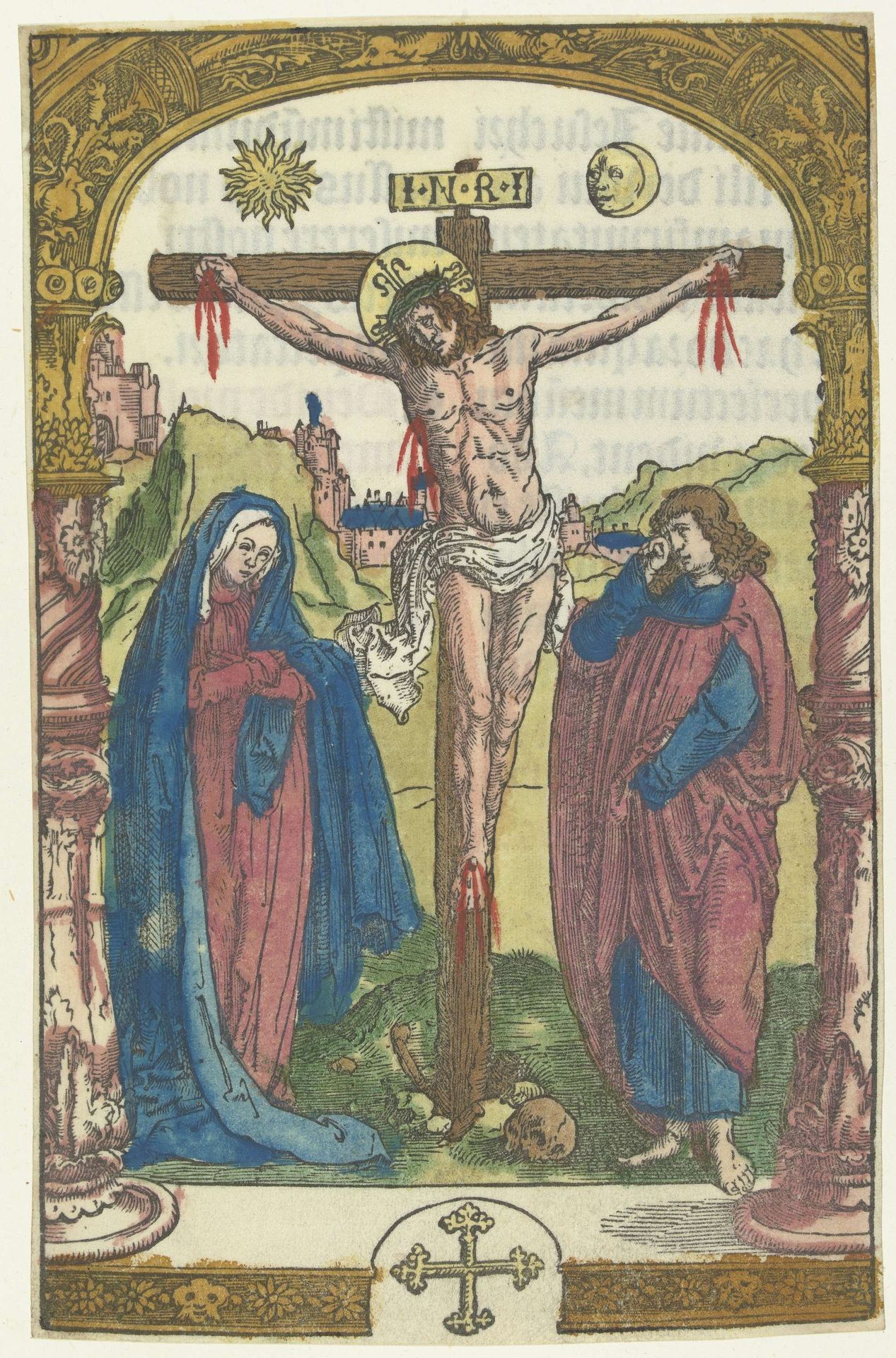
Lucas van Leyden created this colored woodcut of ‘Christus aan het kruis’ sometime between 1510 and 1520. Van Leyden lived in a time of religious upheaval during the early Reformation. Here, the crucifixion is rendered with a visceral, human sensitivity; Christ’s body is marked by suffering, blood running down the cross, a skull at its base symbolizing mortality. Mary and John stand in sympathetic witness to the scene. Though a depiction of divine execution, the artist makes space for expressions of human grief. Van Leyden’s choice of the woodcut medium is also significant. Woodcuts allowed for wider distribution of images. While the elite might commission paintings, woodcuts made religious imagery accessible, creating a shared visual culture that crossed economic lines. The emotional intensity of this print invites us to consider the role of empathy in faith. How do images shape not just what we believe, but how we feel?

Artwork details
- Medium
- carving, print, engraving
- Dimensions
- height 270 mm, width 175 mm
- Location
- Rijksmuseum
- Copyright
- Rijks Museum: Open Domain
Tags
Comments
Share your thoughts
About this artwork
Lucas van Leyden created this colored woodcut of ‘Christus aan het kruis’ sometime between 1510 and 1520. Van Leyden lived in a time of religious upheaval during the early Reformation. Here, the crucifixion is rendered with a visceral, human sensitivity; Christ’s body is marked by suffering, blood running down the cross, a skull at its base symbolizing mortality. Mary and John stand in sympathetic witness to the scene. Though a depiction of divine execution, the artist makes space for expressions of human grief. Van Leyden’s choice of the woodcut medium is also significant. Woodcuts allowed for wider distribution of images. While the elite might commission paintings, woodcuts made religious imagery accessible, creating a shared visual culture that crossed economic lines. The emotional intensity of this print invites us to consider the role of empathy in faith. How do images shape not just what we believe, but how we feel?
Comments
Share your thoughts