About this artwork
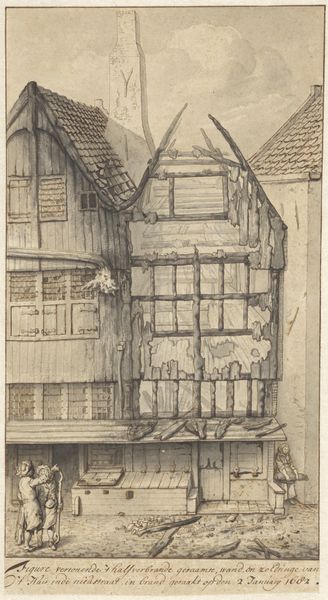
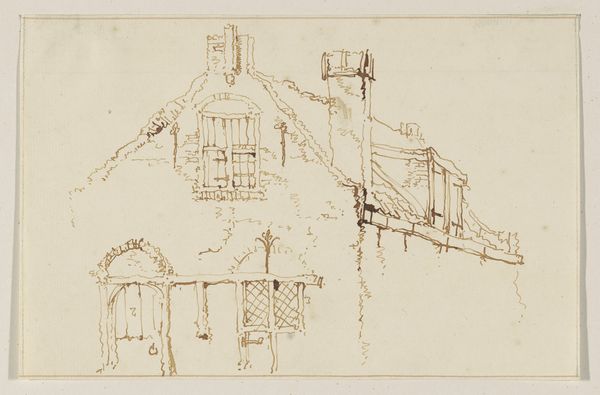
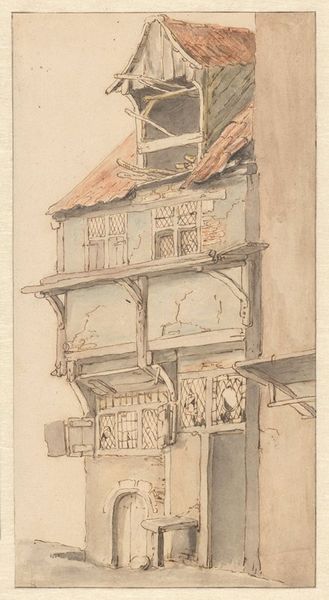
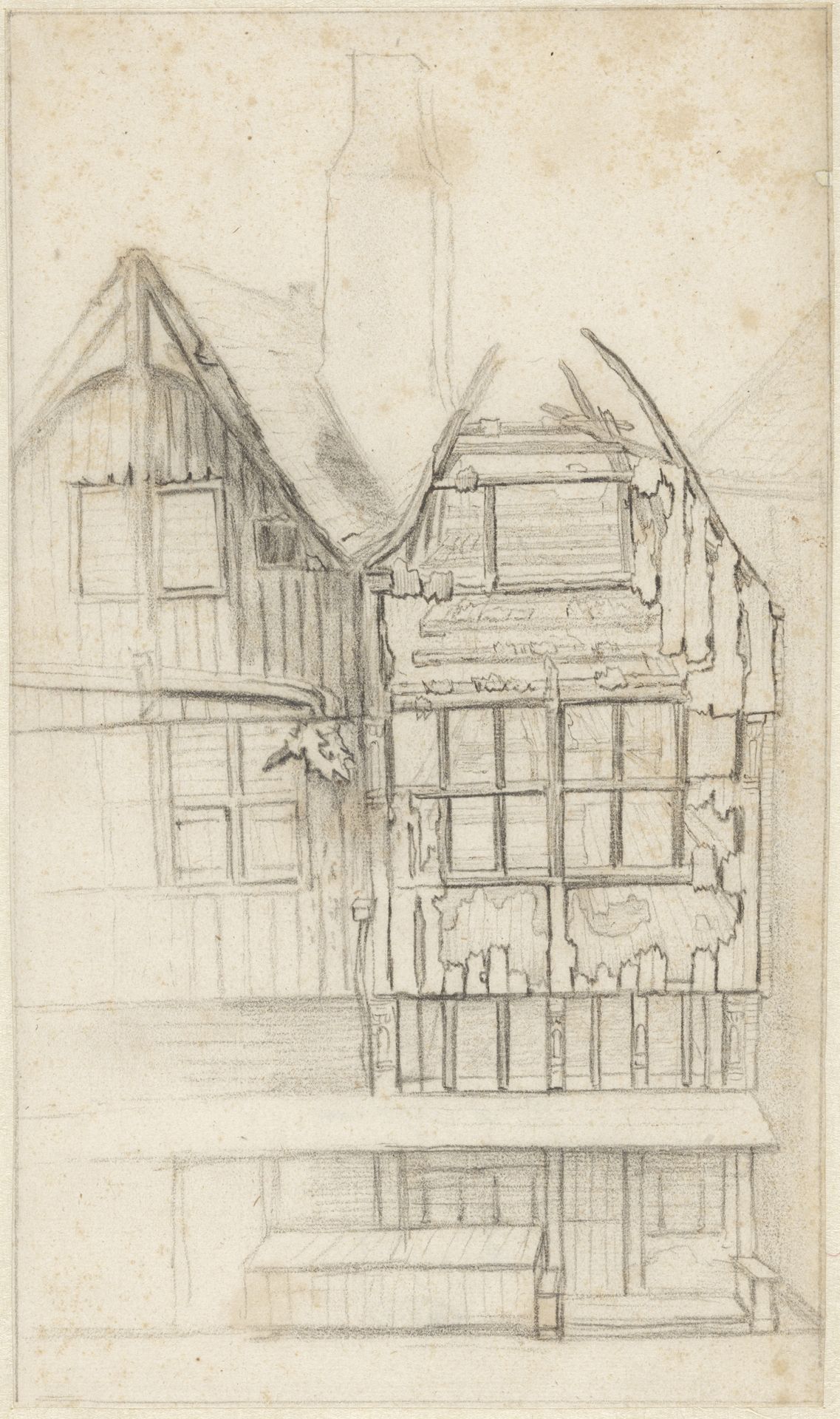
Jan van der Heyden rendered "Two Burned-Out Houses in Oude Nieuwstraat" in 1682 with a graphite pen on paper. The sketch offers a study of destruction and decay with an immediacy that transcends mere documentation. The composition is stark; van der Heyden focuses on the skeletal remains of the buildings, emphasizing their charred textures and broken forms. The use of line is particularly striking. Thin, precise lines define the structures, contrasting with the jagged, erratic lines that depict the fire damage. This contrast creates a tension between order and chaos, reflecting the sudden disruption of the fire. In its raw depiction of urban devastation, the drawing destabilizes conventional notions of architectural beauty, prompting reflection on the fragility of built environments and the transience of human endeavors. The sketch is not merely a record but a commentary on the ephemerality of material existence.
Twee uitgebrande huizen in de Oude Nieuwstraat, 1682
Possibly 1682

Jan van der Heyden
1637 - 1712Location
RijksmuseumArtwork details
- Medium
- drawing, paper, pencil, architecture
- Dimensions
- height 284 mm, width 165 mm
- Location
- Rijksmuseum
- Copyright
- Rijks Museum: Open Domain
Tags
Comments
Share your thoughts
About this artwork
Jan van der Heyden rendered "Two Burned-Out Houses in Oude Nieuwstraat" in 1682 with a graphite pen on paper. The sketch offers a study of destruction and decay with an immediacy that transcends mere documentation. The composition is stark; van der Heyden focuses on the skeletal remains of the buildings, emphasizing their charred textures and broken forms. The use of line is particularly striking. Thin, precise lines define the structures, contrasting with the jagged, erratic lines that depict the fire damage. This contrast creates a tension between order and chaos, reflecting the sudden disruption of the fire. In its raw depiction of urban devastation, the drawing destabilizes conventional notions of architectural beauty, prompting reflection on the fragility of built environments and the transience of human endeavors. The sketch is not merely a record but a commentary on the ephemerality of material existence.
Comments
Share your thoughts