About this artwork
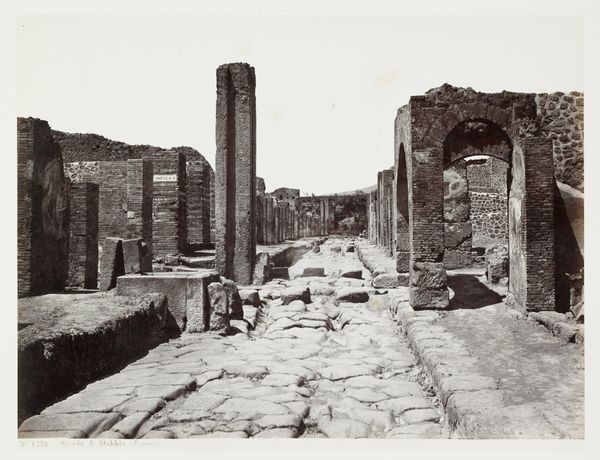
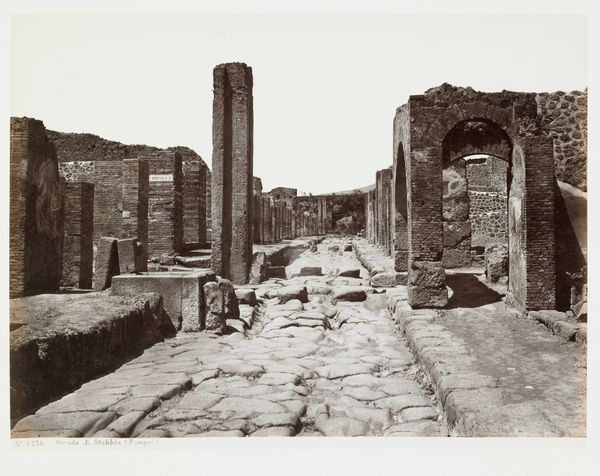
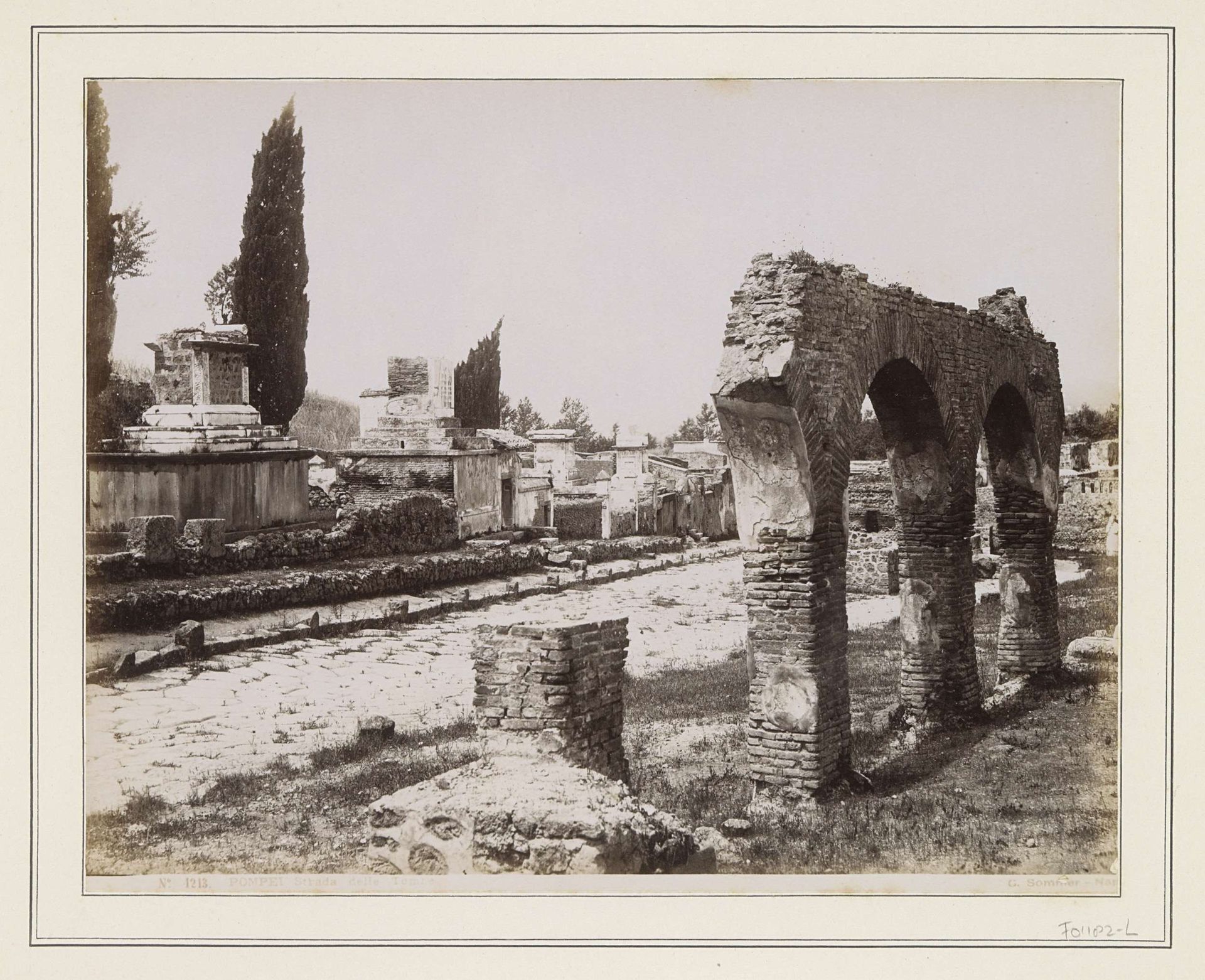
Giorgio Sommer captured this photograph of the "Remains of the Street of Tombs in Pompeii" with albumen silver print. Here, the tombs lining the ancient road serve as potent symbols of mortality and remembrance, a tradition deeply rooted in Roman culture. Note the presence of the arches. They were used as commemorative monuments, like triumphal arches, and also as architectural elements within tombs. These motifs extend back to Etruscan practices and reappear throughout the Renaissance, often used to frame portraits. These symbols have been passed down through history, shifting in meaning. The arch evolved into symbols of triumph and passage, while tombs, as our collective memory dictates, remain sites for mourning. It's on a deep, subconscious level that this composition engages us, stirring a primal awareness of our own mortality. Indeed, these motifs, like echoes from the past, resurface, evolve, and take on new meanings in different historical contexts.
Restanten van Strada delle Tombe in Pompeï c. 1860 - 1890

Giorgio Sommer
1834 - 1914Location
RijksmuseumArtwork details
- Medium
- photography, gelatin-silver-print
- Dimensions
- height 190 mm, width 248 mm
- Location
- Rijksmuseum
- Copyright
- Rijks Museum: Open Domain
Tags
landscape
photography
ancient-mediterranean
orientalism
gelatin-silver-print
19th century
cityscape
history-painting
Comments
No comments
About this artwork
Giorgio Sommer captured this photograph of the "Remains of the Street of Tombs in Pompeii" with albumen silver print. Here, the tombs lining the ancient road serve as potent symbols of mortality and remembrance, a tradition deeply rooted in Roman culture. Note the presence of the arches. They were used as commemorative monuments, like triumphal arches, and also as architectural elements within tombs. These motifs extend back to Etruscan practices and reappear throughout the Renaissance, often used to frame portraits. These symbols have been passed down through history, shifting in meaning. The arch evolved into symbols of triumph and passage, while tombs, as our collective memory dictates, remain sites for mourning. It's on a deep, subconscious level that this composition engages us, stirring a primal awareness of our own mortality. Indeed, these motifs, like echoes from the past, resurface, evolve, and take on new meanings in different historical contexts.
Comments
No comments