About this artwork
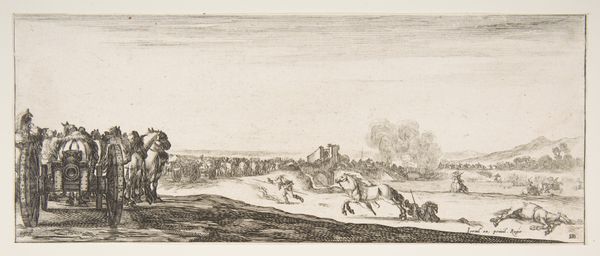
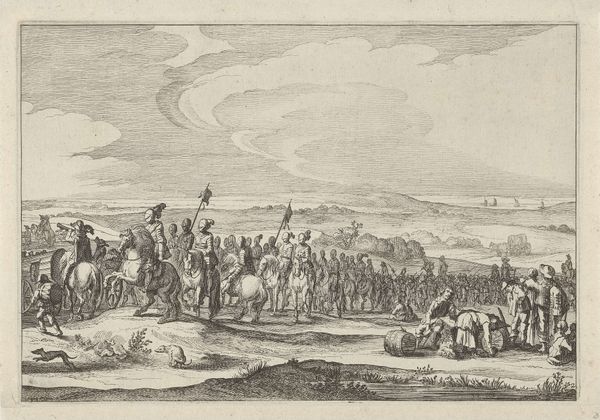
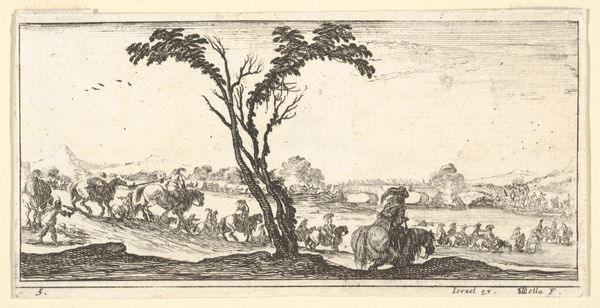
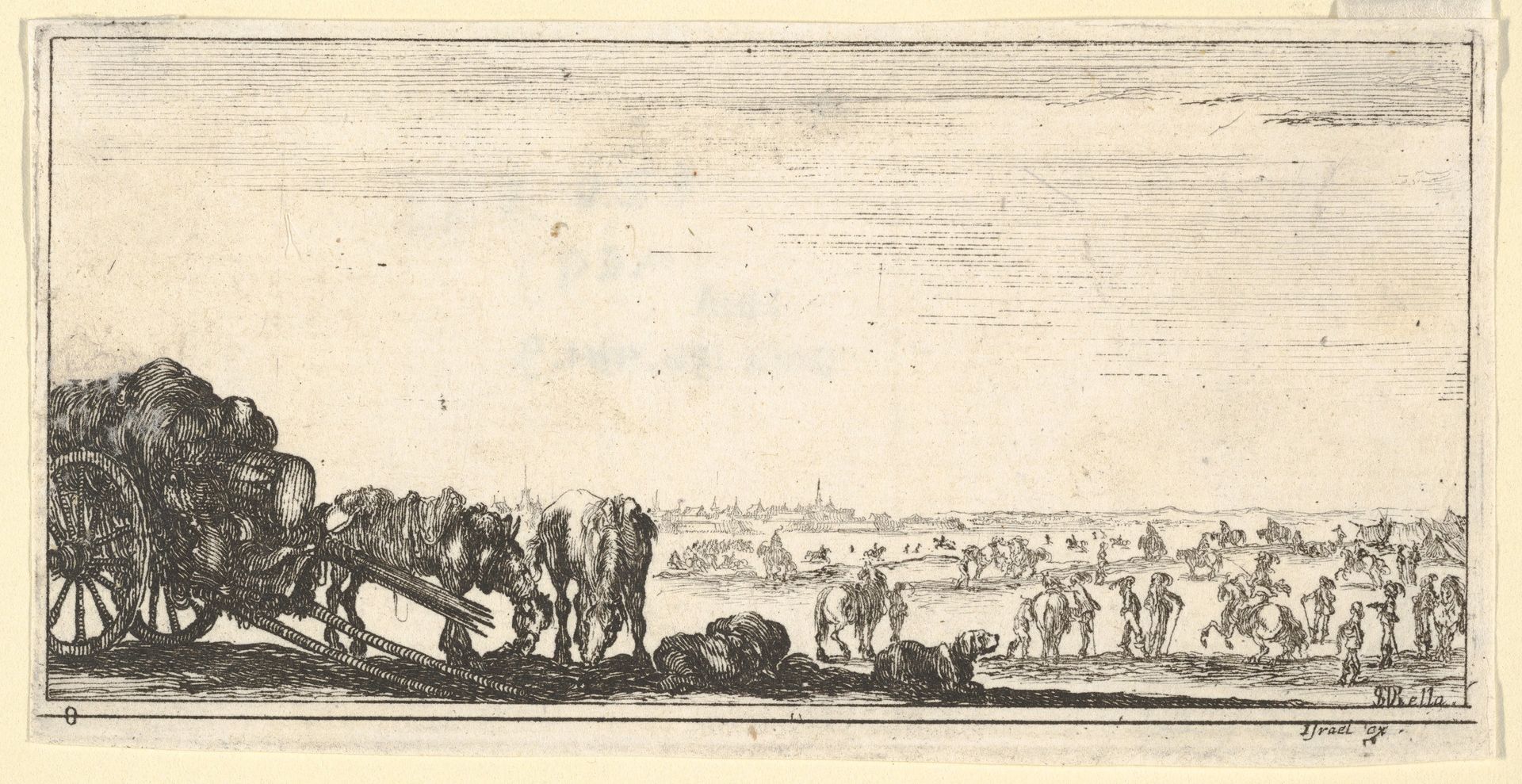
This is Plate 8, an etching by Stefano della Bella, depicting troops and artillery, made in the 17th century. The dog in the foreground catches my eye. In antiquity, the dog was a symbol of fidelity and vigilance, often depicted guarding homes and accompanying hunters. But observe how della Bella positions the animal amidst the chaos of war. It is no longer the loyal companion but seems lost, perhaps mirroring the plight of civilians caught in conflict. This recalls similar depictions of animals in Goya’s "Disasters of War," where they symbolize the breakdown of social order and the primal instincts unleashed by violence. The dog's presence invites us to reflect on the psychological impact of war, an experience that strips away civilization, leaving behind only the raw, emotional residue of trauma. The image resonates with a collective memory of conflict, a recurring nightmare that resurfaces across centuries, each time with new horrors.
Plate 8: a chariot and two horses to left, a dog in center, various horses and soldiers in the background, from 'Troops, cannons, and attacks on towns' (Dessins de quelques conduites de troupes, canons, et ataques de villes) 1635 - 1645

Stefano della Bella
1610 - 1664
The Metropolitan Museum of Art
Metropolitan Museum of Art, New York, NYArtwork details
- Medium
- drawing, print
- Dimensions
- Sheet: 2 1/2 x 5 in. (6.3 x 12.7 cm)
- Location
- Metropolitan Museum of Art, New York, NY
- Copyright
- Public Domain
Tags
drawing
baroque
dog
soldier
horse
history-painting
Comments
No comments
About this artwork
This is Plate 8, an etching by Stefano della Bella, depicting troops and artillery, made in the 17th century. The dog in the foreground catches my eye. In antiquity, the dog was a symbol of fidelity and vigilance, often depicted guarding homes and accompanying hunters. But observe how della Bella positions the animal amidst the chaos of war. It is no longer the loyal companion but seems lost, perhaps mirroring the plight of civilians caught in conflict. This recalls similar depictions of animals in Goya’s "Disasters of War," where they symbolize the breakdown of social order and the primal instincts unleashed by violence. The dog's presence invites us to reflect on the psychological impact of war, an experience that strips away civilization, leaving behind only the raw, emotional residue of trauma. The image resonates with a collective memory of conflict, a recurring nightmare that resurfaces across centuries, each time with new horrors.
Comments
No comments