About this artwork
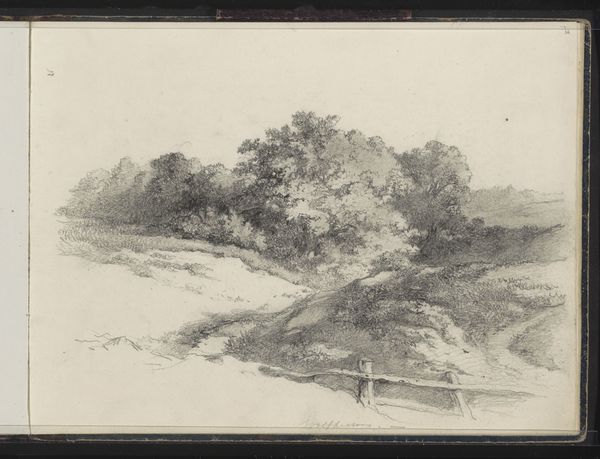
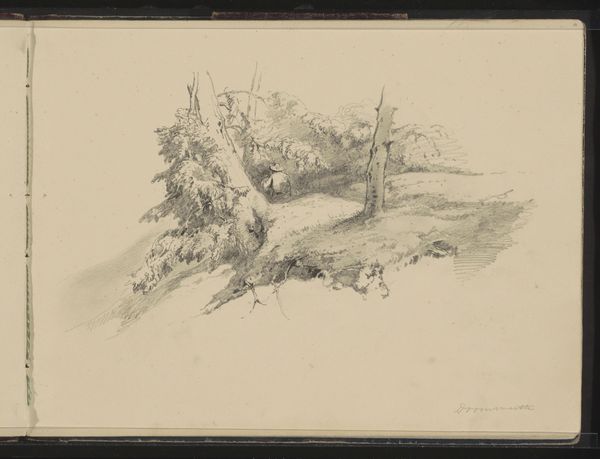
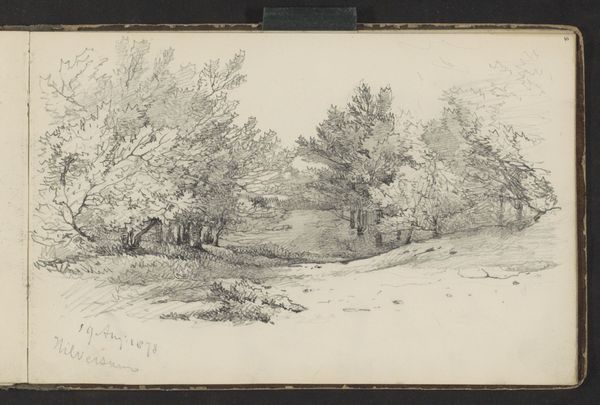
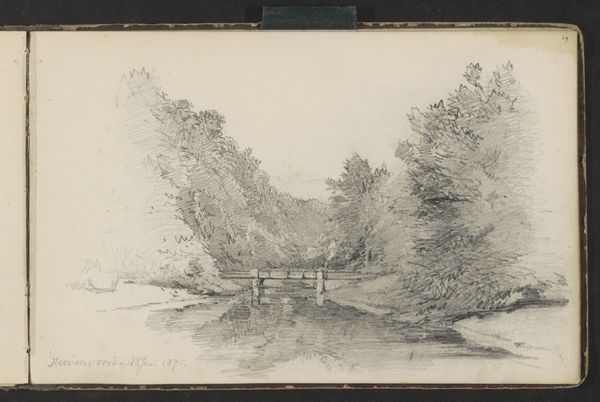
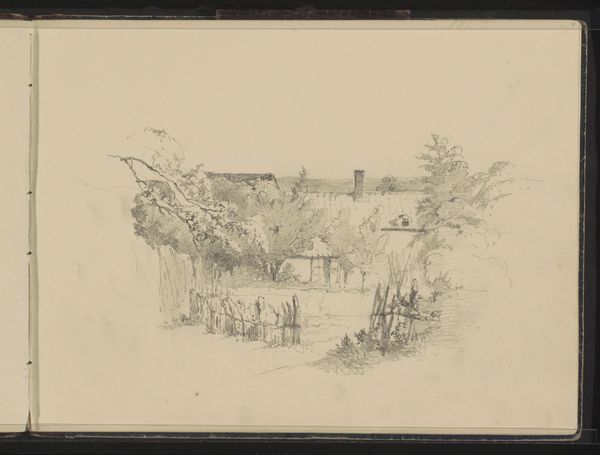
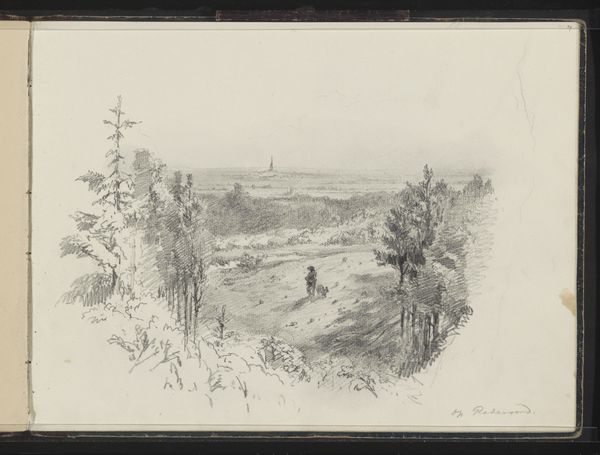
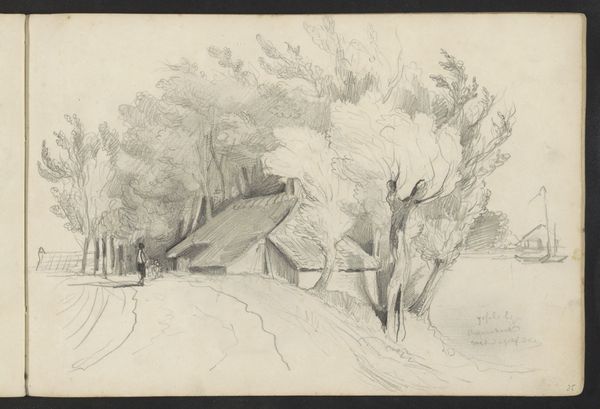
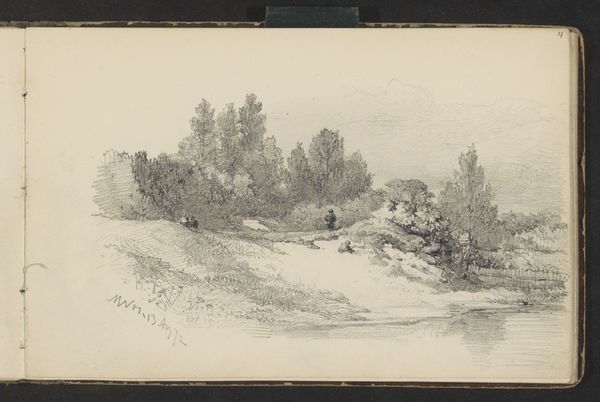
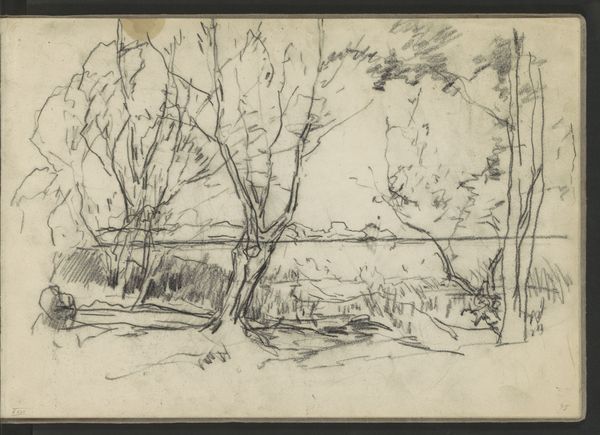
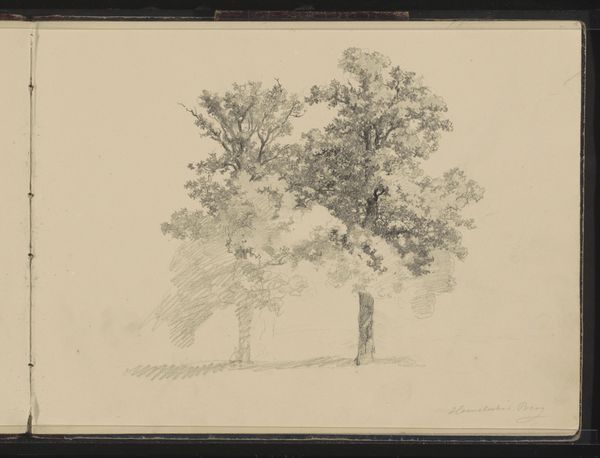
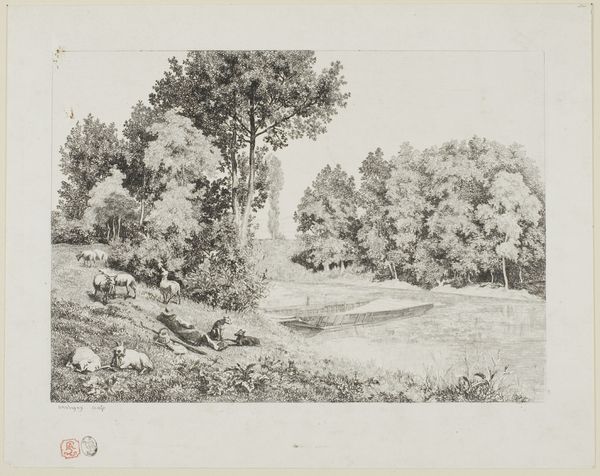
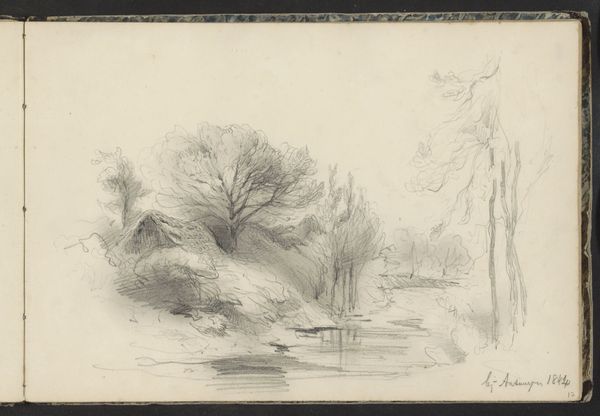
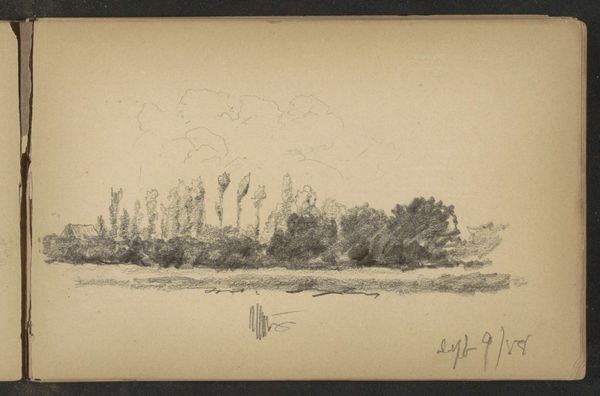
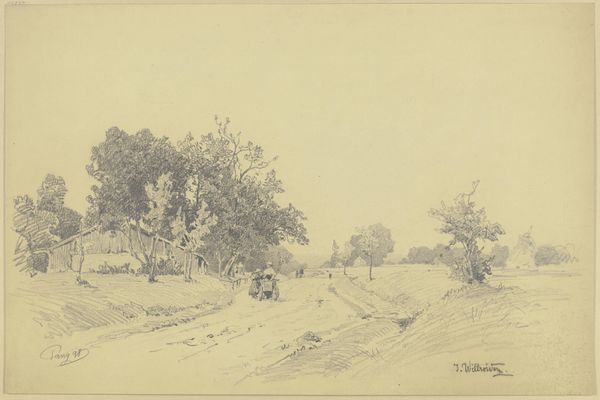
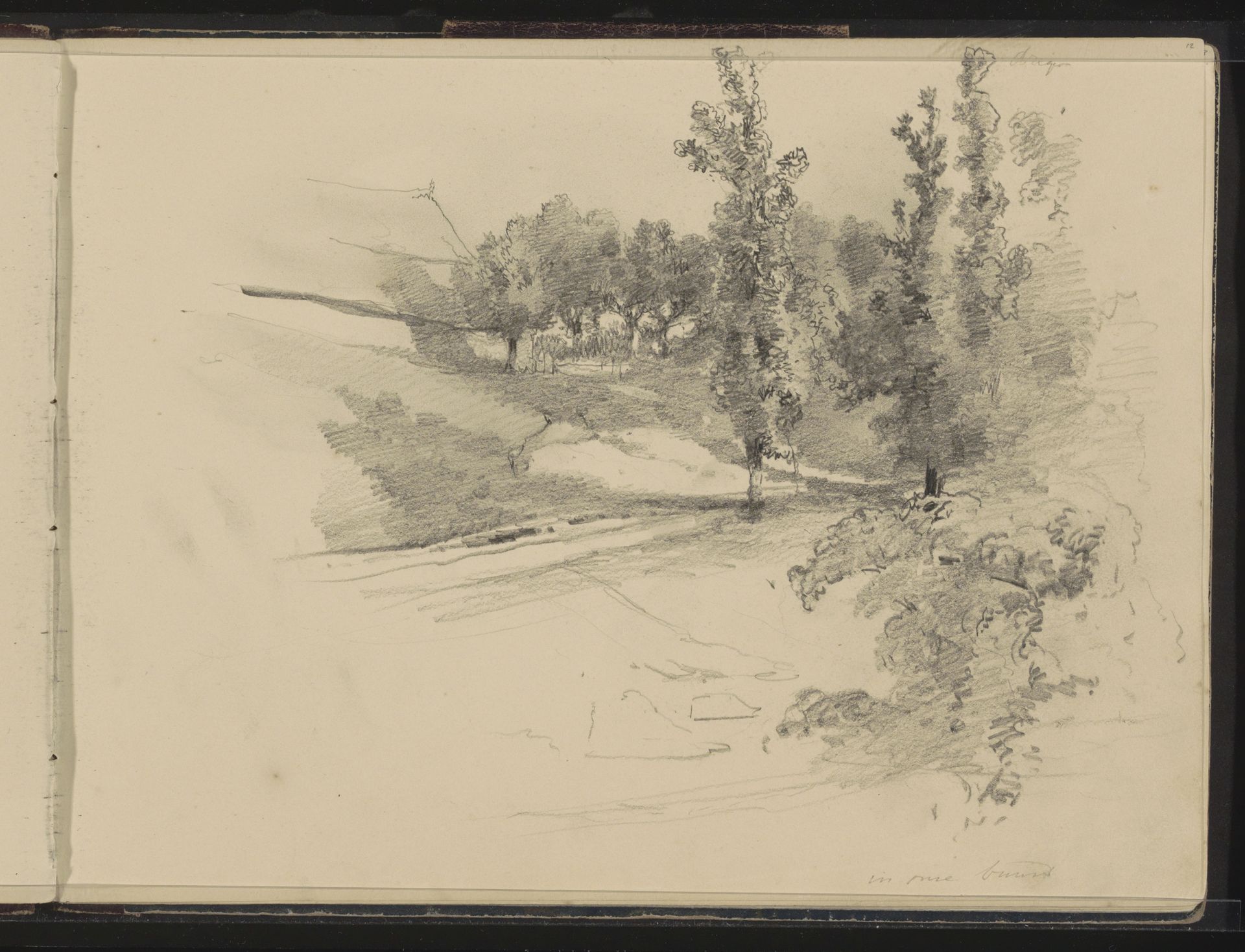
Maria Vos sketched "Landschap met bomen en een huis bij Oosterbeek" using graphite, achieving a study in tonal variation and compositional balance. The work invites us to consider the visual structure where the trees rise vertically, contrasting against the gentle slope of the landscape. Light and shadow are delineated through varying densities of graphite, creating depth. See how the artist uses directional lines to guide the eye from the foreground towards the horizon. Vos employs a semiotic system, where the trees and house become signs representing nature and domesticity. The sketch functions as a study in perception, challenging viewers to construct a coherent image from fragmented marks. It reflects broader artistic concerns about how we see and interpret the world. Notice the subtle interplay between detailed areas and open spaces. It suggests a discourse between presence and absence. This dynamic reminds us that art is not about fixed representation, but about a continuous process of seeing and understanding.
Landschap met bomen en een huis bij Oosterbeek
c. 1864 - 1865

Maria Vos
1824 - 1906Location
RijksmuseumArtwork details
- Medium
- drawing, pencil
- Location
- Rijksmuseum
- Copyright
- Rijks Museum: Open Domain
Tags
Comments
Share your thoughts
About this artwork
Maria Vos sketched "Landschap met bomen en een huis bij Oosterbeek" using graphite, achieving a study in tonal variation and compositional balance. The work invites us to consider the visual structure where the trees rise vertically, contrasting against the gentle slope of the landscape. Light and shadow are delineated through varying densities of graphite, creating depth. See how the artist uses directional lines to guide the eye from the foreground towards the horizon. Vos employs a semiotic system, where the trees and house become signs representing nature and domesticity. The sketch functions as a study in perception, challenging viewers to construct a coherent image from fragmented marks. It reflects broader artistic concerns about how we see and interpret the world. Notice the subtle interplay between detailed areas and open spaces. It suggests a discourse between presence and absence. This dynamic reminds us that art is not about fixed representation, but about a continuous process of seeing and understanding.
Comments
Share your thoughts