17th century
Henry Stewart, Lord Darnley and Duke of Albany

Henry Stuart, Lord Darnley
1545 - 1567
The Metropolitan Museum of Art
Metropolitan Museum of Art, New York, NYListen to curator's interpretation
Curatorial notes
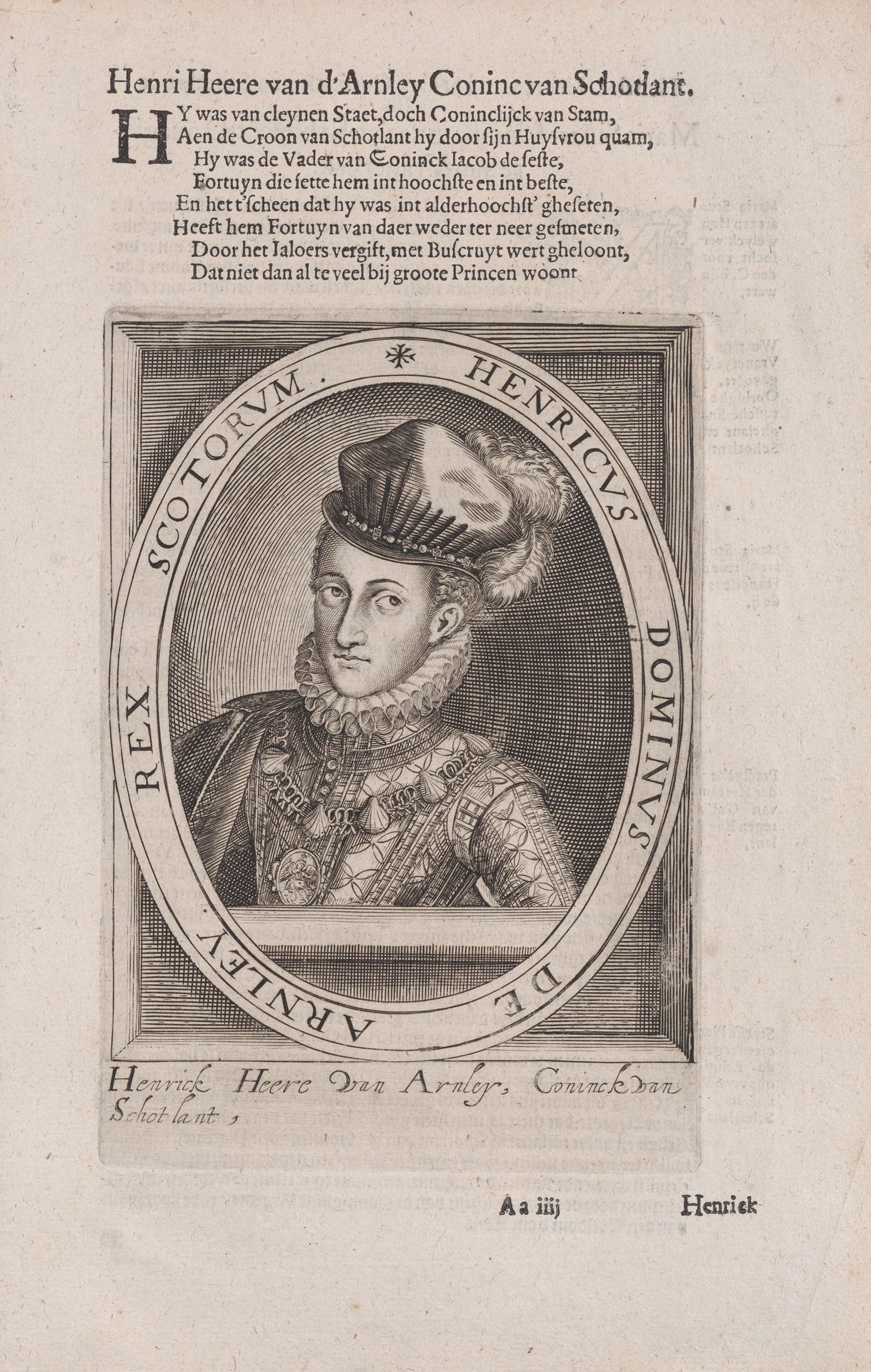
Curator: Here we have an engraving from the 17th century, a portrait of Henry Stuart, Lord Darnley, as he was titled, now hanging in the Metropolitan Museum of Art. Editor: My initial impression is of a somber dignity. Even with the elaborate ruff and feathered hat, there's a weight to his expression. He's presented almost like a melancholic Roman emperor. Curator: Indeed. These portraits, even in print form, were incredibly important in shaping the image and perception of powerful figures. Darnley, as the husband of Mary, Queen of Scots, was a central player in the turbulent politics of the time. The image deliberately conveys an air of regal authority. Editor: Absolutely. The oval frame mimics a classical cameo, and the inscription “Rex Scotorum Dominus de Darnley” reinforces his claim to power. But I can't help but notice the shadow and detail of his ornate clothing, underscoring vulnerability, as well. Do you agree? Curator: It is possible that his eventual assassination and its effects on his son’s claim to the throne – James VI of Scotland who later became James I of England – contributed to this feeling in retrospect. We view the artwork today with more understanding about his legacy. These are details in light and shadow meant to underscore a warning to powerful figures, perhaps. Editor: Interesting observation, to be sure. Symbolically, the attire seems designed to showcase power but hints at a fragility. Look how intricately his garb is patterned, but it looks almost woven and soft. Curator: Portraits, even mass-produced engravings, reinforced specific agendas and understandings. Here is Darnley not simply as a consort, but as a powerful leader worthy of respect. The political context cannot be separated from this image’s deliberate construction. Editor: Precisely! Visual rhetoric intended to solidify lineage by imbuing him with classical regality is so strong here. That’s a wonderful entry point. Curator: Exploring the multiple layers of imagery in portraits such as this provides a valuable window into a past era of Scottish nobility, though one fraught with tension and intrigue. Editor: Agreed. What seems on the surface as simple is in fact an encoding of cultural memory and status intended to project, influence and solidify perception for centuries.