About this artwork
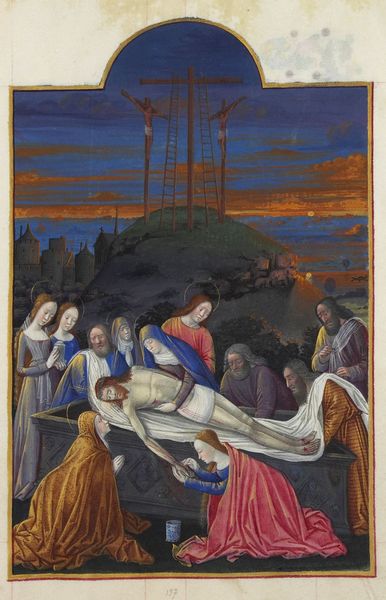
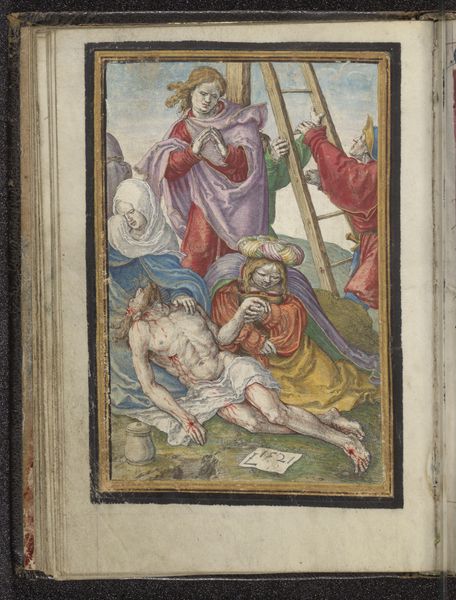
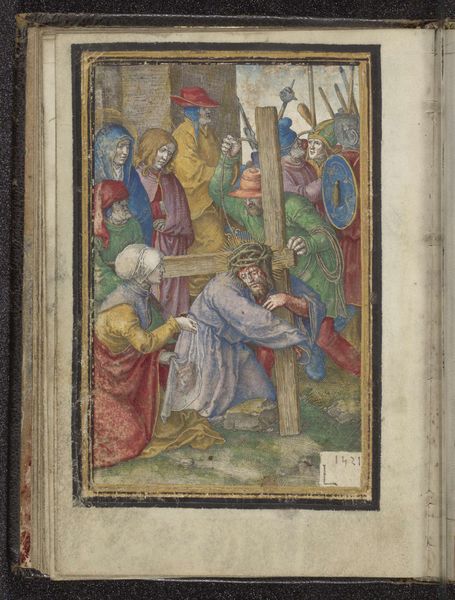
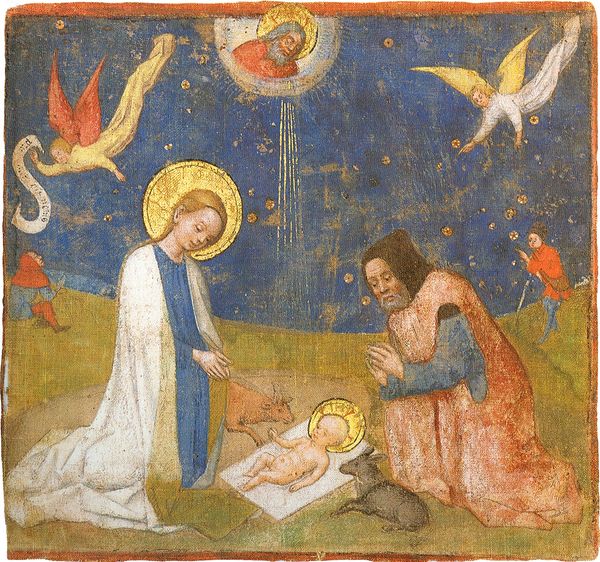
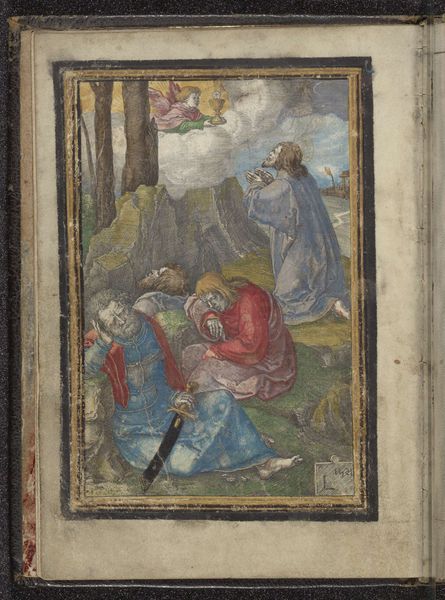
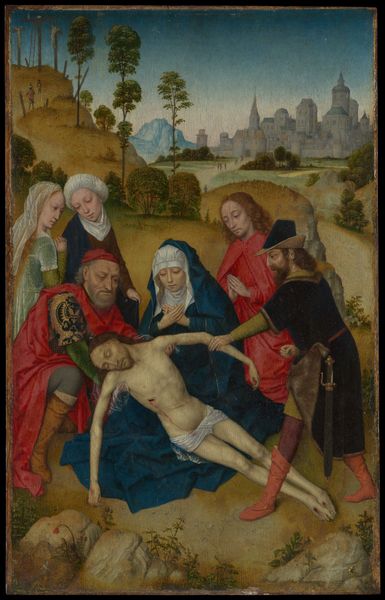
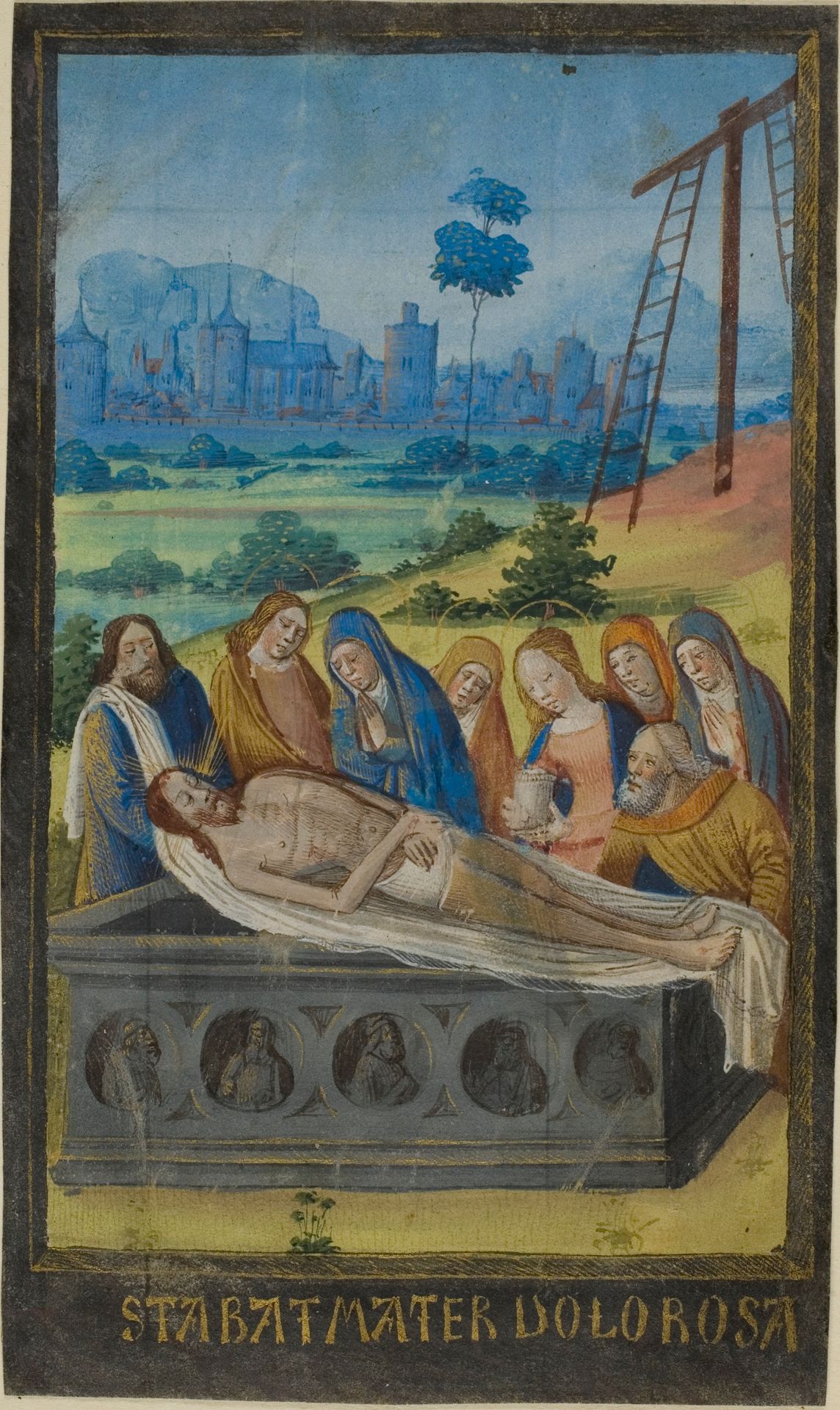
Jean Colombe painted "The Entombment" in the late 15th century in this small, but deeply resonant miniature from a Book of Hours. Here, Christ is shown laid in his tomb, mourned by his mother and followers, a scene laden with symbols of grief, faith, and redemption. Note how this scene echoes across cultures and eras; the mourning mother, for example, can be traced back to ancient depictions of Mater Dolorosa, her sorrow a universal language of loss. Her gesture, repeated by the other figures surrounding Christ's body, links them in shared misery. The ladder behind the body, a stark reminder of the crucifixion, becomes a leitmotif. We see it repurposed in countless iterations of religious suffering. The scene’s emotional power lies in its capacity to evoke profound feelings of empathy and sorrow. The symbols are not fixed; they are in constant flux, reappearing and evolving across time. This miniature is a testament to the enduring power of images to shape our collective memory.
The Entombment (Stabat Mater Prayer), from a Book of Hours c. 1480


Artwork details
- Medium
- drawing, tempera, painting, print, ink
- Dimensions
- 41 × 83 mm
- Location
- The Art Institute of Chicago
- Copyright
- Public Domain
Tags
drawing
medieval
narrative-art
tempera
painting
gothic
figuration
ink
france
line
watercolour illustration
history-painting
international-gothic
miniature
watercolor
Comments
No comments
About this artwork
Jean Colombe painted "The Entombment" in the late 15th century in this small, but deeply resonant miniature from a Book of Hours. Here, Christ is shown laid in his tomb, mourned by his mother and followers, a scene laden with symbols of grief, faith, and redemption. Note how this scene echoes across cultures and eras; the mourning mother, for example, can be traced back to ancient depictions of Mater Dolorosa, her sorrow a universal language of loss. Her gesture, repeated by the other figures surrounding Christ's body, links them in shared misery. The ladder behind the body, a stark reminder of the crucifixion, becomes a leitmotif. We see it repurposed in countless iterations of religious suffering. The scene’s emotional power lies in its capacity to evoke profound feelings of empathy and sorrow. The symbols are not fixed; they are in constant flux, reappearing and evolving across time. This miniature is a testament to the enduring power of images to shape our collective memory.
Comments
No comments