About this artwork
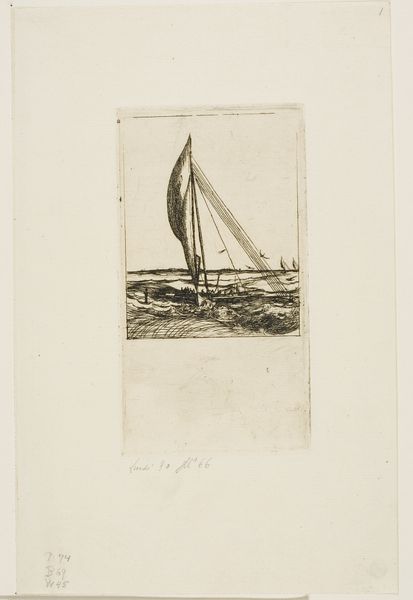
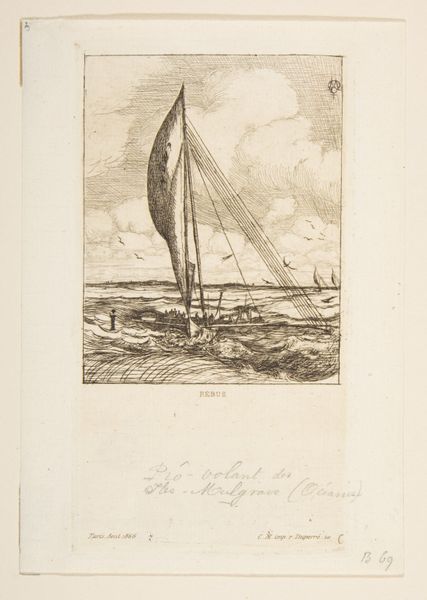
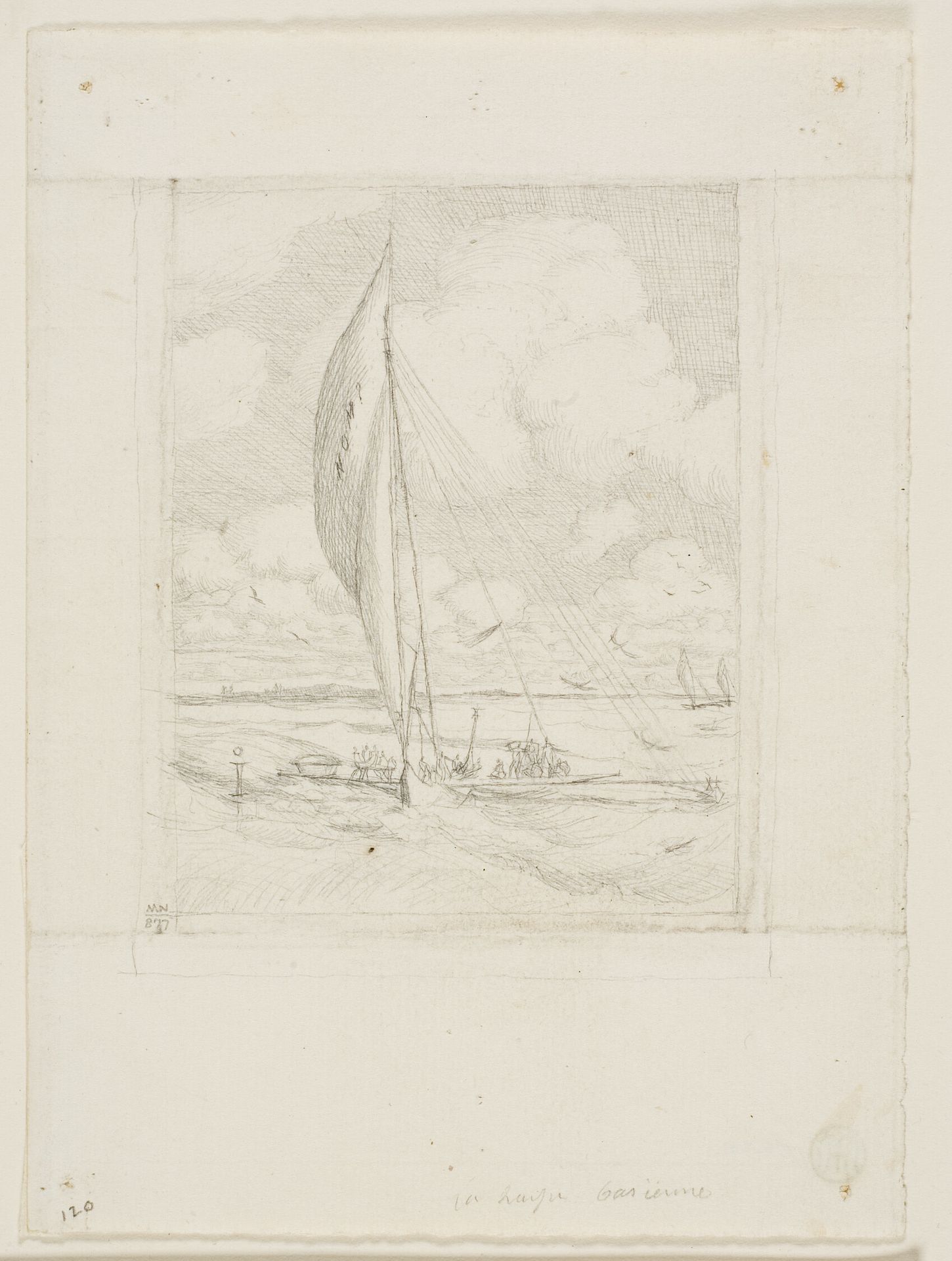
Charles Meryon etched "Swift-Sailing Proa, Mulgrave Archipelago, Oceania," capturing a scene far removed from his native France. Meryon, who never actually visited Oceania, based this print on earlier drawings by others. This act of artistic interpretation becomes a lens through which we can examine 19th-century European perceptions of Pacific Islanders and their technology. Consider the proa itself, an indigenous sailing vessel rendered with a Western artistic sensibility. Meryon’s work invites us to contemplate the complexities of cultural exchange and representation. It is a dance between observation, imagination, and the power dynamics inherent in seeing and depicting a world not one's own. It is a quiet yet potent reminder of the narratives we construct when encountering cultures distant from our own. How do we see, interpret, and translate the stories of others?
Swift-Sailing Proa, Mulgrave Archipelago, Oceania 1866


Artwork details
- Medium
- drawing, print, etching, paper, graphite
- Dimensions
- 156 × 114 mm
- Location
- The Art Institute of Chicago
- Copyright
- Public Domain
Tags
drawing
etching
landscape
etching
paper
graphite
realism
Comments
No comments
About this artwork
Charles Meryon etched "Swift-Sailing Proa, Mulgrave Archipelago, Oceania," capturing a scene far removed from his native France. Meryon, who never actually visited Oceania, based this print on earlier drawings by others. This act of artistic interpretation becomes a lens through which we can examine 19th-century European perceptions of Pacific Islanders and their technology. Consider the proa itself, an indigenous sailing vessel rendered with a Western artistic sensibility. Meryon’s work invites us to contemplate the complexities of cultural exchange and representation. It is a dance between observation, imagination, and the power dynamics inherent in seeing and depicting a world not one's own. It is a quiet yet potent reminder of the narratives we construct when encountering cultures distant from our own. How do we see, interpret, and translate the stories of others?
Comments
No comments