About this artwork
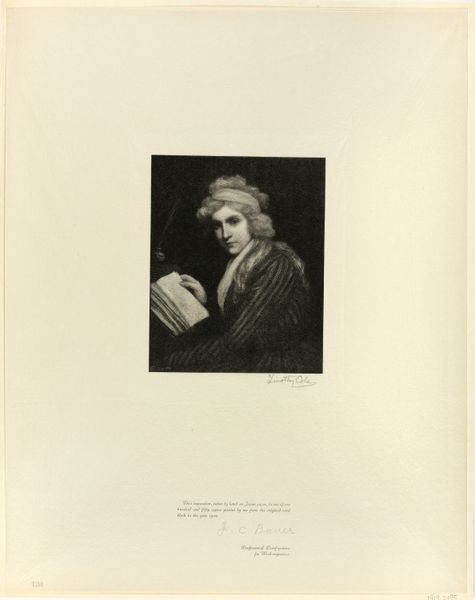
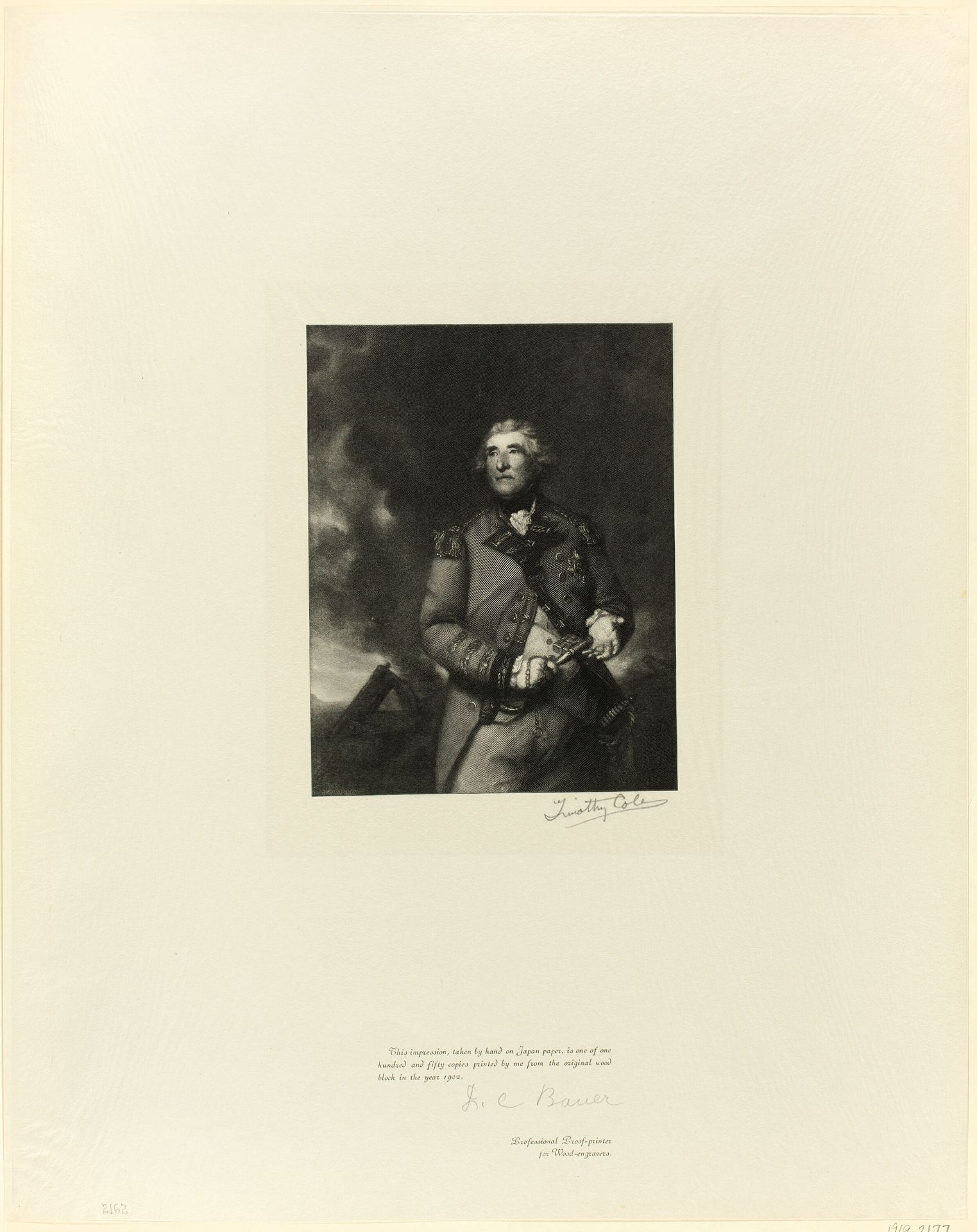
Timothy Cole created this print, “Portrait of Lord Heathfield,” as part of his “Old English Masters” series. Cole, working in the late 19th and early 20th centuries, devoted his career to wood engravings after paintings by European masters. Here, we see a reproduction of Joshua Reynolds’s famous portrait of Lord Heathfield, the Governor of Gibraltar during the Great Siege of 1779-83. Cole’s print participates in the late 19th century’s fascination with reproducing and disseminating images of the past. Consider the rise of photography and the art museum at this time. Cole worked for popular magazines, bringing the prestige and history of European painting to a wider audience. The “Old English Masters” series catered to a cultural moment invested in ideas of ancestry, nobility, and the British Empire. To better understand the image, historians consult archives of popular magazines and institutional records of museums. In this way, the meaning of art becomes contingent on its social and institutional context.
Portrait of Lord Heathfield, from Old English Masters
Possibly 1897 - 1902


Artwork details
- Medium
- drawing, print, paper, engraving
- Dimensions
- 435 × 345 mm (sheet)
- Location
- The Art Institute of Chicago
- Copyright
- Public Domain
Tags
portrait
drawing
paper
united-states
history-painting
academic-art
engraving
Comments
Be the first to share your thoughts about this work.
About this artwork
Timothy Cole created this print, “Portrait of Lord Heathfield,” as part of his “Old English Masters” series. Cole, working in the late 19th and early 20th centuries, devoted his career to wood engravings after paintings by European masters. Here, we see a reproduction of Joshua Reynolds’s famous portrait of Lord Heathfield, the Governor of Gibraltar during the Great Siege of 1779-83. Cole’s print participates in the late 19th century’s fascination with reproducing and disseminating images of the past. Consider the rise of photography and the art museum at this time. Cole worked for popular magazines, bringing the prestige and history of European painting to a wider audience. The “Old English Masters” series catered to a cultural moment invested in ideas of ancestry, nobility, and the British Empire. To better understand the image, historians consult archives of popular magazines and institutional records of museums. In this way, the meaning of art becomes contingent on its social and institutional context.
Comments
Be the first to share your thoughts about this work.