About this artwork
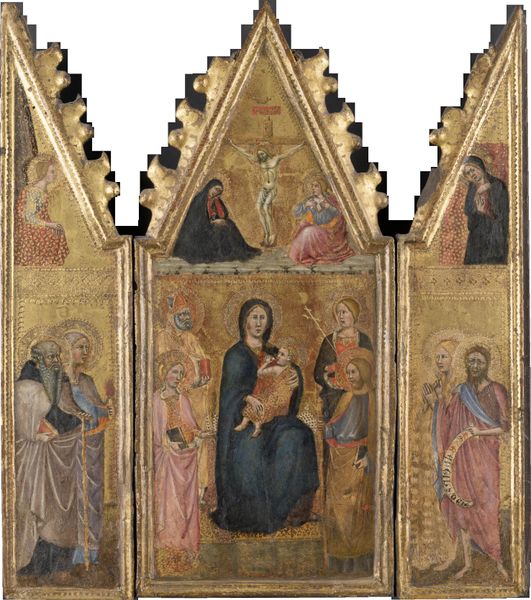
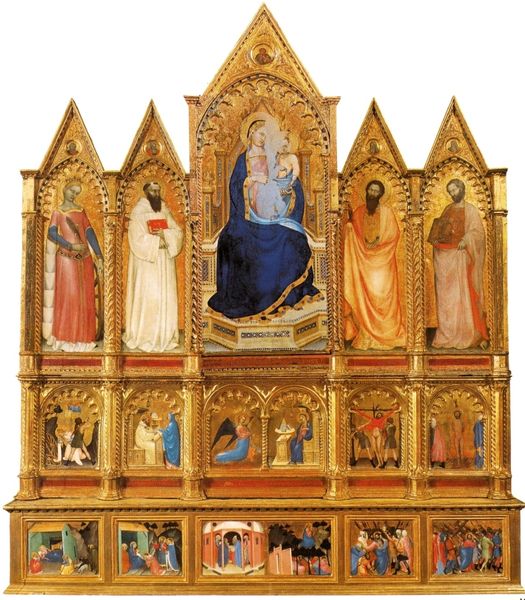
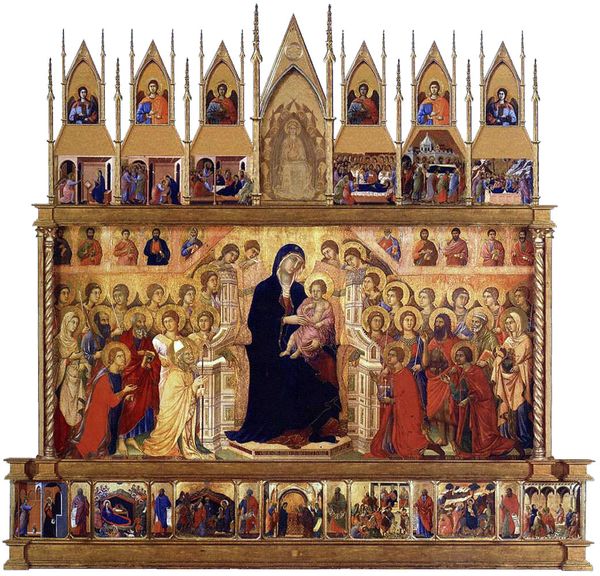
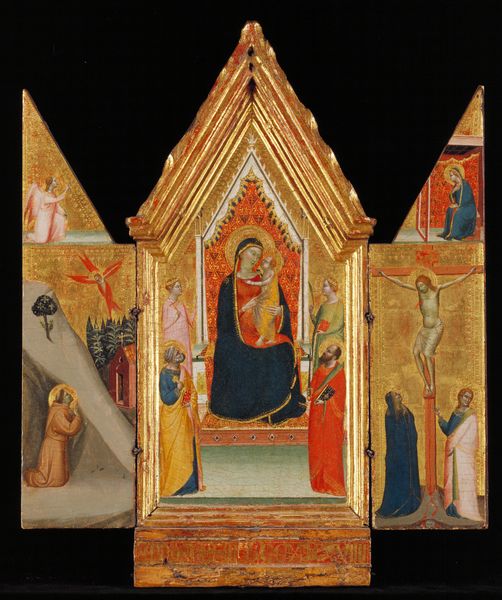
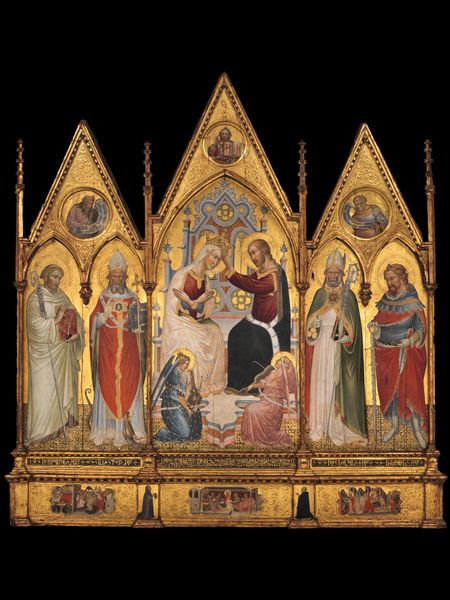
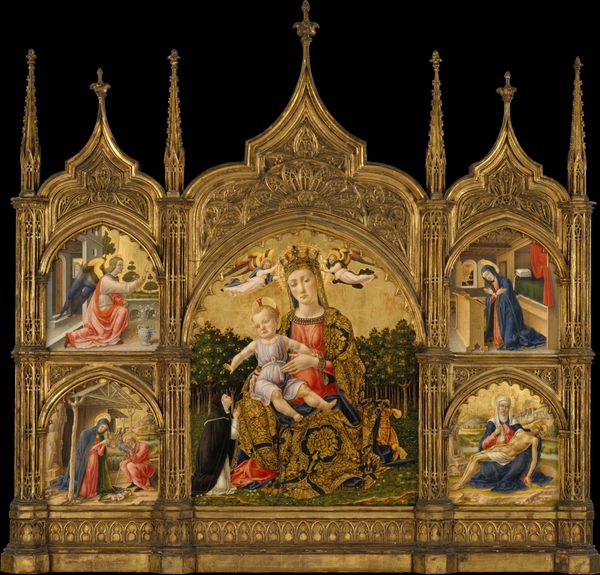
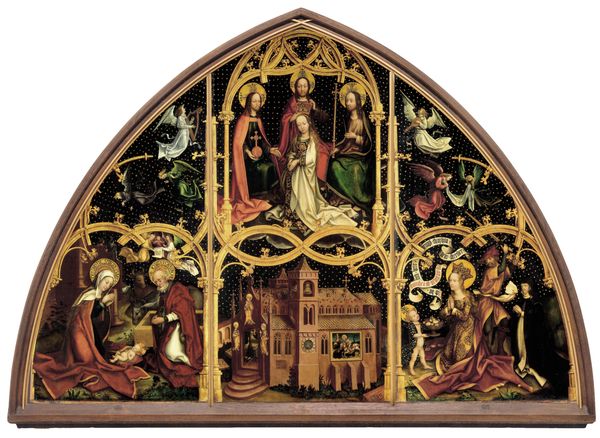
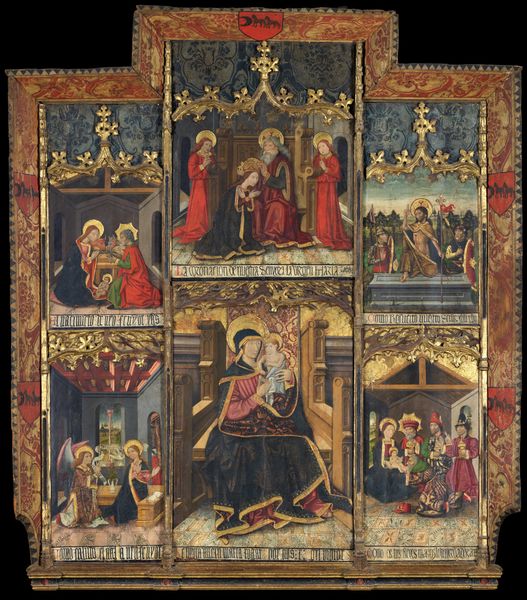
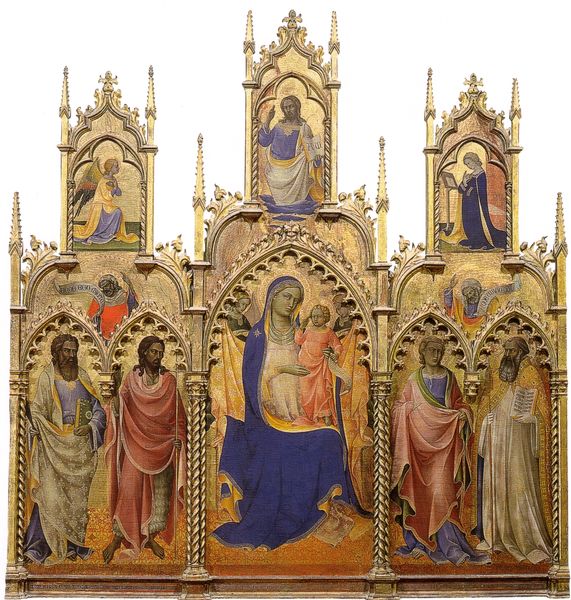
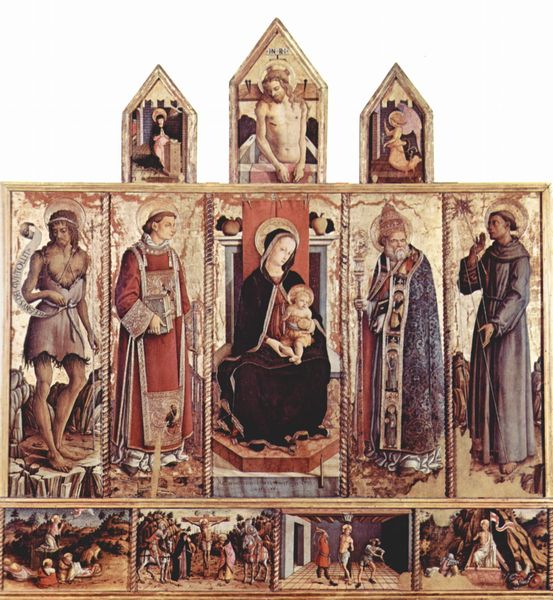
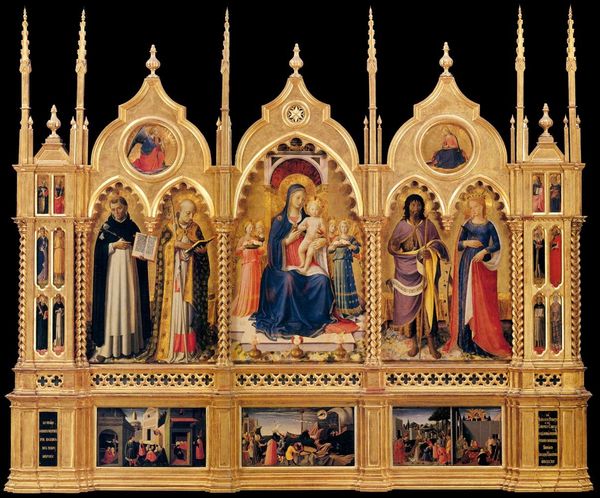
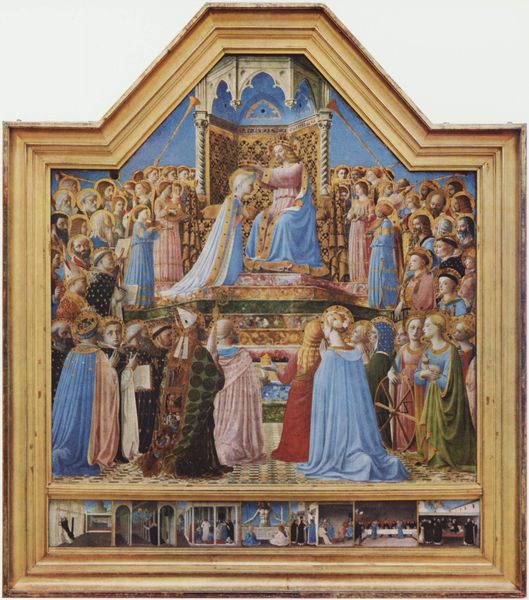
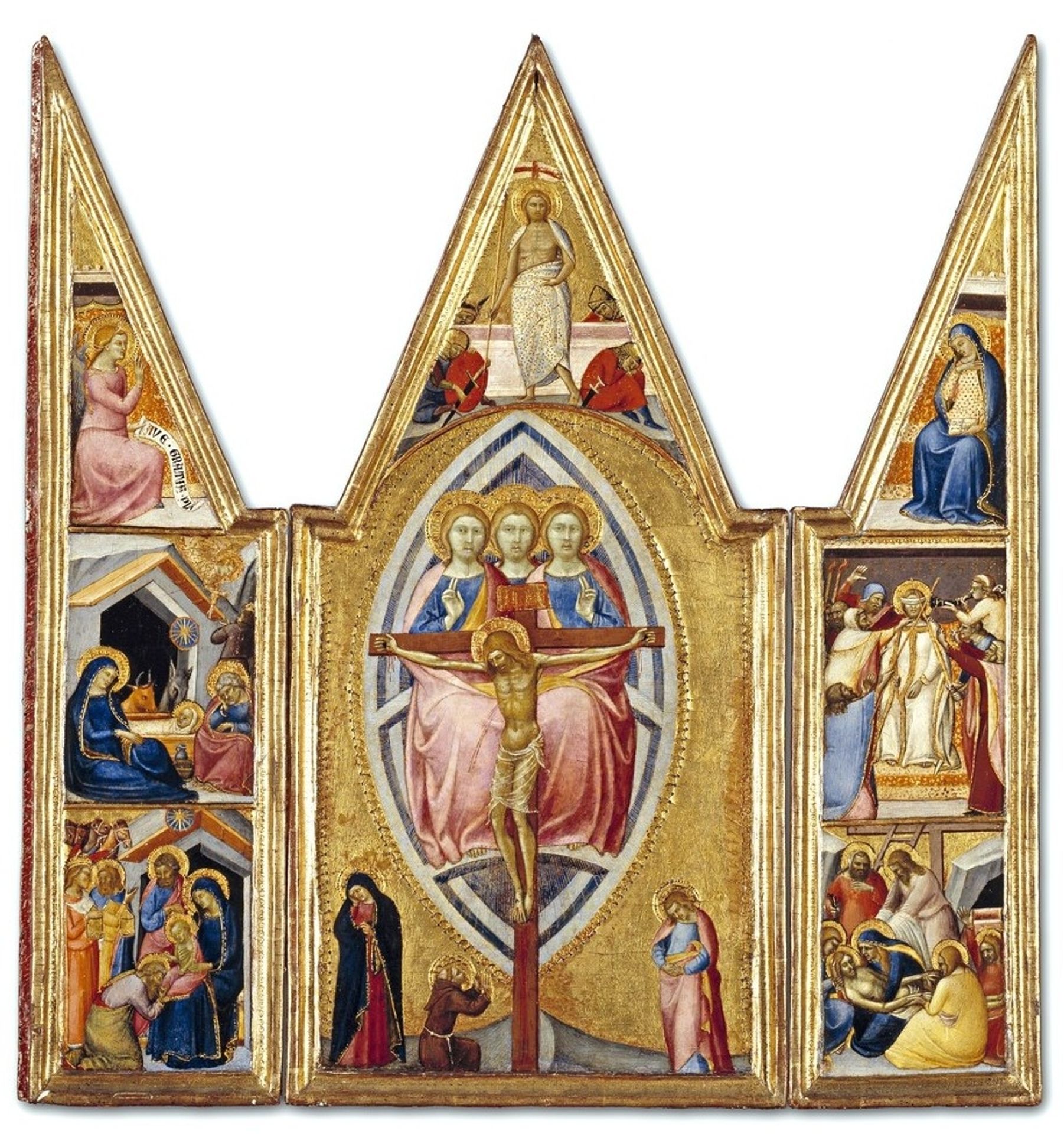
Luca di Tommé painted “The Trinity and the Crucifixion, with Scenes from the Life of Christ” during the 14th century, a time when the Black Death ravaged Europe and religious art served as a focal point for faith and solace. This tempera on panel work reflects the intersection of the divine and the human, typical of its time, yet it also subtly underscores the social order. The virgin Mary, often depicted in a position of subservience, is granted a place of prominence through the multiple scenes dedicated to her. Notice, that her suffering as a mother mirrors Christ's sacrifice, offering a nuanced narrative on the feminine role in spiritual redemption. Consider, also, the absence of individual identity in the figures, replaced by types that reinforce the communal, rather than the individual, experience of faith. This piece is a reminder of how art can reflect society’s values, even as it provides a space for emotional connection during times of collective trauma.
the Trinity and the Crucifixion, with Scenes from the Life of Christ

Artwork details
- Medium
- panel, tempera, painting
- Copyright
- Public domain
Tags
Comments
Share your thoughts
About this artwork
Luca di Tommé painted “The Trinity and the Crucifixion, with Scenes from the Life of Christ” during the 14th century, a time when the Black Death ravaged Europe and religious art served as a focal point for faith and solace. This tempera on panel work reflects the intersection of the divine and the human, typical of its time, yet it also subtly underscores the social order. The virgin Mary, often depicted in a position of subservience, is granted a place of prominence through the multiple scenes dedicated to her. Notice, that her suffering as a mother mirrors Christ's sacrifice, offering a nuanced narrative on the feminine role in spiritual redemption. Consider, also, the absence of individual identity in the figures, replaced by types that reinforce the communal, rather than the individual, experience of faith. This piece is a reminder of how art can reflect society’s values, even as it provides a space for emotional connection during times of collective trauma.
Comments
Share your thoughts