1777 - 1790
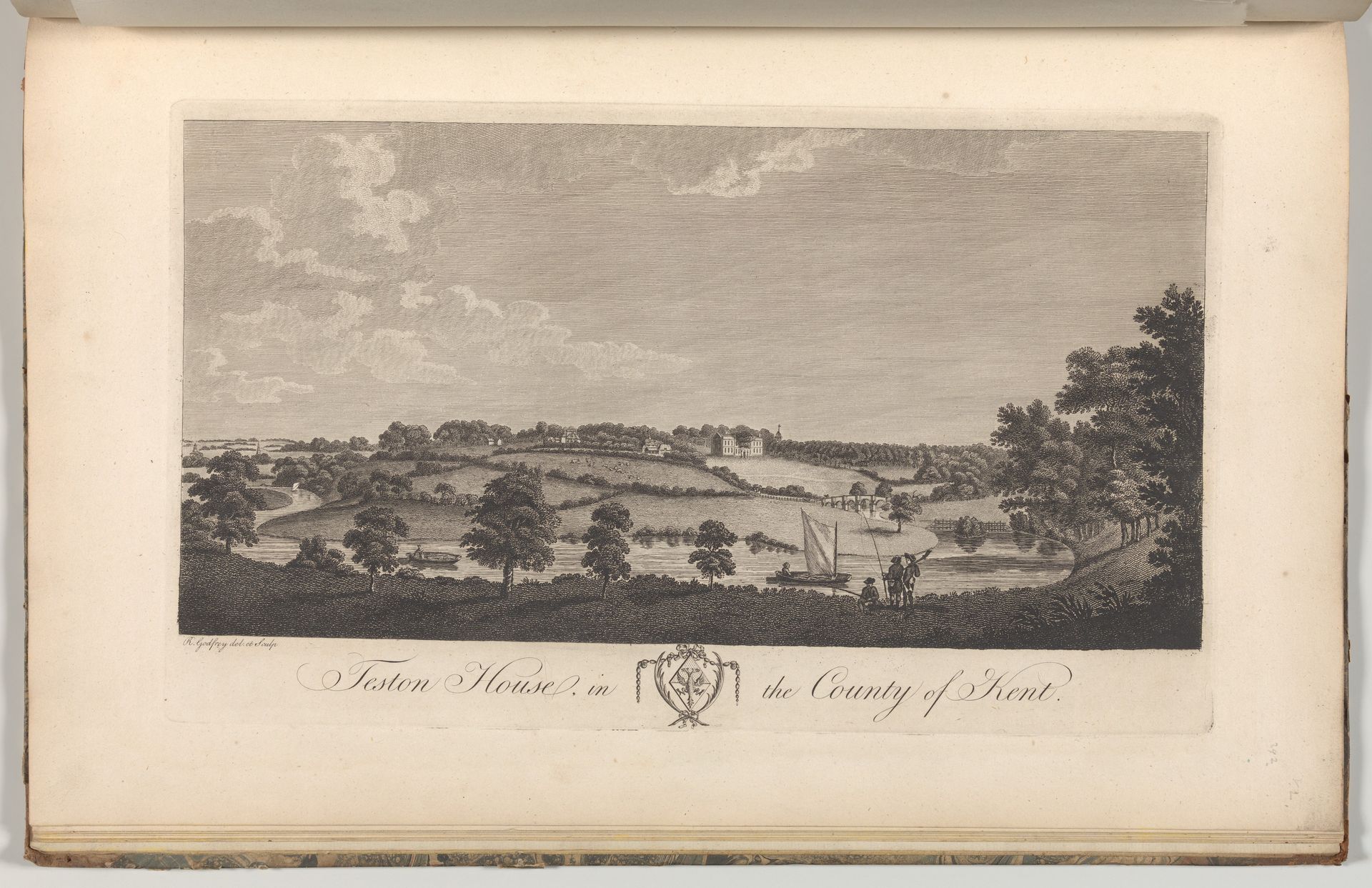
Teston House in the County of Kent, from Edward Hasted's, The History and Topographical Survey of the County of Kent, vols. 1-3

Richard Bernard Godfrey
1728 - 1795
The Metropolitan Museum of Art
Metropolitan Museum of Art, New York, NYListen to curator's interpretation
Curatorial notes
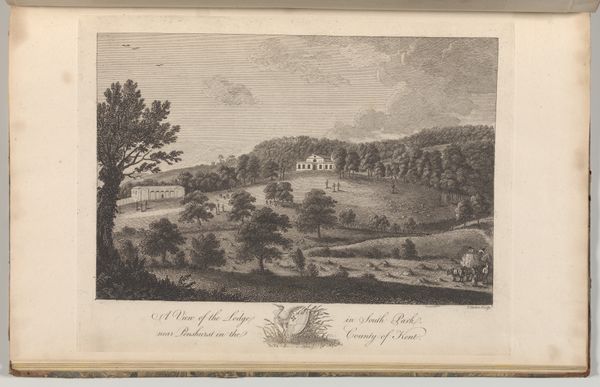
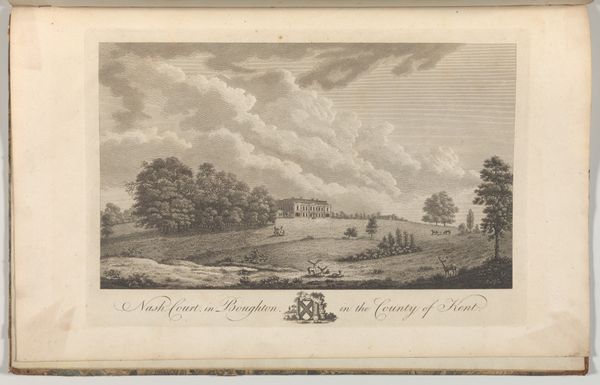
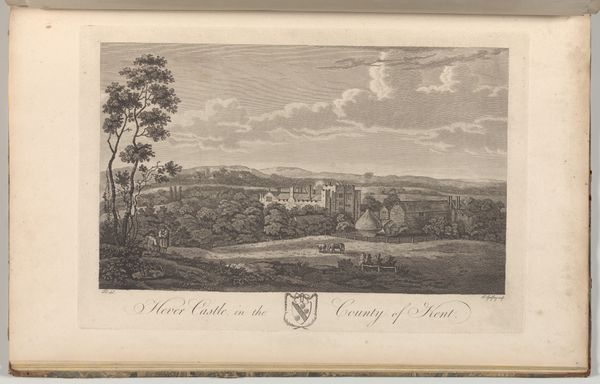
Richard Bernard Godfrey created this print of Teston House in the County of Kent, part of Edward Hasted's topographical survey. The print employs a meticulous linear technique to define form and space. The scene is laid out with a balanced asymmetry, where the house sits elevated in the mid-ground, anchoring the composition. Godfrey uses the formal device of the picturesque, carefully arranging elements to lead the eye through the landscape. Notice how the winding river creates a serpentine line, guiding our gaze from the foreground figures to the distant horizon. The trees frame the scene, their dark masses contrasting with the open sky and lighter tones of the fields. The print utilizes hatching and cross-hatching to model the forms, giving volume to the trees and buildings. This image is not just a record of a place; it's a constructed view. Consider how the artist employs a visual language rooted in 18th-century aesthetics, reflecting a desire to impose order and beauty onto the natural world.