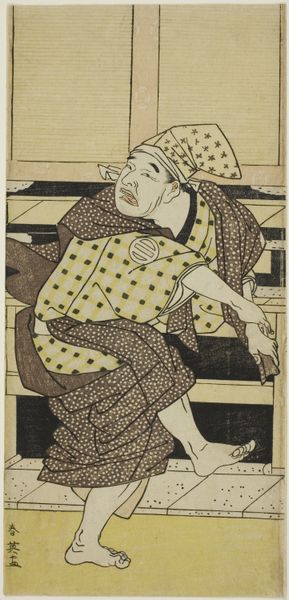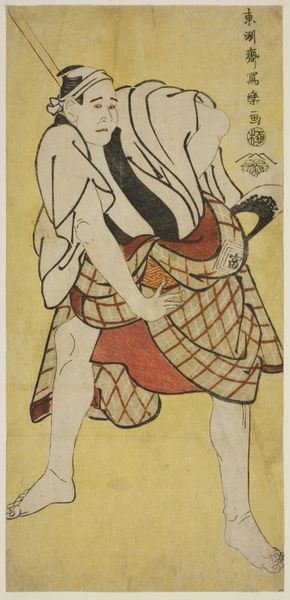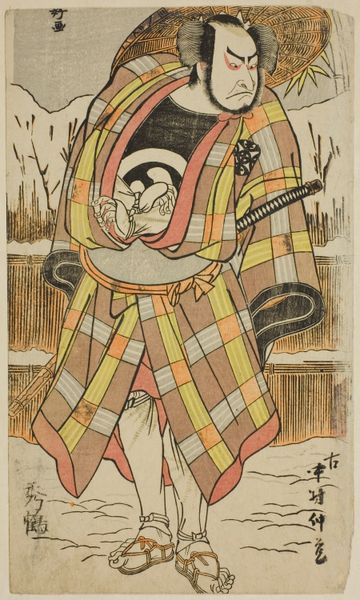
About this artwork
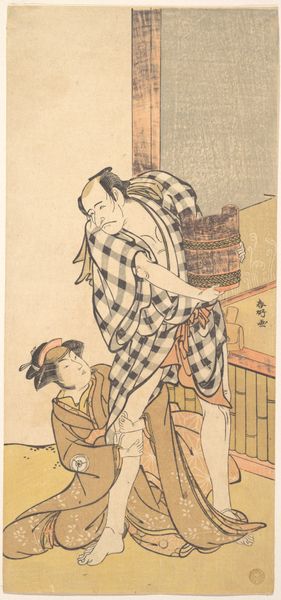
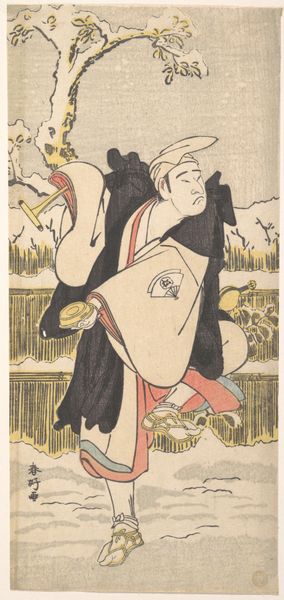
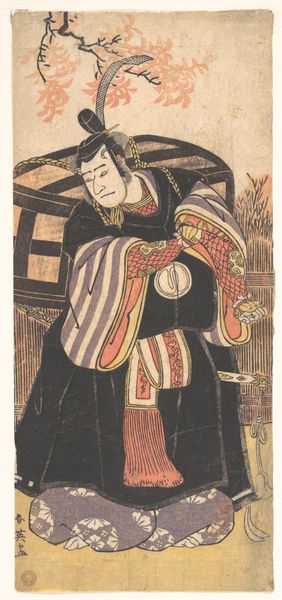
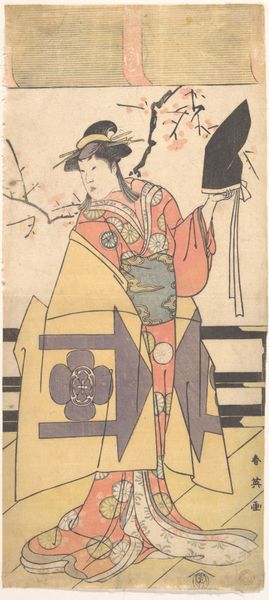
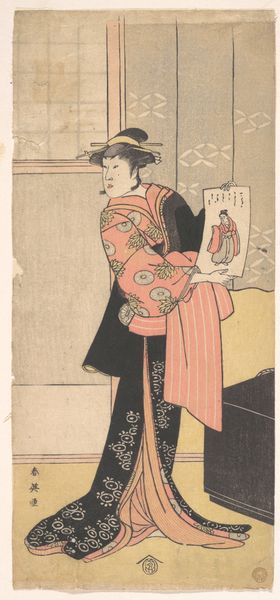
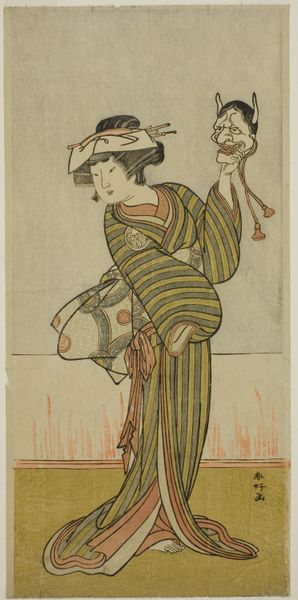
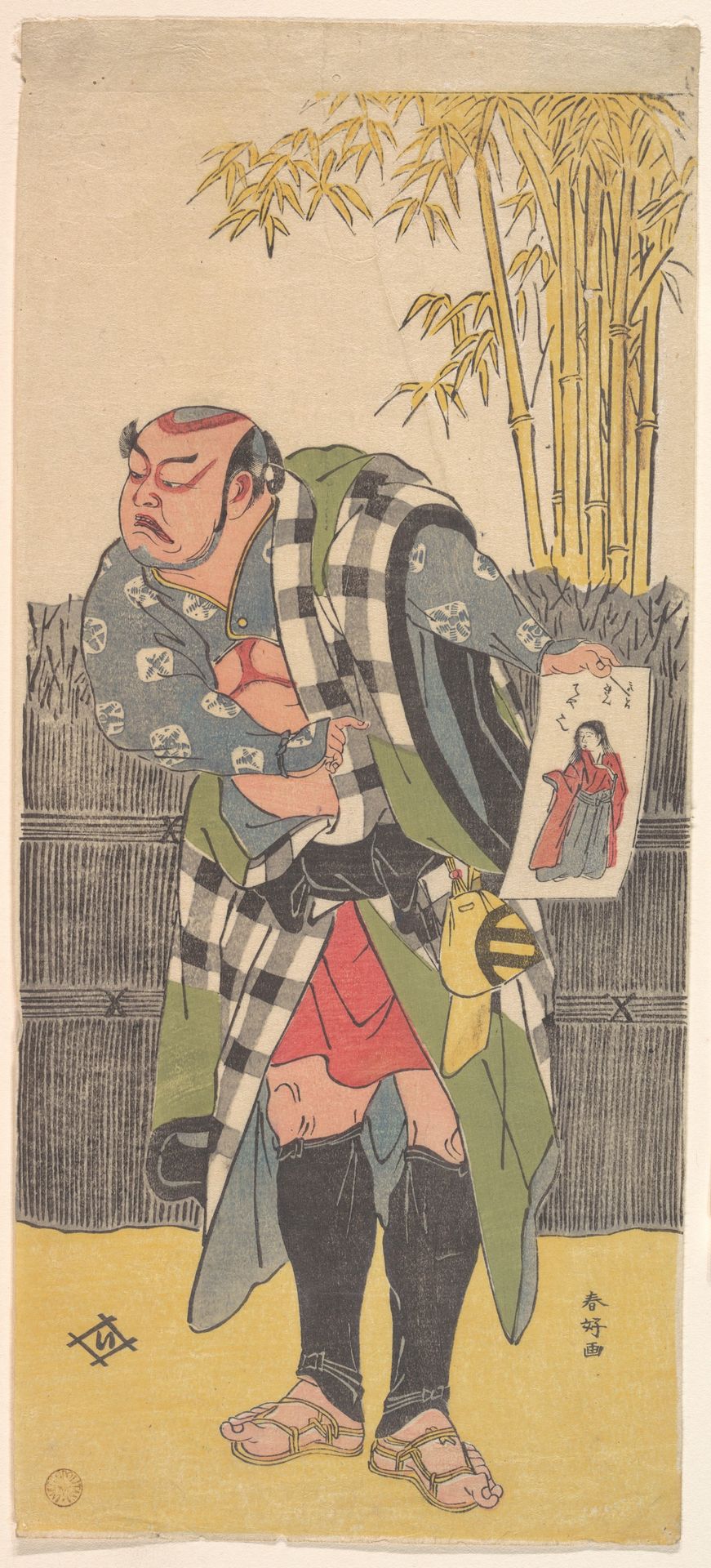
Katsukawa Shunko created this woodblock print of Kabuki Actor Kataoka Nizaemon VII. Kabuki emerged during the Edo period as a form of entertainment accessible to a wide audience, reflecting the cultural and social dynamics of the time. Here, Nizaemon is captured holding a picture, perhaps a fan portrait, in his hand. The actor's likeness and portrayal by Shunko intersect with questions of identity and representation. In feudal Japan actors were low on the social hierarchy, however, Kabuki provided an important outlet for cultural expression. Kabuki was a space where gender roles were often blurred, as men played female roles, challenging societal norms. Shunko’s work provides a glimpse into the world of Kabuki, offering a reflection on the intersections of art, identity, and cultural performance. It invites us to consider the narratives we construct and the ways in which art both shapes and mirrors our understanding of the world.
Kabuki Actor Kataoka Nizaemon VII
1788 - 1790


Artwork details
- Medium
- print, woodblock-print
- Dimensions
- H. 12 13/16 in. (32.5 cm); W. 5 5/8 in. (14.3 cm)
- Location
- Metropolitan Museum of Art, New York, NY
- Copyright
- Public Domain
Tags
Comments
Share your thoughts
About this artwork
Katsukawa Shunko created this woodblock print of Kabuki Actor Kataoka Nizaemon VII. Kabuki emerged during the Edo period as a form of entertainment accessible to a wide audience, reflecting the cultural and social dynamics of the time. Here, Nizaemon is captured holding a picture, perhaps a fan portrait, in his hand. The actor's likeness and portrayal by Shunko intersect with questions of identity and representation. In feudal Japan actors were low on the social hierarchy, however, Kabuki provided an important outlet for cultural expression. Kabuki was a space where gender roles were often blurred, as men played female roles, challenging societal norms. Shunko’s work provides a glimpse into the world of Kabuki, offering a reflection on the intersections of art, identity, and cultural performance. It invites us to consider the narratives we construct and the ways in which art both shapes and mirrors our understanding of the world.
Comments
Share your thoughts