About this artwork
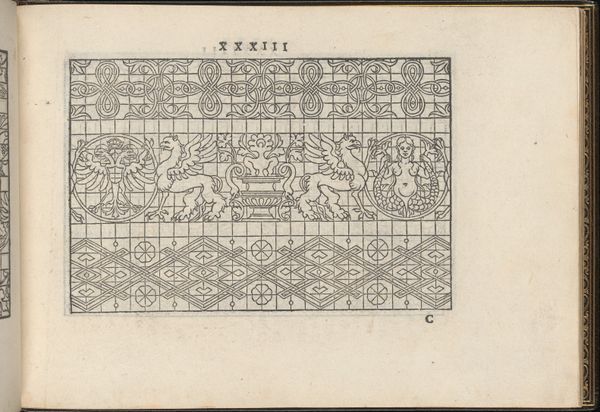
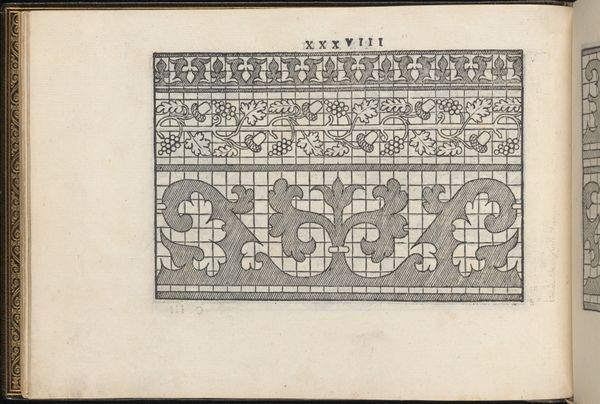
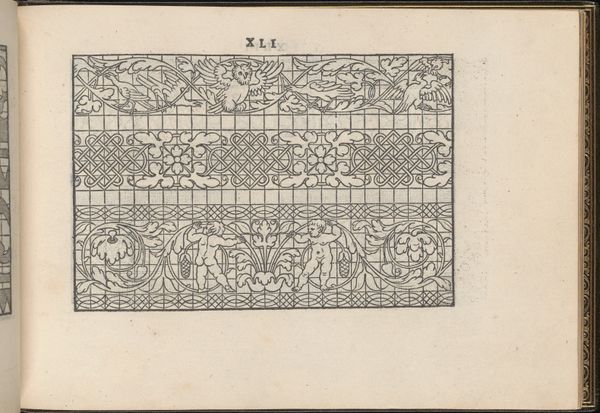
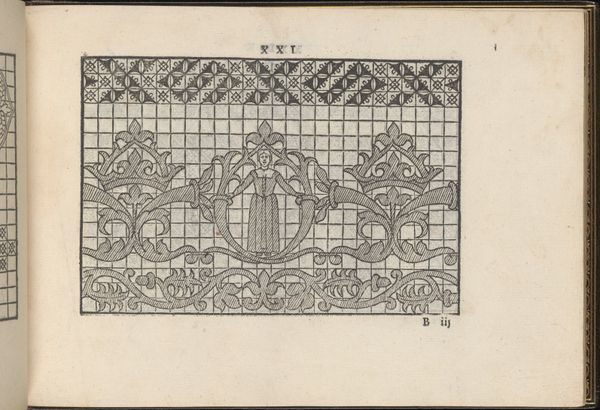
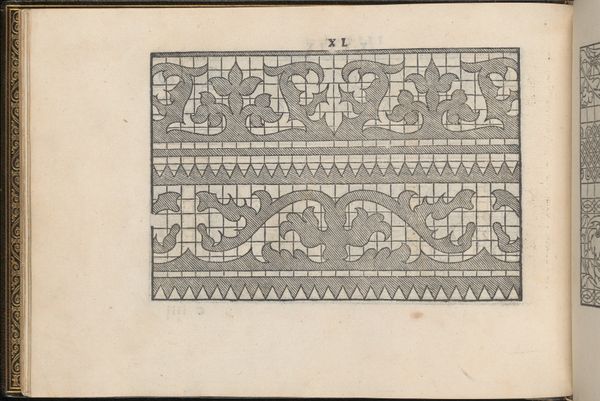
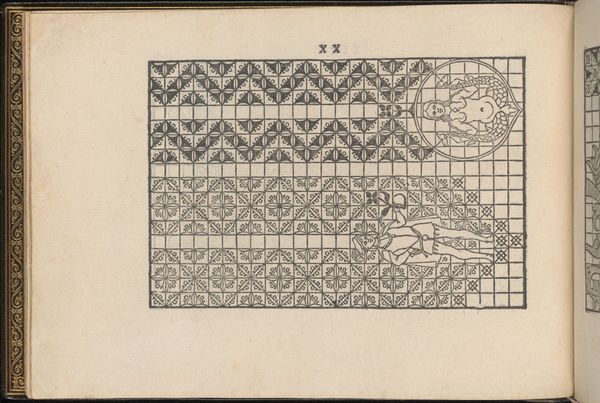
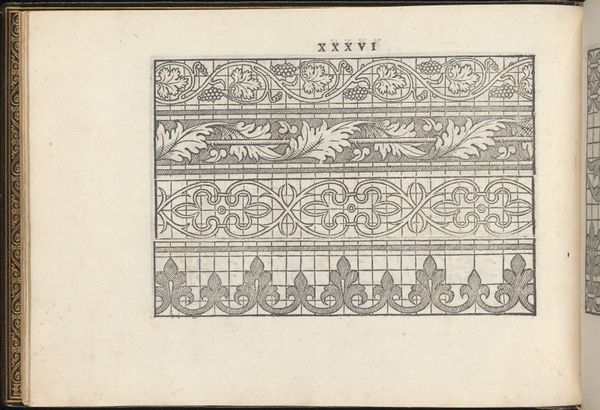
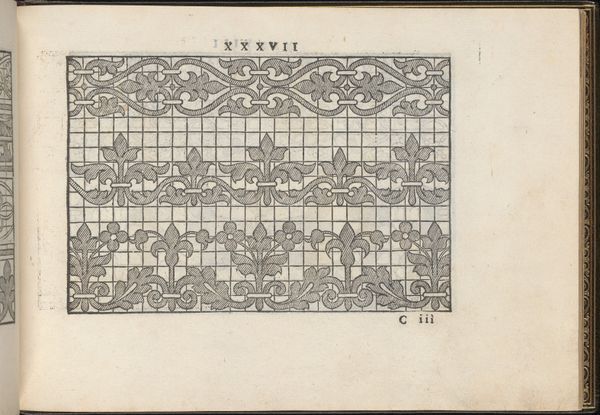
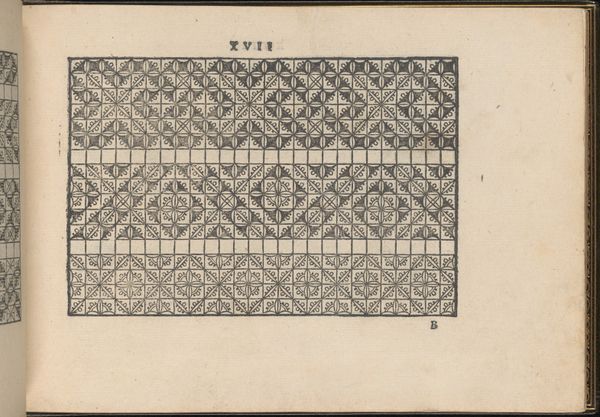
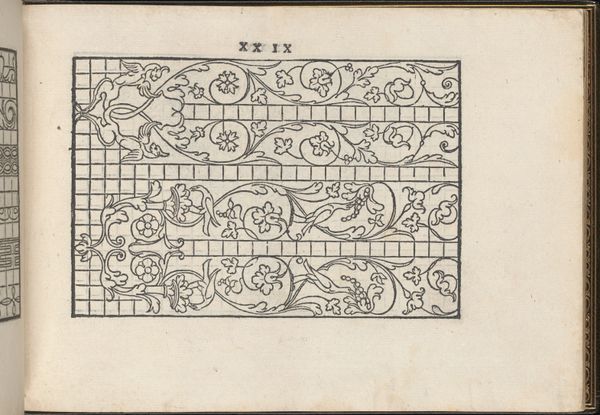
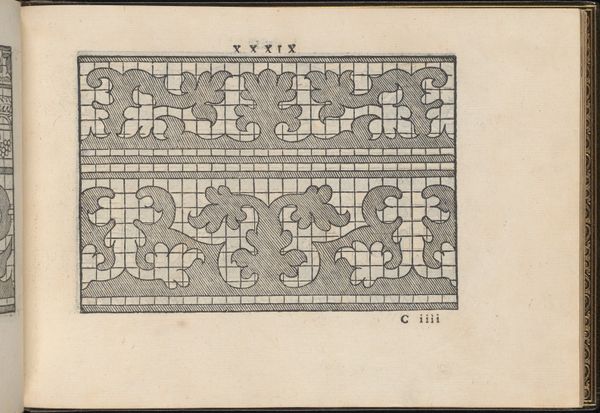
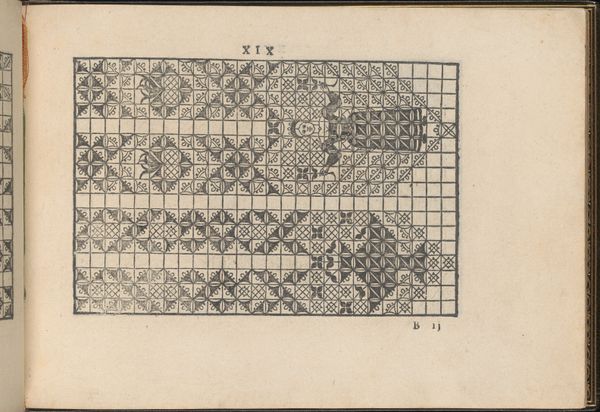
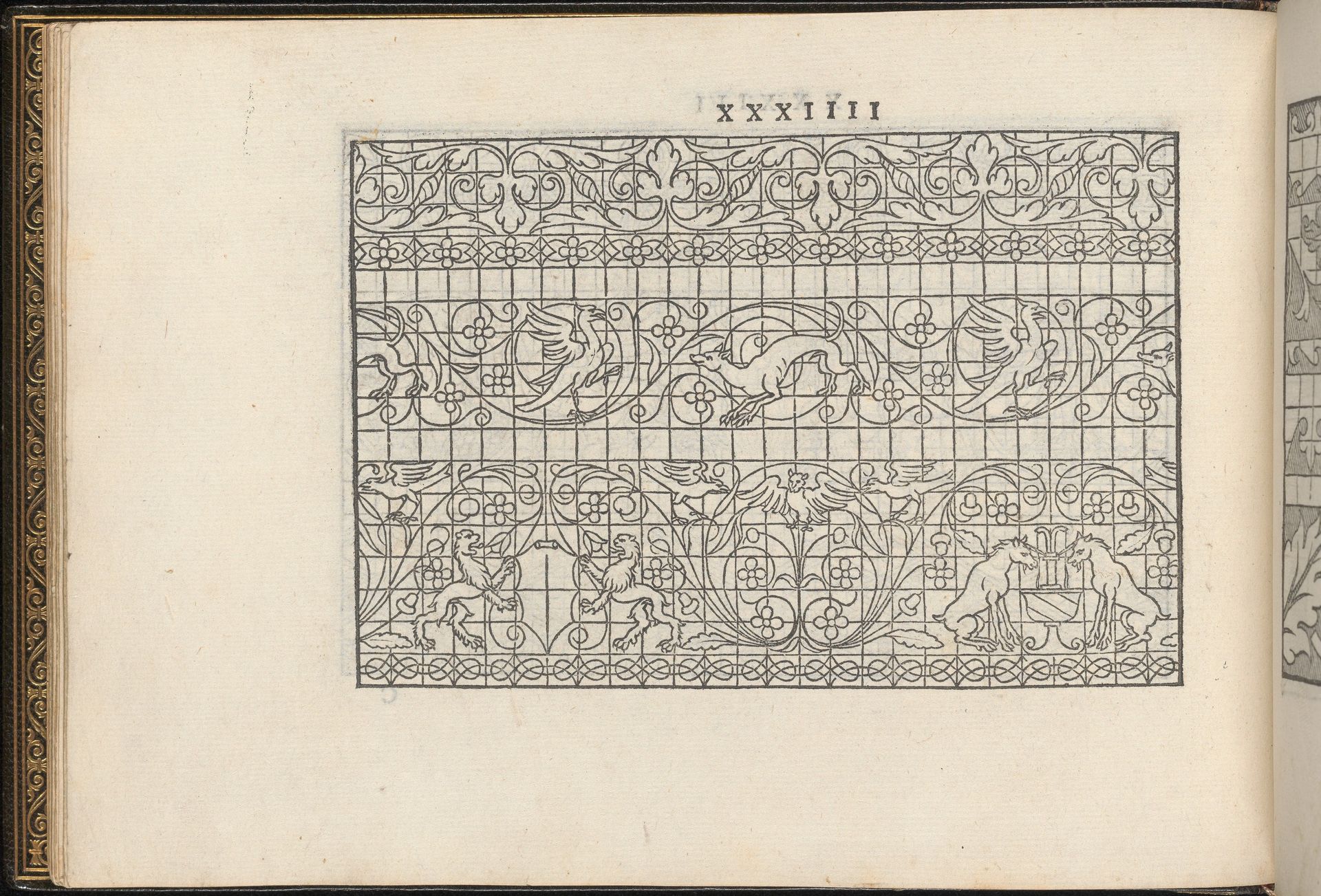
This is an engraving by Giovanni Ostaus, created around 1590. It presents a page from a book intended to guide the creation of embroidery patterns. The overall impression is one of structured elegance, a grid filled with stylized natural forms. The design is segmented into horizontal bands, each showcasing a different pattern. Note the contrast between the geometric rigidity of the grid and the organic shapes of the animals and foliage. This interplay creates a tension, softening the rigid structure with a sense of lively movement. The animals – birds, lions, and perhaps a leaping fox – are rendered with a delicate, almost playful line, which enlivens the composition. Consider the function of this page. It isn't simply decorative; it's a template, a set of instructions. Ostaus offers a framework within which artisans could express their creativity. This engraving destabilizes the traditional hierarchy between fine art and craft, blurring the lines between artistic invention and practical application. It invites us to reconsider how art can be both beautiful and functional, a testament to human ingenuity and the endless possibilities of design.
La Vera Perfettione del Disegno di varie sorti di recami, page 17 (verso) 1567


Artwork details
- Medium
- drawing, print, engraving
- Dimensions
- Overall: 6 5/16 x 8 7/16 in. (16 x 21.5 cm)
- Location
- Metropolitan Museum of Art, New York, NY
- Copyright
- Public Domain
Tags
drawing
11_renaissance
geometric
line
decorative-art
italian-renaissance
engraving
Comments
No comments
About this artwork
This is an engraving by Giovanni Ostaus, created around 1590. It presents a page from a book intended to guide the creation of embroidery patterns. The overall impression is one of structured elegance, a grid filled with stylized natural forms. The design is segmented into horizontal bands, each showcasing a different pattern. Note the contrast between the geometric rigidity of the grid and the organic shapes of the animals and foliage. This interplay creates a tension, softening the rigid structure with a sense of lively movement. The animals – birds, lions, and perhaps a leaping fox – are rendered with a delicate, almost playful line, which enlivens the composition. Consider the function of this page. It isn't simply decorative; it's a template, a set of instructions. Ostaus offers a framework within which artisans could express their creativity. This engraving destabilizes the traditional hierarchy between fine art and craft, blurring the lines between artistic invention and practical application. It invites us to reconsider how art can be both beautiful and functional, a testament to human ingenuity and the endless possibilities of design.
Comments
No comments