About this artwork
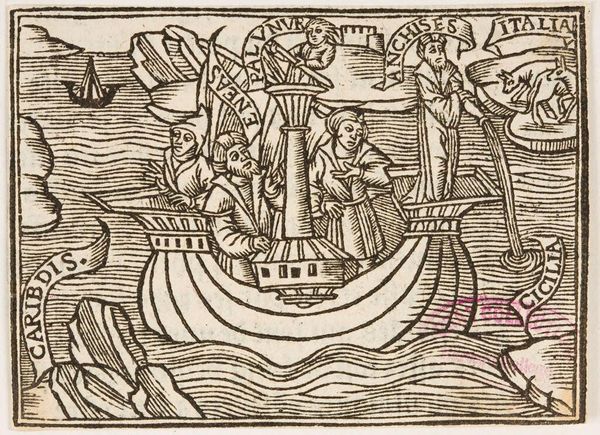
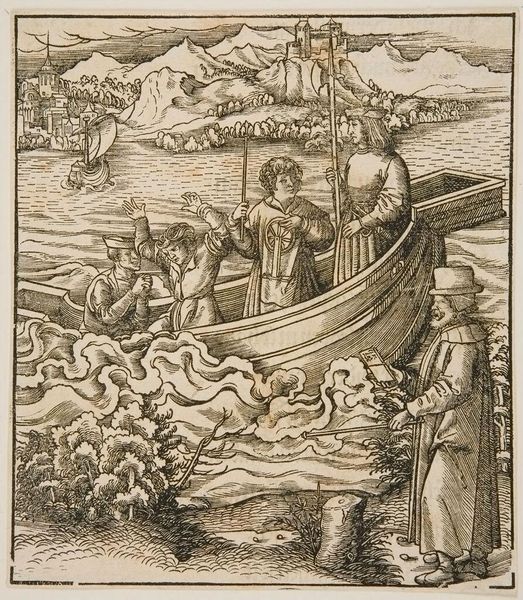
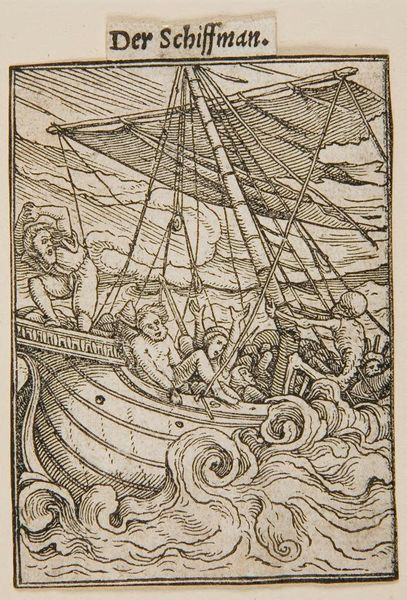
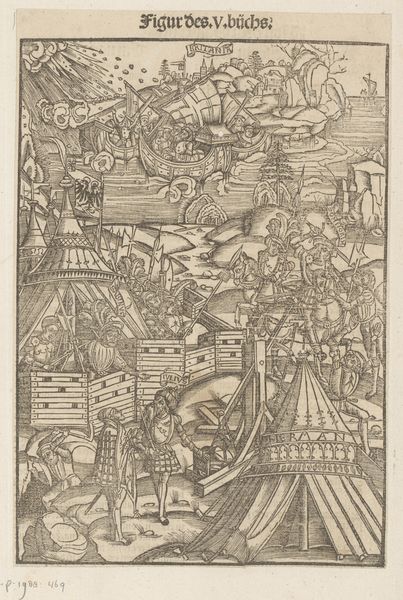
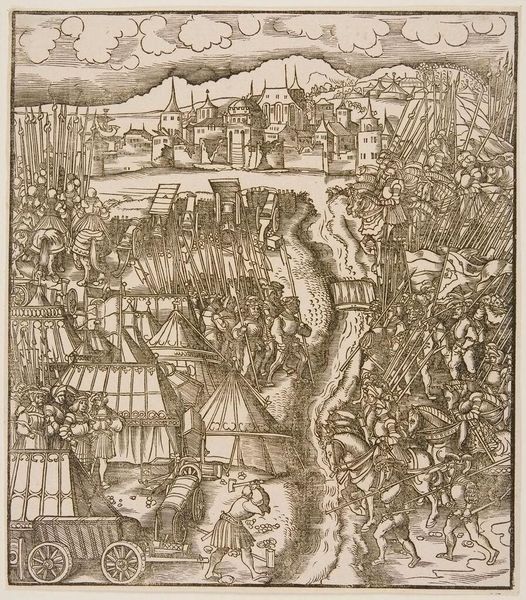
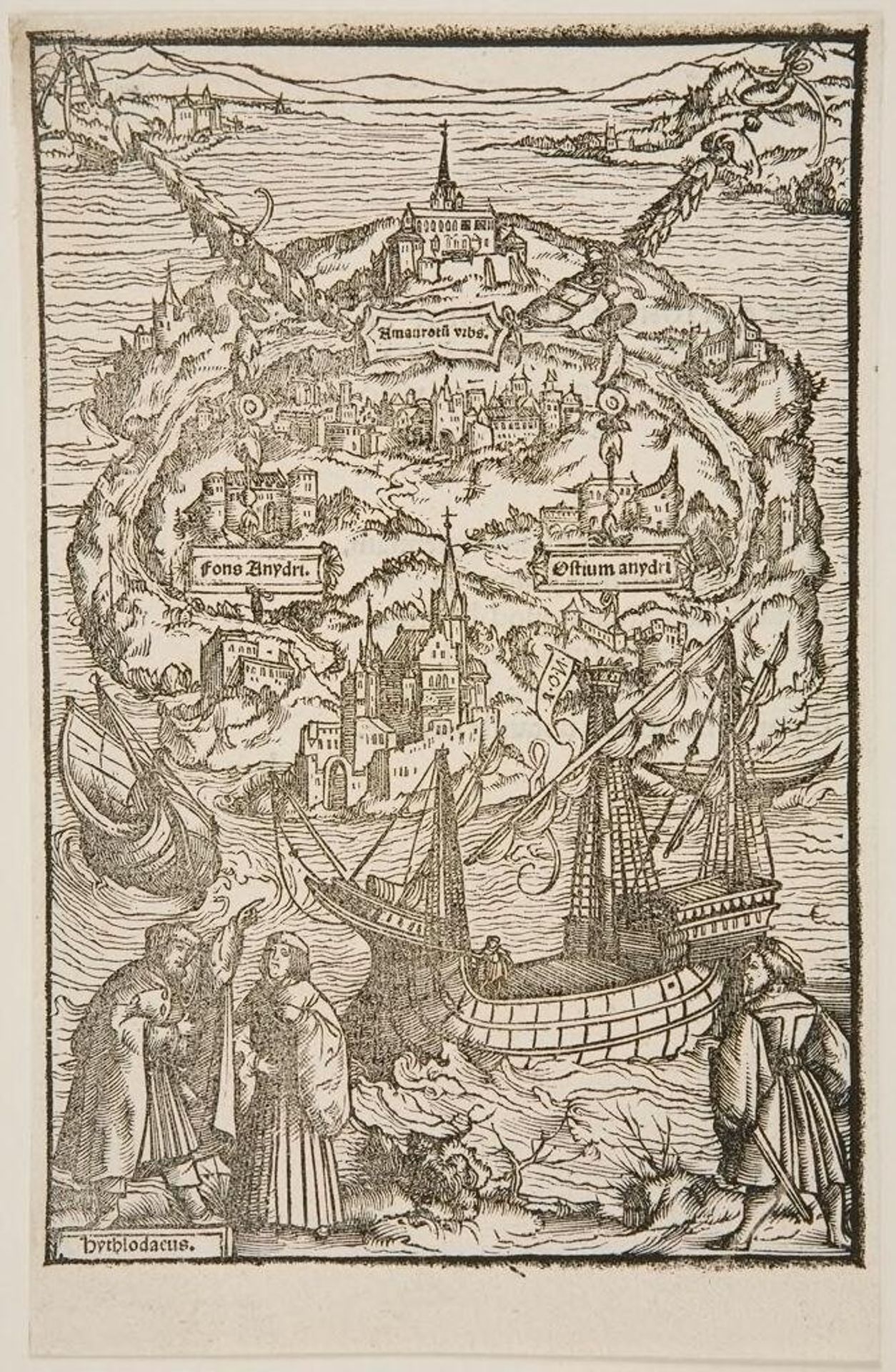
Curator: This is Ambrosius Holbein's "Island of Utopia," a captivating woodcut. It feels like a fever dream captured on paper, doesn't it? All those tiny, precise lines weaving together this impossible place. Editor: It's overwhelmingly detailed, almost claustrophobic. I immediately feel the weight of civilization, the density of human endeavor pressed onto a small space. A little suffocating, perhaps. Curator: Holbein was likely inspired by Thomas More's book, Utopia, published a few years before this print. It’s a commentary on ideal societies, a popular subject at the time. Utopia as a place, but really, a state of mind, or, maybe, a warning. Editor: So, is this supposed "perfection" inherently flawed? The rigid lines, the cramped architecture… it suggests that the pursuit of an ideal can become its own kind of prison. Curator: Perhaps. I also see an incredible technical skill here, Holbein using his tools to carve out not just the physical space but also an intellectual one, full of debate, hope, and disillusionment. A rather human paradise then, wouldn't you say? Editor: Indeed. Seeing it this way, I'm less suffocated and more intrigued by the human project—warts and all.
Island of Utopia c. 16th century

Artwork details
- Location
- Harvard Art Museums
- Copyright
- CC0 1.0
Comments
No comments
About this artwork
Curator: This is Ambrosius Holbein's "Island of Utopia," a captivating woodcut. It feels like a fever dream captured on paper, doesn't it? All those tiny, precise lines weaving together this impossible place. Editor: It's overwhelmingly detailed, almost claustrophobic. I immediately feel the weight of civilization, the density of human endeavor pressed onto a small space. A little suffocating, perhaps. Curator: Holbein was likely inspired by Thomas More's book, Utopia, published a few years before this print. It’s a commentary on ideal societies, a popular subject at the time. Utopia as a place, but really, a state of mind, or, maybe, a warning. Editor: So, is this supposed "perfection" inherently flawed? The rigid lines, the cramped architecture… it suggests that the pursuit of an ideal can become its own kind of prison. Curator: Perhaps. I also see an incredible technical skill here, Holbein using his tools to carve out not just the physical space but also an intellectual one, full of debate, hope, and disillusionment. A rather human paradise then, wouldn't you say? Editor: Indeed. Seeing it this way, I'm less suffocated and more intrigued by the human project—warts and all.
Comments
No comments