About this artwork
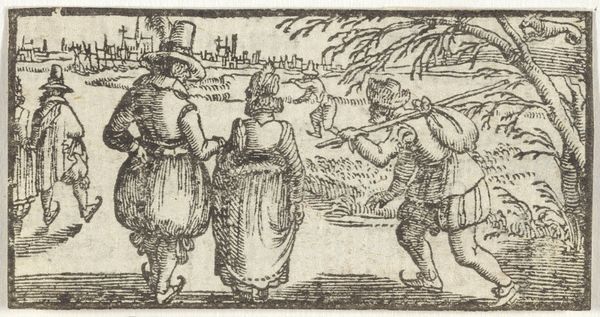
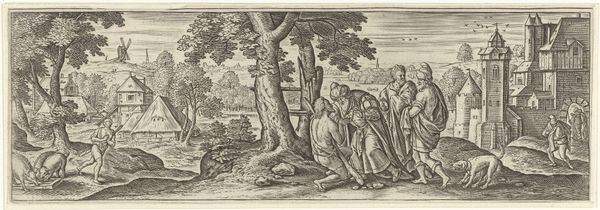
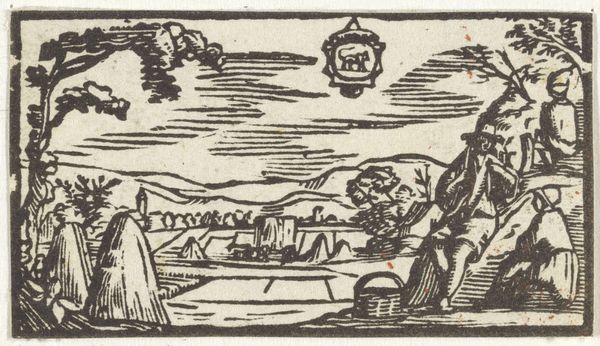
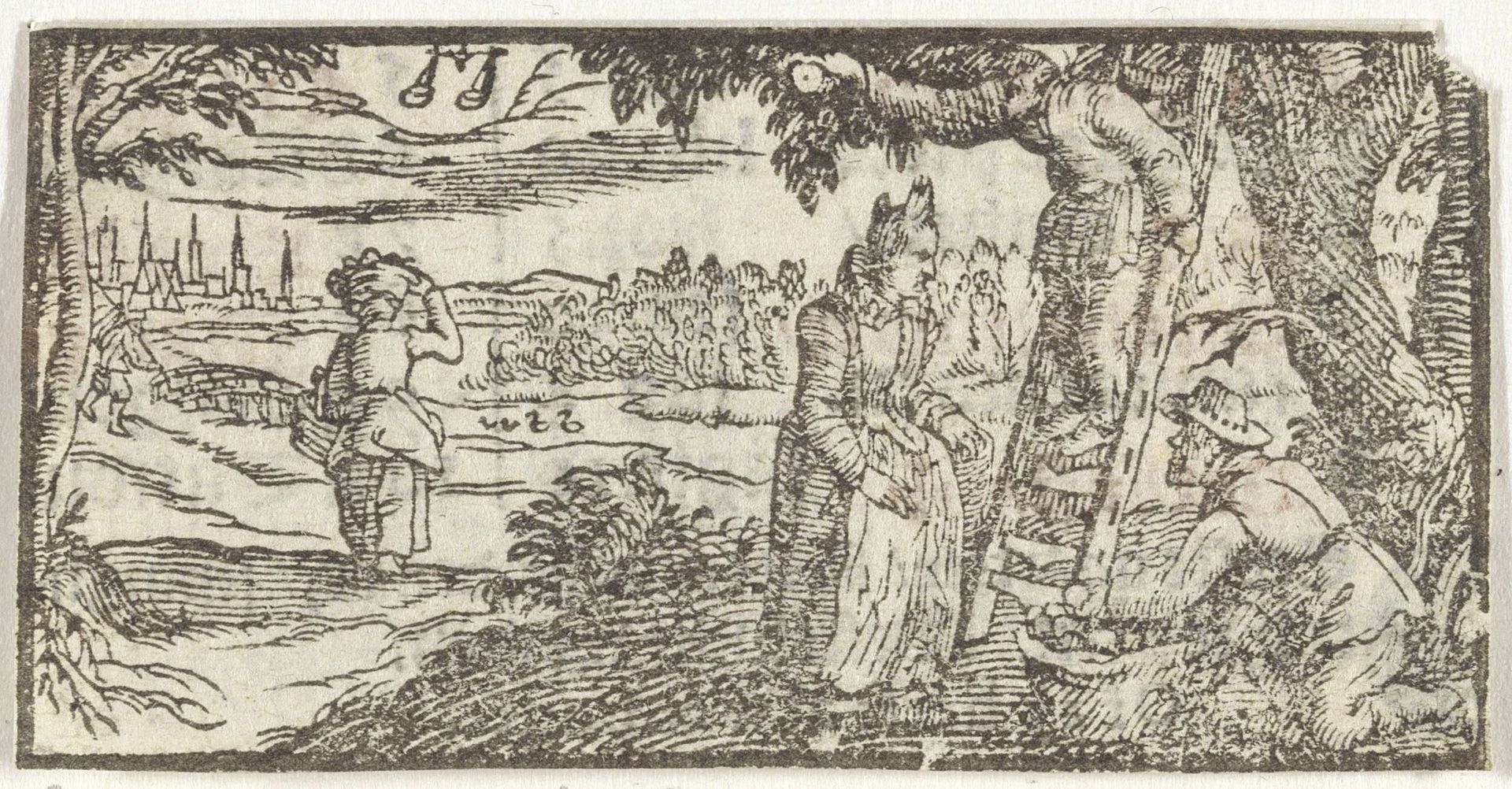
Curator: This intimate drawing, believed to be from the 17th century, is titled "September." Its fine lines capture a slice of life. What do you notice first? Editor: The labor. The way bodies are situated within that landscape feels deeply unequal. A figure carrying what looks like harvested goods walking toward a city while a group harvests from a tree in the foreground. Curator: Precisely. Think about how images like these circulated. Drawings such as this offered a perspective on work and the rhythms of life at a specific historical juncture. The division of labor you mentioned speaks volumes. How do we situate that within gender roles of the period? Editor: Well, notice who is collecting from the tree—there’s one individual climbing, seemingly male, and one who has apparently collected produce. They're assisted by one who appears to be a woman at their side. And the lone figure in the distance also appears to be carrying burdens. The artwork reproduces existing social dynamics while eliding specific experiences. Curator: Right, and considering this artwork dates to the 17th century, the style aligns with Northern Renaissance traditions, emphasizing detailed landscapes and genre-painting, that kind of quotidian focus. Editor: The city backdrop is compelling, acting as both destination and implied engine to that labor. Does that background imply a sense of collective prosperity or suggest class separation? It’s hard to interpret. But thinking about audience is interesting here. What would someone viewing this drawing within a collection make of the scene? Curator: It likely depended on the viewer's position in the social hierarchy. Perhaps a wealthy collector saw the drawing and saw idealized labor practices; another might have a starkly different perspective. This drawing encapsulates the complicated, intersecting dynamics of its time. It's fascinating how a small artwork on paper can hold such layers of social meaning. Editor: Indeed. I find myself pondering the choices that everyday individuals make and how our understanding of past dynamics can better inform present struggles for a more equitable society.

Artwork details
- Medium
- drawing, ink, engraving
- Dimensions
- height 28 mm, width 56 mm
- Copyright
- Rijks Museum: Open Domain
Tags
Comments
Share your thoughts
About this artwork
Curator: This intimate drawing, believed to be from the 17th century, is titled "September." Its fine lines capture a slice of life. What do you notice first? Editor: The labor. The way bodies are situated within that landscape feels deeply unequal. A figure carrying what looks like harvested goods walking toward a city while a group harvests from a tree in the foreground. Curator: Precisely. Think about how images like these circulated. Drawings such as this offered a perspective on work and the rhythms of life at a specific historical juncture. The division of labor you mentioned speaks volumes. How do we situate that within gender roles of the period? Editor: Well, notice who is collecting from the tree—there’s one individual climbing, seemingly male, and one who has apparently collected produce. They're assisted by one who appears to be a woman at their side. And the lone figure in the distance also appears to be carrying burdens. The artwork reproduces existing social dynamics while eliding specific experiences. Curator: Right, and considering this artwork dates to the 17th century, the style aligns with Northern Renaissance traditions, emphasizing detailed landscapes and genre-painting, that kind of quotidian focus. Editor: The city backdrop is compelling, acting as both destination and implied engine to that labor. Does that background imply a sense of collective prosperity or suggest class separation? It’s hard to interpret. But thinking about audience is interesting here. What would someone viewing this drawing within a collection make of the scene? Curator: It likely depended on the viewer's position in the social hierarchy. Perhaps a wealthy collector saw the drawing and saw idealized labor practices; another might have a starkly different perspective. This drawing encapsulates the complicated, intersecting dynamics of its time. It's fascinating how a small artwork on paper can hold such layers of social meaning. Editor: Indeed. I find myself pondering the choices that everyday individuals make and how our understanding of past dynamics can better inform present struggles for a more equitable society.
Comments
Share your thoughts