About this artwork
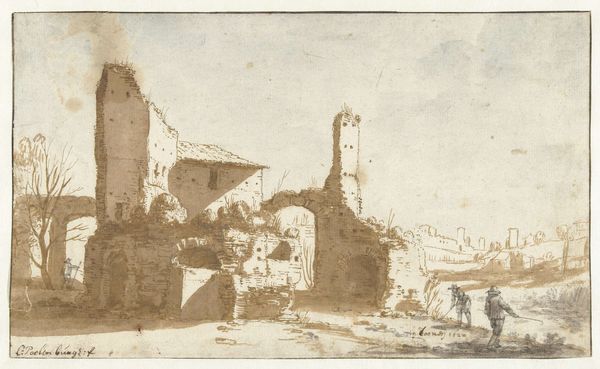
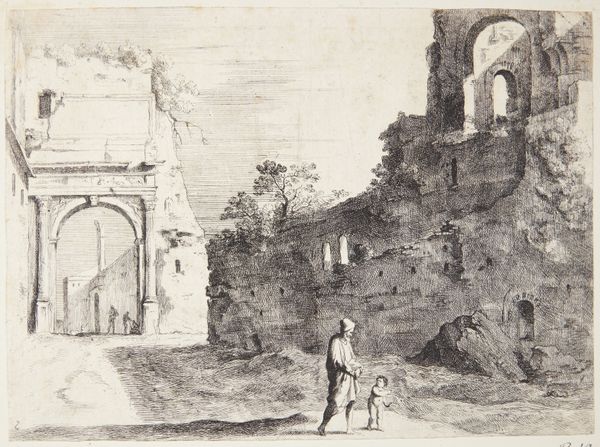
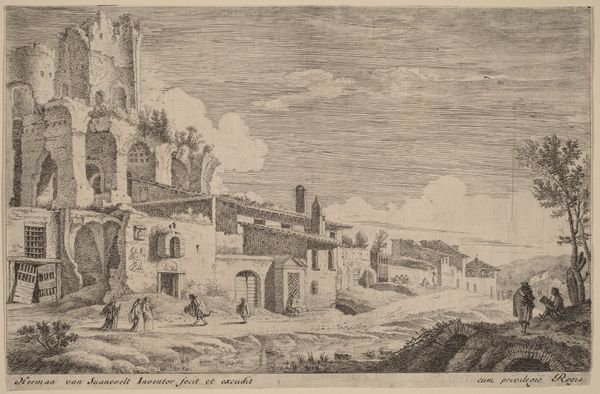
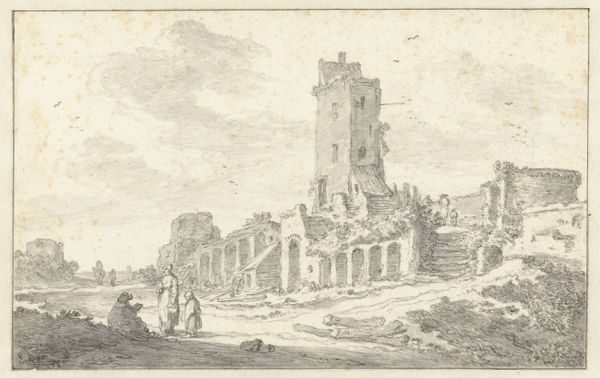
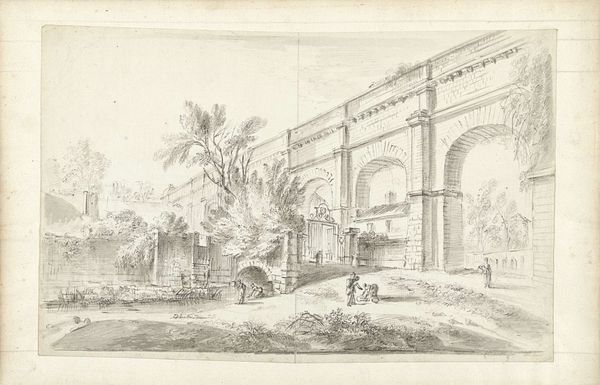
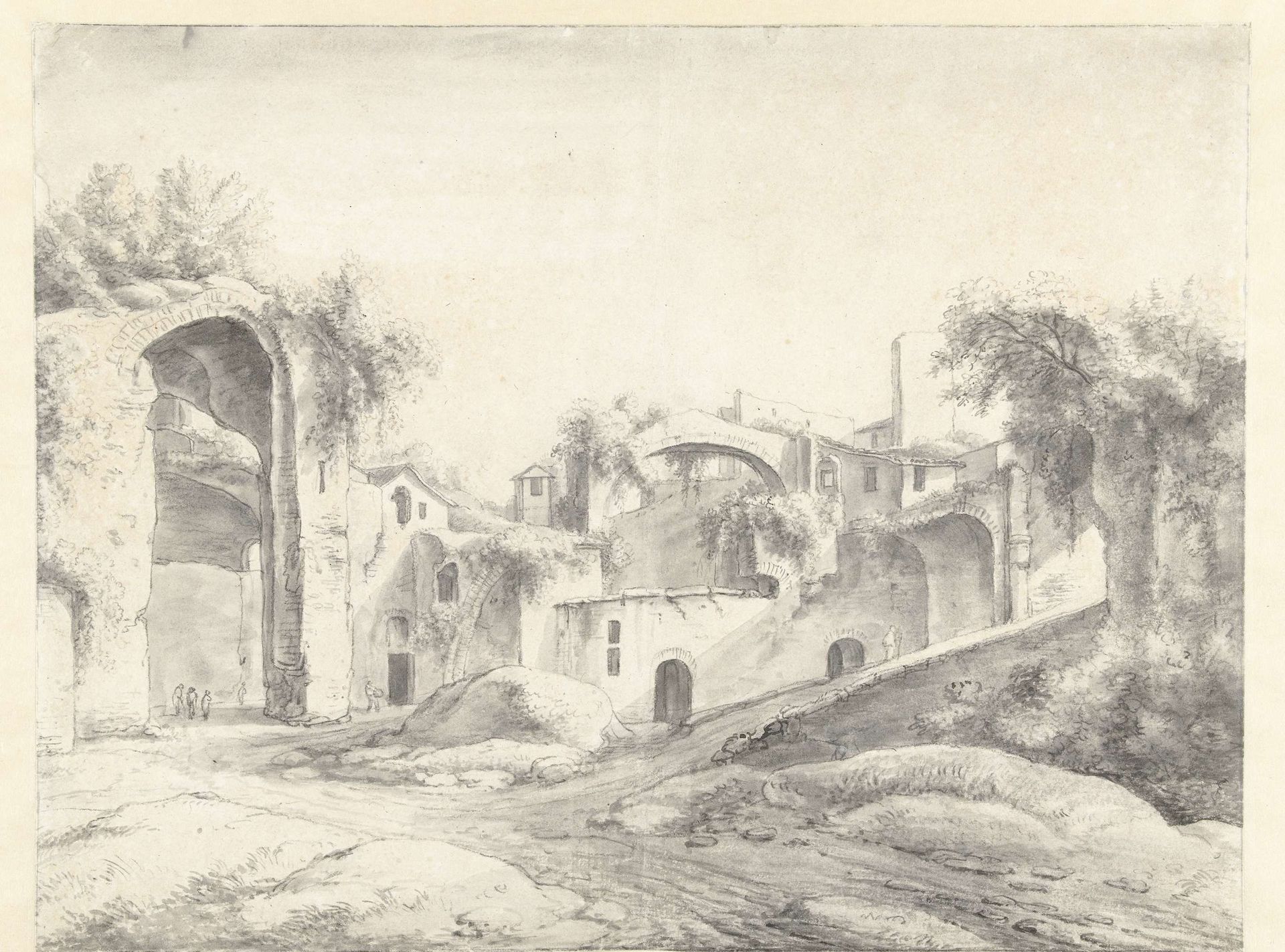
Anthonie Waterloo sketched the ruins of the Baths of Diocletian in Rome. The arches, once symbols of Roman engineering prowess, now stand weathered, overgrown, and softened by the passage of time. The arch, a potent symbol of triumph and dominion in Roman art, reappears throughout history in various guises. From triumphal arches celebrating military victories to the arched entrances of cathedrals symbolizing a gateway to the divine, the arch carries a cultural memory. Here, however, the arch crumbles, overgrown with foliage. The decay speaks volumes. It reminds us of the cyclical nature of civilizations—their rise, fall, and inevitable transformation. This imagery touches a primal part of our psyche, evoking feelings of nostalgia and the transient nature of human endeavors. In its ruined state, the arch becomes a mirror, reflecting our own mortality and the impermanence of all things. It’s a poignant memento mori, urging us to contemplate the echoes of history.
Ruïnes van de thermen van Diocletianus te Rome
1619 - 1690

Anthonie Waterloo
1610 - 1690Location
RijksmuseumArtwork details
- Medium
- drawing, pencil
- Dimensions
- height 360 mm, width 462 mm
- Location
- Rijksmuseum
- Copyright
- Rijks Museum: Open Domain
Tags
drawing
baroque
pencil sketch
landscape
charcoal drawing
pencil drawing
pencil
history-painting
Comments
Be the first to share your thoughts about this work.
About this artwork
Anthonie Waterloo sketched the ruins of the Baths of Diocletian in Rome. The arches, once symbols of Roman engineering prowess, now stand weathered, overgrown, and softened by the passage of time. The arch, a potent symbol of triumph and dominion in Roman art, reappears throughout history in various guises. From triumphal arches celebrating military victories to the arched entrances of cathedrals symbolizing a gateway to the divine, the arch carries a cultural memory. Here, however, the arch crumbles, overgrown with foliage. The decay speaks volumes. It reminds us of the cyclical nature of civilizations—their rise, fall, and inevitable transformation. This imagery touches a primal part of our psyche, evoking feelings of nostalgia and the transient nature of human endeavors. In its ruined state, the arch becomes a mirror, reflecting our own mortality and the impermanence of all things. It’s a poignant memento mori, urging us to contemplate the echoes of history.
Comments
Be the first to share your thoughts about this work.