About this artwork
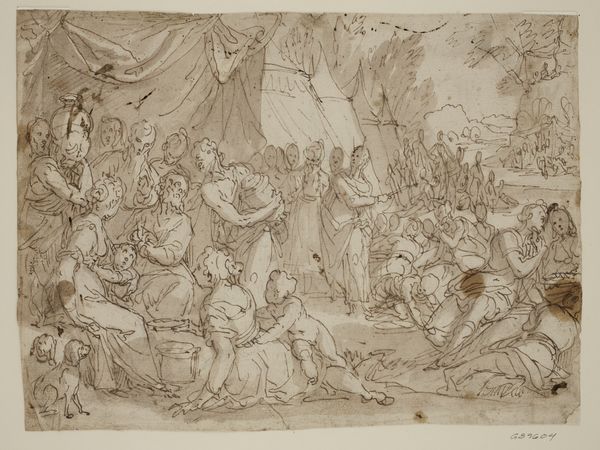
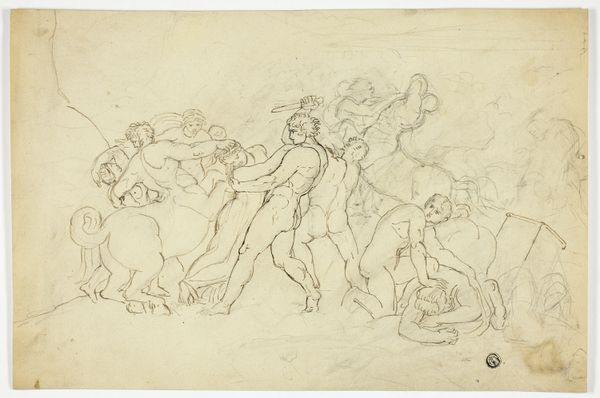
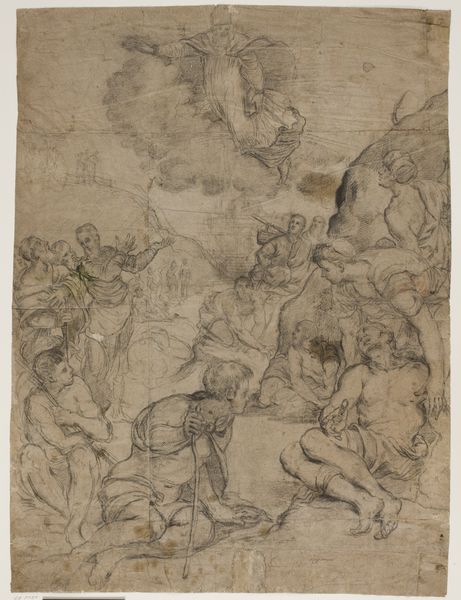
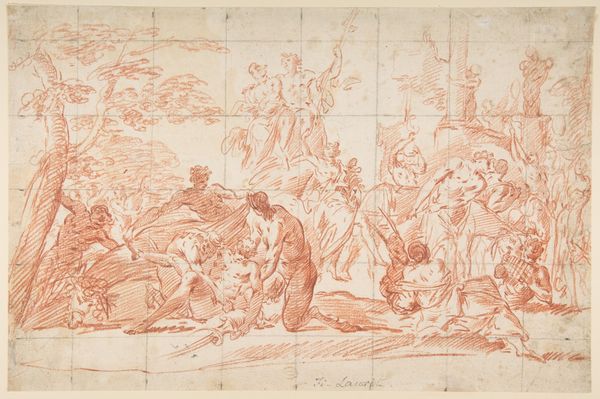
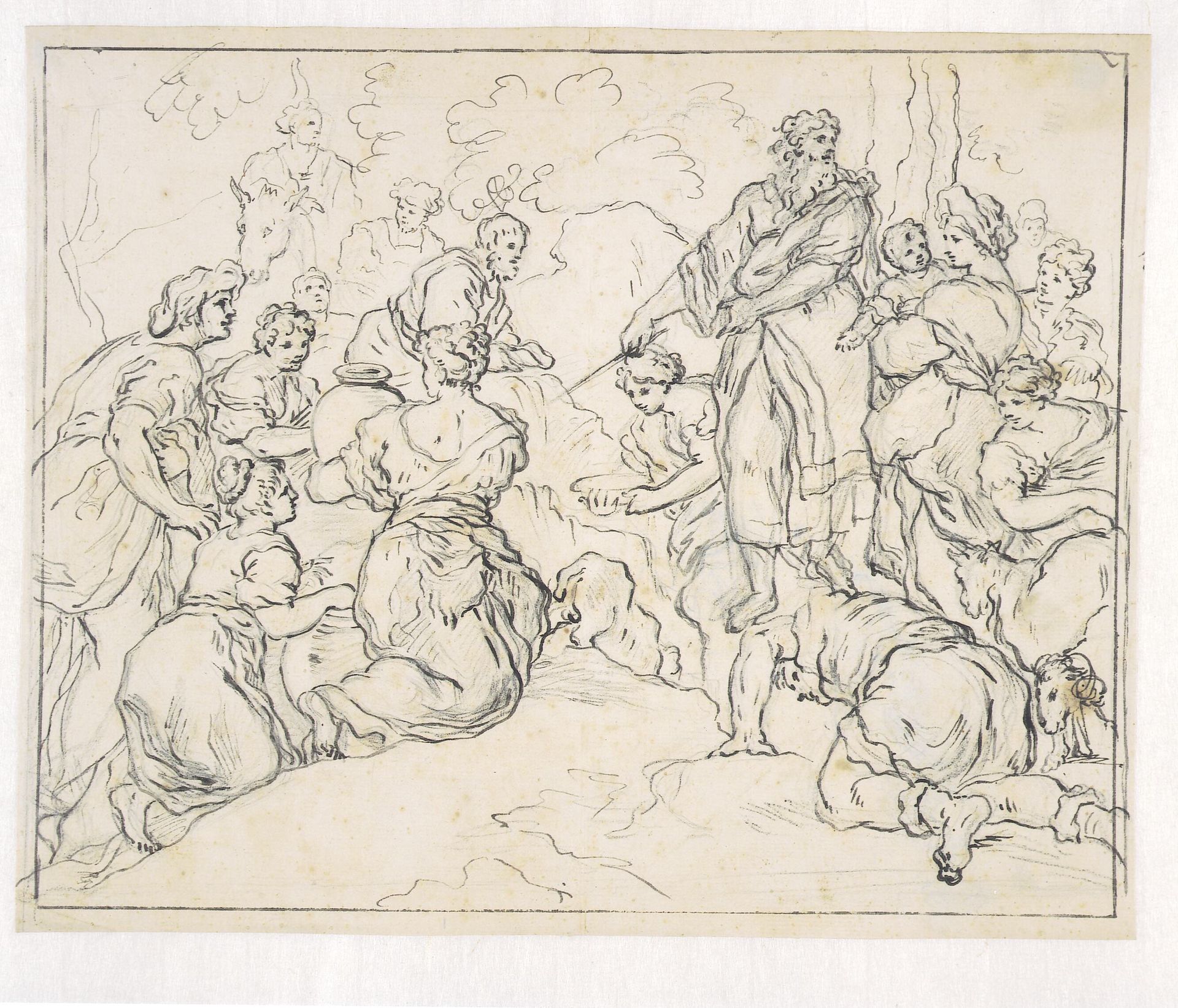
This drawing depicts Moses striking the rock, made by Francesco La Marra around the 18th century. The image teems with figures, their thirst palpable as Moses, staff in hand, brings forth water. Consider the staff, a symbol of authority and divine intervention, echoing back to ancient scepters of power. This motif resonates across cultures, from Hermes' caduceus to shamanic staffs, each a conduit for unseen forces. Even the act of striking bears significance; think of Zeus wielding his thunderbolt, a gesture of power and consequence. Note the expressions of desperation turning to relief. These primal emotions, etched in the figures’ faces, tap into our collective memory of survival and deliverance. The thirst, the hope, the awe – these are universal experiences passed down through generations, their resonance undiminished by time. The image becomes a vessel carrying these emotions through the ages. Thus, the scene becomes a mirror, reflecting our own deepest fears and hopes. The symbols in this image are not simply historical relics; they are living forces, constantly evolving and resurfacing within the human psyche.
Moses striking the rock 1710 - 1780


Artwork details
- Medium
- drawing, ink, pen
- Dimensions
- 263 mm (height) x 327 mm (width) (bladmaal)
- Location
- SMK - Statens Museum for Kunst
Tags
drawing
ink drawing
narrative-art
baroque
ink painting
pen drawing
figuration
ink
pen
history-painting
academic-art
Comments
No comments
About this artwork
This drawing depicts Moses striking the rock, made by Francesco La Marra around the 18th century. The image teems with figures, their thirst palpable as Moses, staff in hand, brings forth water. Consider the staff, a symbol of authority and divine intervention, echoing back to ancient scepters of power. This motif resonates across cultures, from Hermes' caduceus to shamanic staffs, each a conduit for unseen forces. Even the act of striking bears significance; think of Zeus wielding his thunderbolt, a gesture of power and consequence. Note the expressions of desperation turning to relief. These primal emotions, etched in the figures’ faces, tap into our collective memory of survival and deliverance. The thirst, the hope, the awe – these are universal experiences passed down through generations, their resonance undiminished by time. The image becomes a vessel carrying these emotions through the ages. Thus, the scene becomes a mirror, reflecting our own deepest fears and hopes. The symbols in this image are not simply historical relics; they are living forces, constantly evolving and resurfacing within the human psyche.
Comments
No comments