1701 - 1759
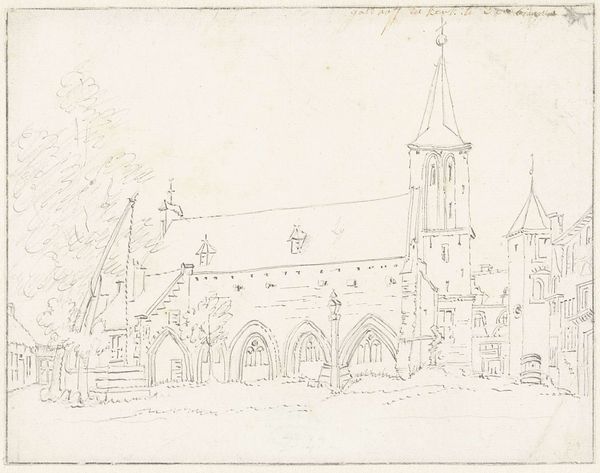
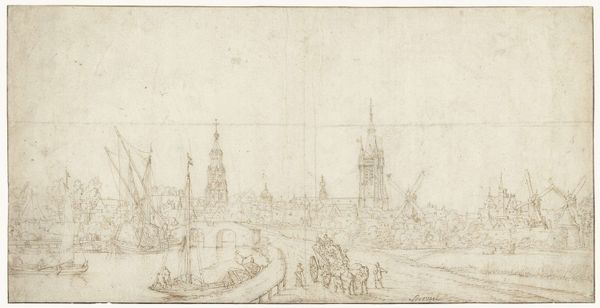
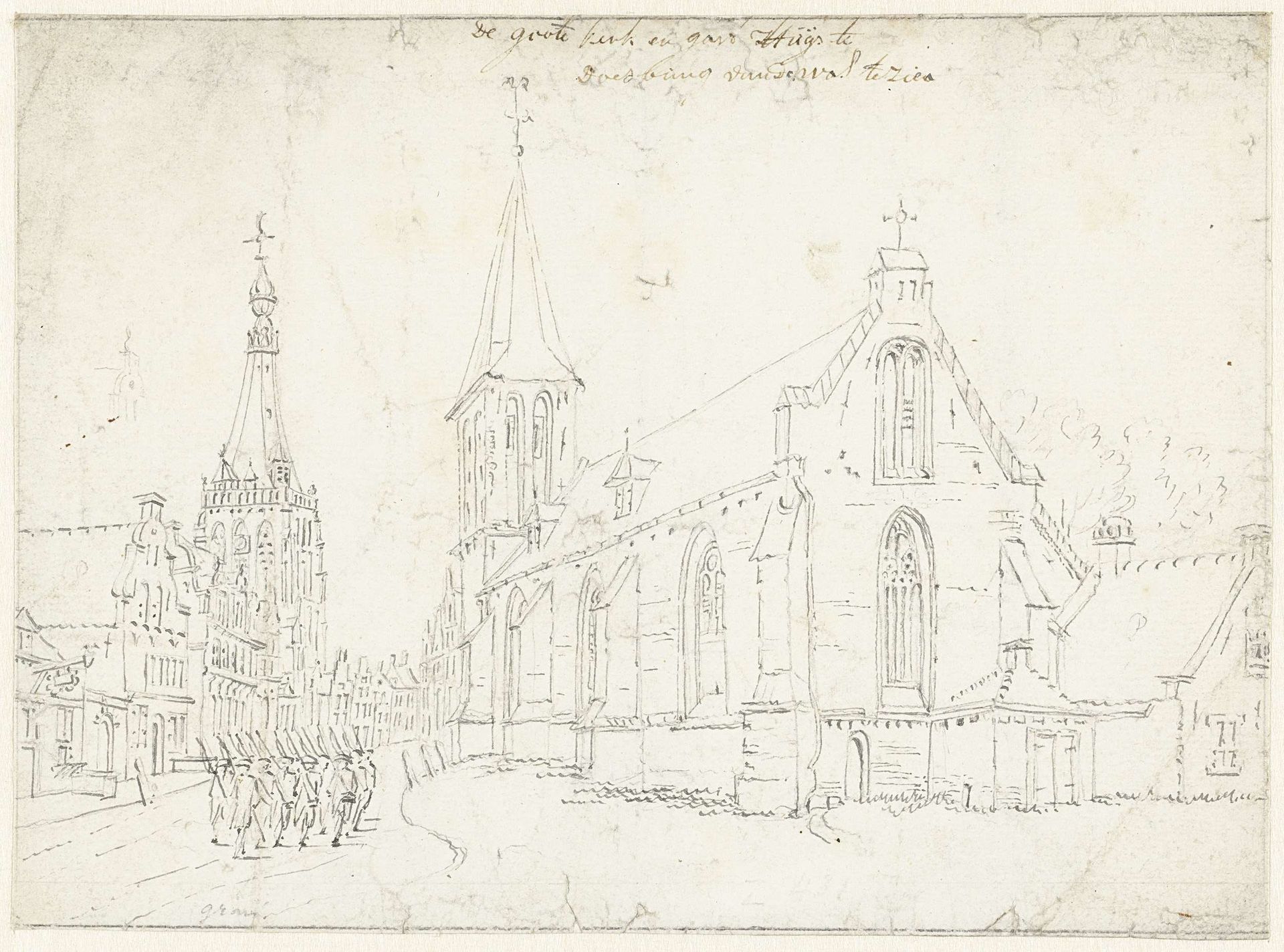
De Grote Kerk en het gasthuis te Doesburg, Gelderland

Cornelis Pronk
1691 - 1759Location
RijksmuseumListen to curator's interpretation
Curatorial notes
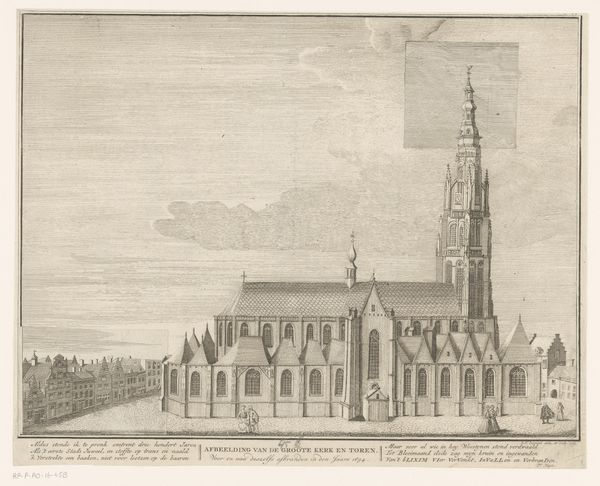
Curator: Cornelis Pronk, a name synonymous with detailed topographical drawings, brings us this cityscape. It’s titled “De Grote Kerk en het gasthuis te Doesburg, Gelderland,” placing us in Doesburg, Netherlands, sometime between 1701 and 1759. Editor: There's a somber, almost spectral quality to it. The buildings seem to loom, despite the delicacy of the lines. It feels like looking at a memory fading into the paper. Curator: I find that 'fading' impression quite appropriate, considering it's a pen and ink drawing on paper. Think about Pronk’s hand, carefully selecting each pen, preparing his ink. The labor involved, creating such precise detail by hand, tells a story of artistry deeply entwined with material effort. Editor: Yes, but what a choice of subject! Churches often act as visual shorthand, emblems of established order or even salvation. Then the gasthuis – or almshouse, I suppose – reminding us of charity, community, the structure of Dutch society at that time. I see the high spires directing eyes and minds upwards. Curator: The placement of the church next to the gasthuis is quite telling of community investment. A pen and ink drawing allowed for relatively inexpensive reproduction; perhaps this piece aided in securing material resources, for both buildings. The drawing becomes part of a fundraising campaign. Editor: The detail given to these important structures in contrast with the almost faceless people feels loaded. And are those soldiers in the front? What do they signify to the cultural memory Pronk sought to capture, or perhaps impose? Curator: The soldiers might suggest not just the reality of military presence, but also the consumption of military apparatus within this economic ecosystem. Are we looking at the instruments and impact of war—paid for with local materials and taxes? Editor: An intriguing thought. It reframes the church and almshouse; instead of simple faith and charity, are they complicit actors in a system reliant on something much harder edged? Curator: This lens allows us to appreciate not just what is depicted but how the very process of its creation—pen, ink, paper, Pronk's labour—bind it inextricably to the historical circumstances it reflects. Editor: Indeed, shifting our perspective gives this seemingly simple sketch added depth, layering symbolic reading over material making to better reflect an image of Dutch society in the 18th Century. Curator: It serves as a potent reminder that appreciating the materials and making involved enriches our engagement with art.