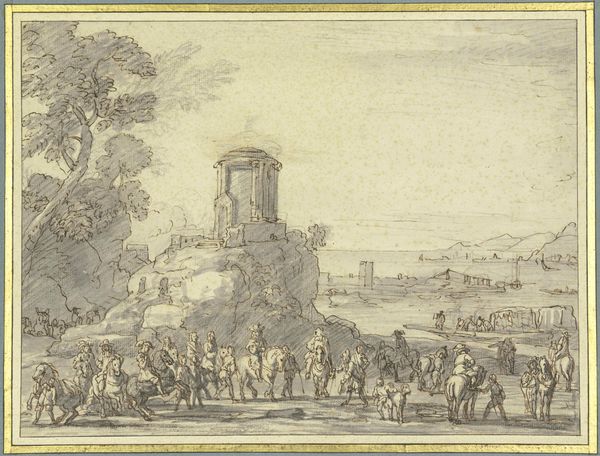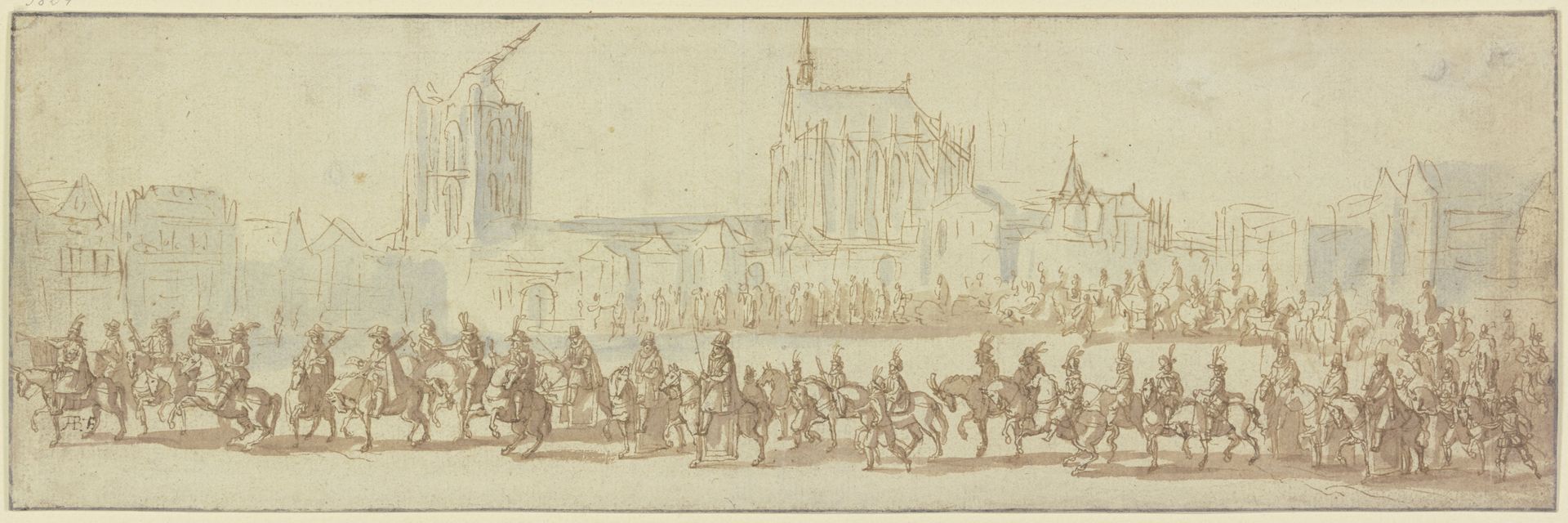
Reiterzug auf einem Platz, im Hintergrund der Kölner Dom


Listen to curator's interpretation
Curatorial notes
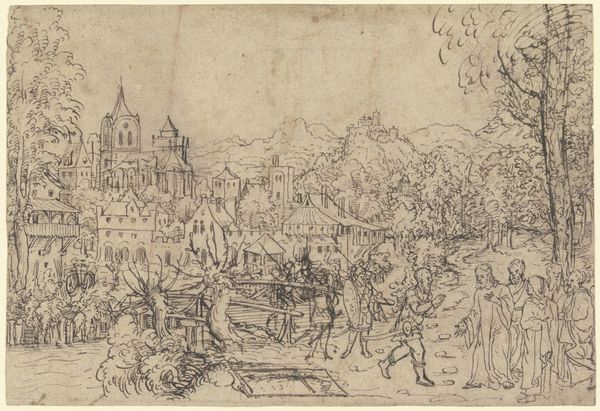
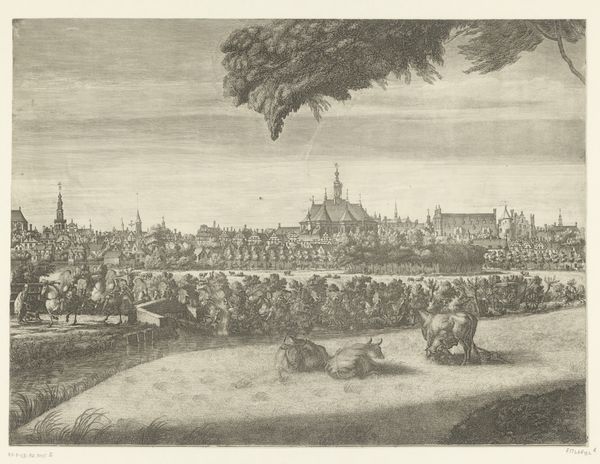
Curator: This intriguing piece, housed here at the Städel Museum, is titled "Reiterzug auf einem Platz, im Hintergrund der Kölner Dom"—roughly translated, "Cavalcade in a Square, with Cologne Cathedral in the Background"— and attributed to Augustin Braun. It's a delicate work using pencil and ink. Editor: The cathedral looming behind this cavalcade creates a rather stark feeling, doesn't it? Almost ominous, overshadowing the riders even though they command the foreground. It really conveys how the church influenced so much in society during the baroque era, doesn’t it? Curator: Indeed. And it’s important to consider the labor involved. Braun utilized specific grades of pencil and carefully prepared ink, showing skill and access to particular resources. Who made the paper? How was the ink formulated? What kind of knowledge went into those productions, and were there apprentices? What does all this tell us about craft hierarchy? Editor: Definitely. This sketch seems like a glimpse into the political landscape of the time, though we lack a definite date. Was Braun intending to celebrate power, perhaps with a political statement regarding class? Who were the horses for, anyway? The careful detailing in the riders' garments and weaponry points to wealth, status, maybe conquest? Curator: You touch on an important tension: is this a commissioned work, documenting a specific event, or something more speculative, perhaps a preparatory sketch for a larger composition? Braun's mastery lies in how he captures both individual detail and mass movement with such efficiency in this city setting. Think of the economics of artistic patronage in Braun’s time and the rise of cityscape prints. Editor: Absolutely, and also consider how history writing intersects. What was Cologne like in the past? Braun’s cityscape positions authority in ways that speak to societal structure: who is riding in the foreground versus milling around behind in that space? Was it supposed to evoke certain types of memories, or construct political mythologies of the place? Curator: Examining the use of light and shadow also reveals the social dimensions— how Braun created visual texture versus how that communicates hierarchy. Editor: Thinking of those histories makes one think about more contemporary works exploring colonialism, military power and more…it’s like the piece opens onto our contemporary social moment as well. Curator: Yes, exactly, it compels us to see continuities of artistic choices through economic means, which echoes in our current visual culture. Editor: Right. All those details give us a new way of interpreting this piece by Braun.