About this artwork
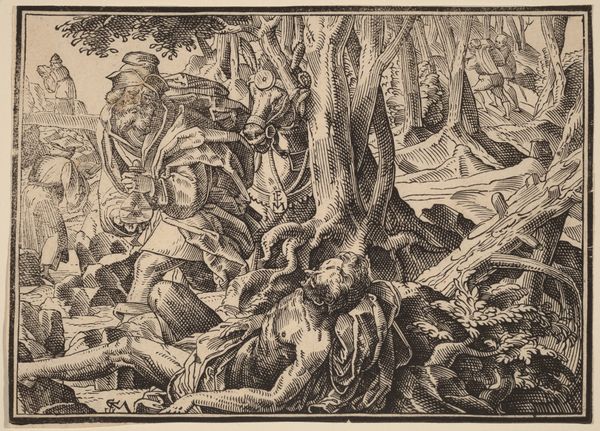
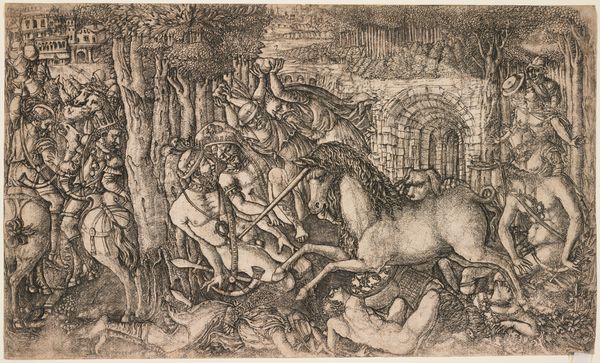
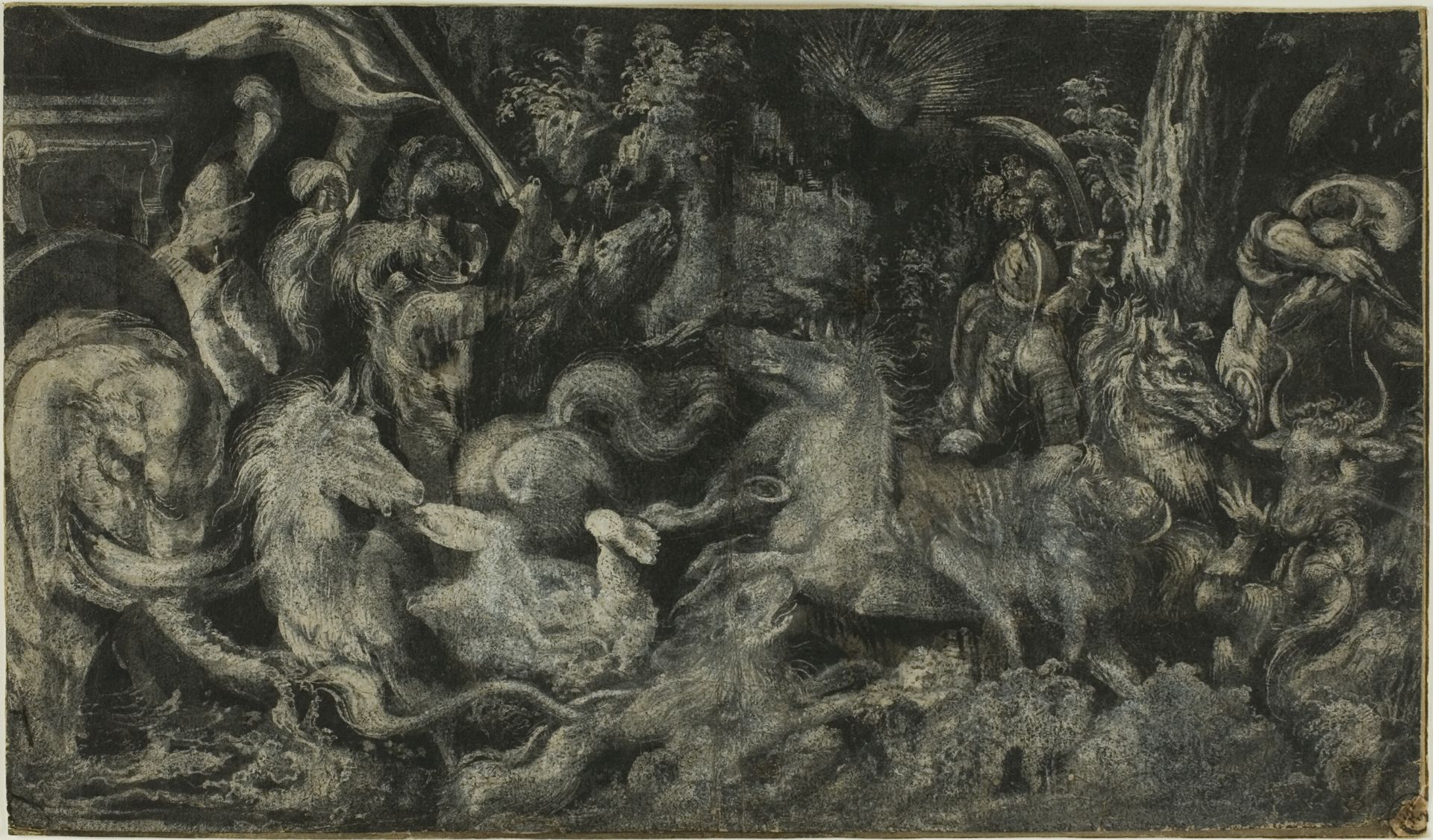
Melchior Bocksberger created "A Nightmare" using pen and black ink on paper, producing a scene dominated by swirling lines and chaotic energy. The monochromatic palette enhances the feeling of unease, drawing viewers into a world of turmoil. The composition is densely packed, featuring rearing horses, soldiers and monstrous figures. The artist’s intricate linework creates a textured surface that heightens the sense of disarray. This dense configuration can be interpreted through the lens of structuralism, where the visual elements function as signs within a system of meaning. Bocksberger uses familiar motifs such as the horse as symbols of power and virility, yet destabilizes these associations by portraying them in a state of panic. This creates a sense of cognitive dissonance. The lack of clear spatial organization challenges the viewer's sense of perspective, fostering a sense of disorientation. Ultimately, the work invites ongoing interpretation, reflecting how our understanding of symbols and cultural codes continually evolves through interaction with art.
A Nightmare
after 1573


Artwork details
- Medium
- drawing, print, paper, charcoal
- Dimensions
- 209 × 364 mm
- Location
- The Art Institute of Chicago
- Copyright
- Public Domain
Tags
Comments
Share your thoughts
About this artwork
Melchior Bocksberger created "A Nightmare" using pen and black ink on paper, producing a scene dominated by swirling lines and chaotic energy. The monochromatic palette enhances the feeling of unease, drawing viewers into a world of turmoil. The composition is densely packed, featuring rearing horses, soldiers and monstrous figures. The artist’s intricate linework creates a textured surface that heightens the sense of disarray. This dense configuration can be interpreted through the lens of structuralism, where the visual elements function as signs within a system of meaning. Bocksberger uses familiar motifs such as the horse as symbols of power and virility, yet destabilizes these associations by portraying them in a state of panic. This creates a sense of cognitive dissonance. The lack of clear spatial organization challenges the viewer's sense of perspective, fostering a sense of disorientation. Ultimately, the work invites ongoing interpretation, reflecting how our understanding of symbols and cultural codes continually evolves through interaction with art.
Comments
Share your thoughts